
For Southern California property managers and facility owners, sidewalk safety is a year-round legal and financial responsibility. While reacting to trip hazards is common, a proactive strategy to prevent sidewalk damage before it starts is far more cost-effective. Preventing a hazard not only saves on future replacement costs but also protects your property from the significant liability associated with trip-and-fall incidents.
Proactive management is the only true way to prevent sidewalk damage from turning into a costly crisis. With over 25 years of experience helping Southern California properties manage their walkways, Precision Concrete Cutting has compiled these expert tips for effective trip hazard prevention.
Key Information
- Proactive Management is Prevention: The best prevention strategy is not about sealing or patching; it’s about data-driven, proactive management of your concrete assets.
- Environmental Factors are Key: In Southern California, soil settlement from dry climates, water intrusion from poor drainage, and tree root growth are the primary causes of sidewalk damage.
- Early Intervention Saves 100%: Fixing a minor 1/4-inch hazard today with precision cutting can prevent a 100%* cost increase for a full slab replacement tomorrow.
- The Liability Risk is Real: Under California’s Unruh Civil Rights Act, a single unaddressed trip hazard can result in a minimum statutory penalty of $4,000, making prevention a critical financial strategy.
- Data is Your Best Tool: A GIS-powered maintenance plan is the most effective tool for identifying risks and budgeting for prevention.
Overview
This guide moves beyond generic advice like “caulk your joints.” Instead, we will focus on the five most impactful strategies that property managers can implement to manage their sidewalk assets effectively. Learn how to identify the root causes of sidewalk damage and how to use modern technology to stop hazards before they become liabilities.
Pro Tip 1: Implement Proactive Asset Management (The GIS Tip)
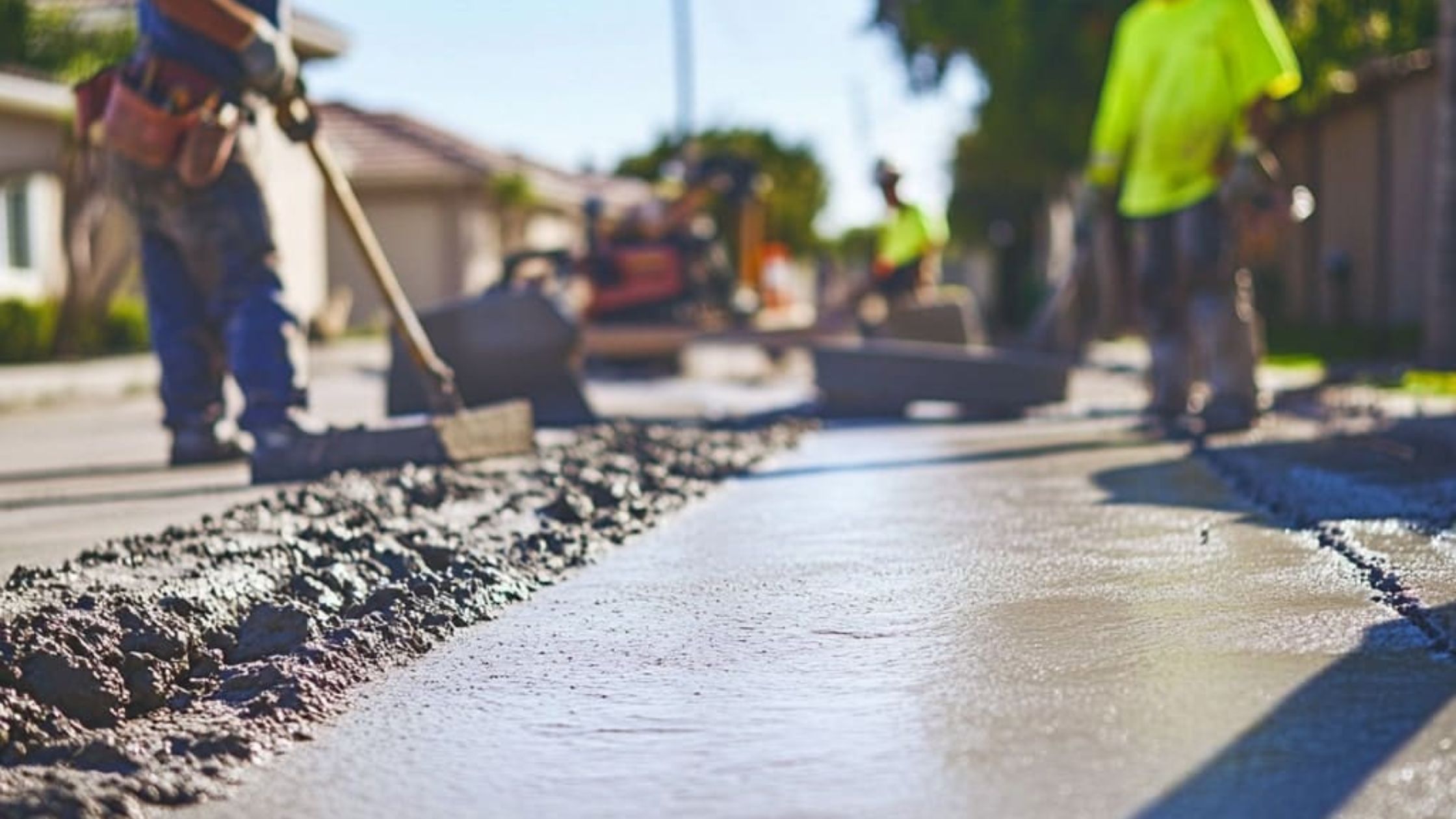
The most critical “prevention” tip isn’t about pouring concrete; it’s about data. The #1 mistake properties make is reactive maintenance—fixing hazards only after a complaint or an injury. True prevention is proactive asset management.
A casual walkthrough can miss the “minor” 1/4-inch and 1/2-inch hazards that carry major liability. A professional GIS survey and inspection is the solution. This service creates a digital map and inventory of every walkway on your property, pinpointing the exact location and measurement of every potential hazard.
This data-driven approach allows you to:
- Budget Accurately: Know the exact cost to achieve 100% compliance, eliminating surprise expenses.
- Prioritize Repairs: Focus your budget on the most severe hazards first.
- Maintain a Legal Record: A GIS report provides a verifiable, time-stamped record of your due diligence in maintaining a safe property, which is invaluable in a liability dispute.
Pro Tip 2: Understand and Manage Environmental Factors
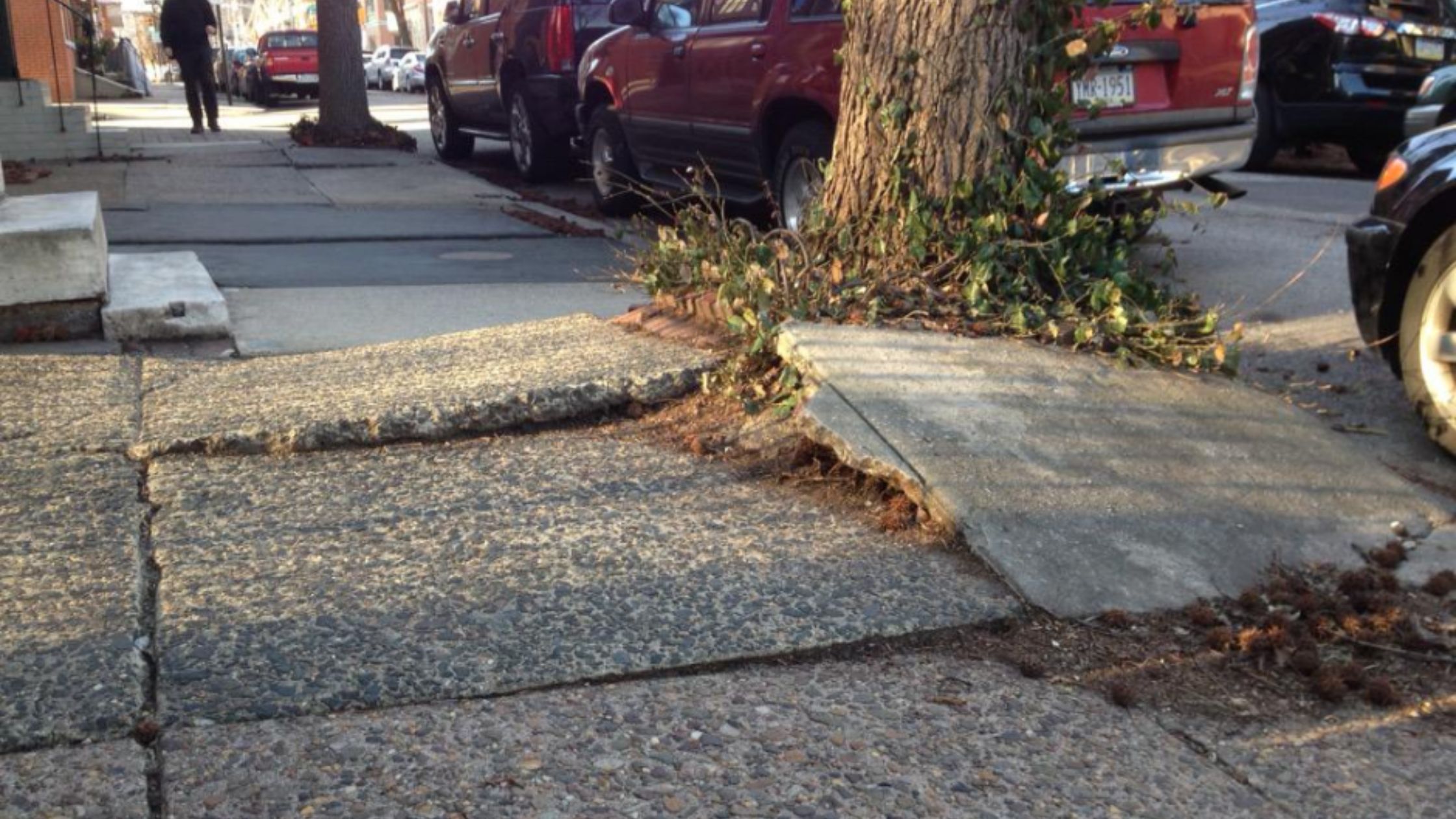
You cannot prevent damage without understanding its cause. In Southern California, the two primary environmental culprits are our climate and water intrusion.
SoCal Climate: Our region’s long, dry periods cause soil (especially clay soil) to shrink and settle. This soil settlement is a leading cause of slabs sinking and creating uneven joints. When seasonal rains do arrive, the saturated soil can heave, or the water can cause erosion under the slab, leading to cracked sidewalks and instability. Prevention means understanding that your sidewalks are in a constant battle with the ground beneath them.
Water & Drainage: Water is a primary enemy of concrete stability. Misdirected sprinklers, clogged drains, or poor grading can saturate the soil under a slab, leading to erosion and heaving. Property managers should be vigilant in identifying and correcting these issues. While drainage problems often require a specialized landscaper or general contractor to fix, identifying them early is a key part of preventing the trip hazards they will inevitably cause.
Pro Tip 3: Monitor Landscaping and Tree Root Growth
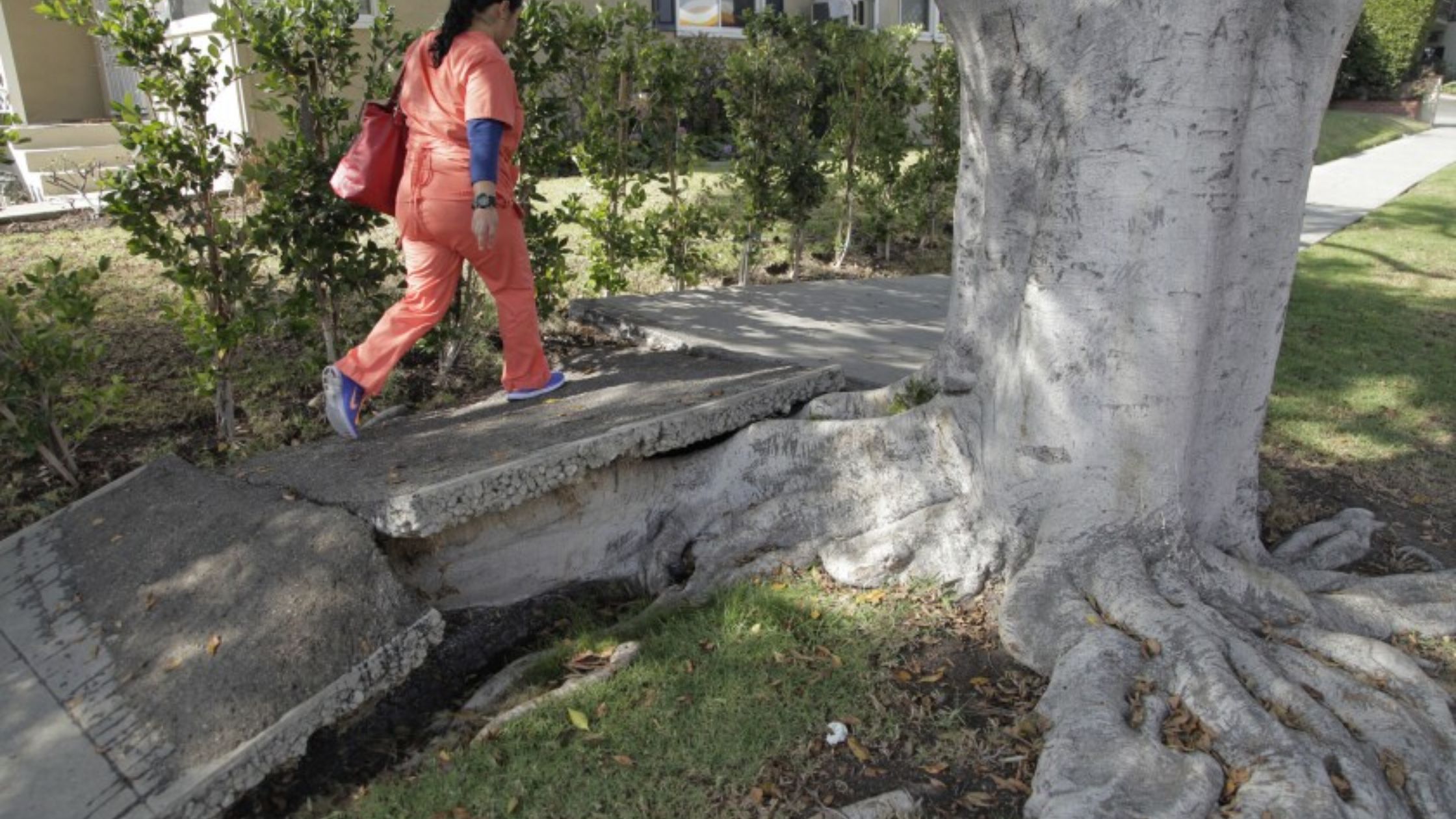
Trees provide immense value to a commercial property, but their roots are a top cause of lifted and damaged sidewalks. Ignoring a tree’s root system is not a viable option; it requires proactive management.
Property managers should work with qualified arborists to select appropriate trees for parkways and, where possible, install root barriers during new landscaping projects. For existing trees, regular monitoring is key.
It’s important to understand the different specialists involved. While Precision Concrete Cutting specializes in repairing the trip hazards that roots create, we do not offer root removal, landscaping, or arborist services. The best preventative strategy involves a partnership: a landscaping professional manages the root, and our sidewalk repair service provides the most efficient, cost-effective solution to restore the walkway to ADA compliance immediately after.
Pro Tip 4: Act on Minor Hazards Immediately to Prevent Major Costs
This is the most effective financial tip for trip hazard prevention. The best way to prevent a $5,000 problem is to fix it when it’s a $50 problem. Waiting for a 1/4-inch hazard to become a 1-inch liability is a costly mistake.
Under the California Building Code (Chapter 11B), that 1/4-inch lip is already a defined hazard. By acting immediately, you not only prevent the hazard from worsening but also eliminate your legal liability.
This is where patented horizontal slicing is a powerful preventative tool. It is not just a repair; it is a tool to prevent two things:
- It prevents liability by bringing the walkway into immediate ADA compliance.
- It prevents replacement by fixing the hazard before it requires a full, disruptive, and expensive slab removal.
A precision repair that takes 15 minutes* today can save you 100%* of the cost of a full replacement project tomorrow. *All timelines and service cost ranges are provided for general information only. Actual project duration and service costs will depend on the specific property conditions, scope of work, accessibility requirements, and agreed-upon scope of service as set forth in the written service agreement.
Pro Tip 5: Choose the Right Service Partner
The final tip for prevention is to choose a specialist, not a generalist. Many “fix-it” contractors will offer to “fix” a trip hazard with a concrete grinder. This is a common mistake. Traditional grinding is an outdated, damaging, and imprecise method that can harm the concrete’s integrity and appearance, and often fails to provide a long-term compliant repair.
Note: While some repair methods discussed here (e.g., sidewalk lifting or drainage work) may require general contractors, Precision Concrete Cutting specializes specifically in trip hazard removal using patented horizontal slicing. We also offer patching and expansion joint maintenance when needed, but do not perform concrete pouring, grinding, or full-panel lifting.
Partnering with a specialist in trip hazard removal ensures you are using the most advanced, compliant, and cost-effective technology available. Our patented method is trusted by over 2,000 satisfied clients across Southern California because it is the most efficient solution for both repair and prevention.
True Prevention is Proactive Management
True sidewalk damage prevention in Southern California isn’t about a single product; it’s about a continuous, proactive strategy. It requires understanding our unique environment, using data to manage assets, and intervening with the right technology before small issues become costly liabilities.
Don’t wait for a complaint or a lawsuit to manage your walkways. Contact Precision Concrete Cutting today for a free site assessment and learn how our GIS survey and patented horizontal slicing services can form the core of your property’s trip hazard prevention plan.
Sources
California Regulatory Resources
- California Civil Rights Department (Unruh Act FAQ) – Explains the state law (Civil Code § 51) and the basis for high-stakes accessibility claims.
- California Streets and Highways Code § 5610 – Details the legal responsibility of property owners to maintain adjacent sidewalks.
Professional and Industry Sources
- California Contractors State License Board (CSLB) – Verifies contractor licensing for any concrete-related work in California.
Building Code and Compliance Authorities
- California Building Standards Commission (BSC) – Official source for the California Building Code (CBC), including Chapter 11B on accessibility.
- US Access Board – Provides the federal baseline for ADA standards, which California often exceeds.
Service Consultation Disclaimer
This article provides general information about Southern California ADA compliance and sidewalk safety and should not be considered as specific technical advice for your property. Compliance requirements, repair methods, and procedures vary significantly based on individual property conditions, jurisdiction within California, and specific accessibility needs. Project schedules, service timelines, and maintenance processes can be affected by many factors specific to each property.
All timelines and service cost ranges are provided for general information only. Actual project duration and service costs will depend on the specific property conditions, scope of work, accessibility requirements, and agreed-upon scope of service as set forth in the written service agreement.
For confidential assessment and specialized service for your specific Southern California property, contact Precision Concrete Cutting or 760-334-8921. Our patented horizontal slicing specialists will provide personalized technical analysis based on your specific property conditions and compliance requirements. No service agreement is created by reading this article.

