

Homeowners associations face constant pressure to maintain safe, attractive common areas while controlling costs and managing reserve funds responsibly. Sidewalk maintenance represents one of the largest infrastructure obligations HOAs manage, with deferred repairs creating liability exposure that far exceeds preventive maintenance investments.
The difference between strategic HOA sidewalk repair planning and reactive emergency response often determines whether associations operate within budget or face special assessments that strain homeowner relationships. At Precision Concrete Cutting, we help Southern California HOAs implement budget-friendly maintenance programs that prioritize safety, extend infrastructure life, and prevent the costly failures that drain reserves.
 Strategy 1: Implement Systematic Inspection Schedules
Catch problems while repairs remain affordable
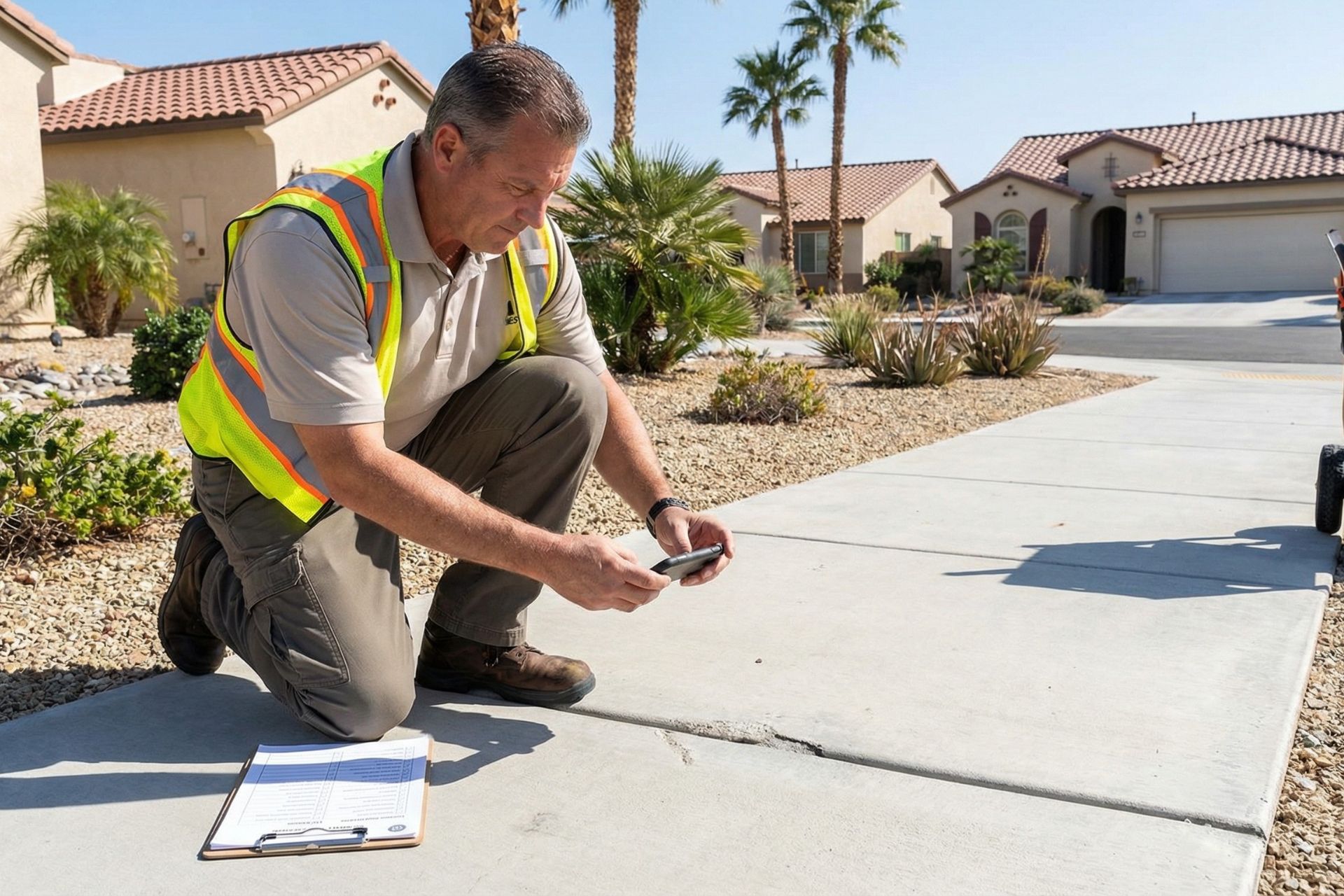
Annual systematic sidewalk inspections identify developing hazards before they require expensive intervention. Height differences of ¼ inch between adjacent slabs—the ADA threshold for trip hazards—are easily corrected through horizontal slicing when detected early, typically costing $300–600 per location. Those same hazards ignored for 2–3 years often require more extensive work costing $800–1,500 or more as damage spreads to surrounding sections.
Create inspection protocols
Effective HOA inspection programs include quarterly walk-throughs by maintenance staff documenting visible concerns, with annual professional assessments providing detailed condition reporting across all common-area sidewalks. Digital documentation—photos, GPS coordinates, severity ratings—supports multi-year tracking showing how conditions evolve and helps prioritize repair budgets.
Budget allocation based on data
Inspection data transforms sidewalk maintenance from guesswork into strategic planning. When boards understand they have 12 minor hazards, 4 moderate concerns, and 2 severe trip risks, they can allocate repair budgets logically—addressing high-traffic severe hazards immediately while scheduling moderate issues within the fiscal year and monitoring minor concerns for progression.
Strategy 2: Prioritize High-Traffic and High-Risk Areas
Focus resources where they matter most
Not all sidewalk sections carry equal importance in budget-friendly maintenance planning. Main entry sidewalks, mailbox areas, pool access paths, and playground approaches see concentrated foot traffic from residents of all ages and mobility levels. Trip hazards in these locations create maximum liability exposure while affecting the most people daily.
Risk-based repair scheduling
Strategic HOAs address repairs based on combined risk assessment considering both hazard severity and exposure level. A moderate trip hazard on the main entry path serving 200 units receives priority over a more severe hazard on a rarely-used side walkway. This risk-based approach maximizes safety improvements per dollar spent while demonstrating responsible stewardship when explaining budget priorities to homeowners.
Document decision rationale
When complaints arise about unaddressed sidewalk issues, documented risk assessments explain why certain repairs received priority. This transparency supports board decisions and helps homeowners understand that maintenance planning follows systematic safety principles rather than responding only to vocal complaints.
Strategy 3: Choose Slicing Over Replacement Where Appropriate
Horizontal slicing delivers targeted solutions
Precision Concrete Cutting’s patented horizontal slicing technique addresses raised trip hazards by cutting elevated sections flush with adjacent concrete—meeting compliance standards while preserving existing infrastructure. This targeted approach typically costs 60–75% less than removing and replacing entire concrete sections, making it ideal for HOA sidewalk repair budgets that must stretch across multiple locations.
What slicing can and cannot address
Horizontal slicing excels at removing raised portions of concrete caused by tree root displacement, soil settling, or section heaving. The method creates smooth transitions that meet ADA compliance standards requiring height differences of ¼ inch or less with proper 1:12 slope transitions. However, slicing addresses raised sections and trip hazards—it does not repair sunken areas or potholes, which may require patching or, in severe cases, section replacement.
Long-term value from durable repairs
While environmental factors like continued root growth or soil movement can eventually create new hazards in previously repaired locations, horizontal slicing provides durable, long-term trip hazard elimination that protects HOAs from immediate liability while deferring expensive replacement costs. This extended timeline allows reserve funds to accumulate for eventual major infrastructure renewal when multiple sections genuinely require replacement.
Strategy 4: Bundle Repairs for Volume Efficiency
Economies of scale reduce per-unit costs
Scheduling multiple sidewalk repairs simultaneously creates significant cost advantages versus addressing individual hazards as complaints arise. Mobilization costs, equipment setup, and administrative overhead spread across 10–20 repair locations cost far less per location than scheduling separate service calls for each issue.
Annual repair windows
Strategic HOAs establish annual repair periods—typically spring or fall when weather cooperates and contractor availability peaks. Throughout the year, inspection data accumulates identifying all developing hazards; during the scheduled repair window, contractors address the entire list efficiently. This batching approach reduces total annual HOA sidewalk repair expenditure by 25–40% compared to reactive scheduling.
Multi-year capital planning
Inspection data revealing dozens of potential repairs allows phased multi-year budgeting. Year one addresses severe hazards and high-traffic concerns; year two tackles moderate issues in secondary areas; year three handles minor concerns before they progress. This strategic sequencing prevents budget shocks from emergency assessments while maintaining defensible safety standards.
 Strategy 5: Invest in Expansion Joint Maintenance
Prevent cracks before they require expensive repairs
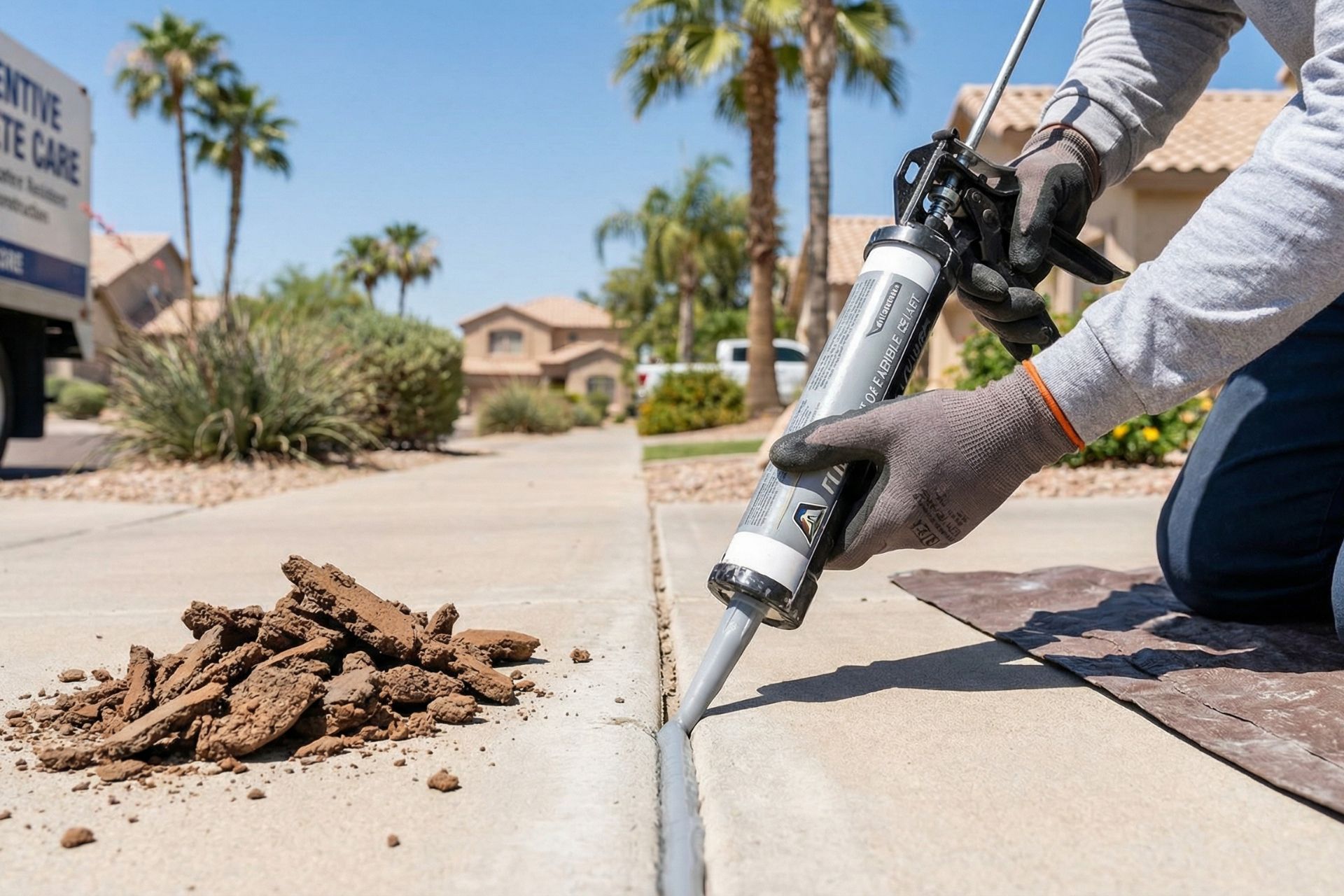
Expansion joints allow concrete to expand and contract with temperature changes without cracking. When joint material deteriorates, adjacent concrete cracks, water infiltrates causing subbase erosion, and sections settle creating the trip hazards that require correction. What begins as $75–150 joint maintenance per location becomes $800–2,000 slab repair when preventive work is deferred.
Regular joint inspection and replacement
Effective budget-friendly maintenance programs include biennial expansion joint assessment across all common-area sidewalks. Deteriorated joint material receives prompt replacement using appropriate flexible fillers that accommodate movement. This small investment—typically $50–100 per joint for material and labor—prevents the cascading failures that multiply repair costs exponentially.
Integration with slicing services
Precision Concrete Cutting offers expansion joint maintenance alongside our patented horizontal slicing services, allowing HOAs to address both immediate trip hazards and preventive joint care during single service visits. This integration maximizes efficiency while ensuring comprehensive sidewalk system care that extends infrastructure life.
Additional Budget Considerations for HOA Boards
Reserve study alignment
Sidewalk maintenance costs should align with reserve study projections for pavement and concrete infrastructure. When actual expenditures consistently exceed projections, reserve studies require updating to prevent future funding shortfalls. Conversely, effective preventive programs often reduce long-term costs below initial projections, creating reserve surplus for other infrastructure needs.
Liability versus repair cost comparison
The average California trip-and-fall settlement ranges $15,000–50,000, with severe injuries potentially exceeding $100,000. A comprehensive annual sidewalk maintenance program addressing all identified hazards typically costs HOAs $3,000–8,000 depending on community size. Even a single prevented injury claim justifies years of proactive maintenance investment.
Homeowner communication
Transparent communication about sidewalk maintenance priorities, budgets, and schedules reduces complaints while building support for necessary assessments when major work becomes unavoidable. Regular updates showing hazards addressed, inspection findings, and multi-year plans demonstrate board diligence and responsible financial stewardship.
What Precision Concrete Cutting Offers HOAs
Specialized services for association needs
We understand HOA budget constraints, approval processes, and documentation requirements. Our services specifically address association common-area needs through patented horizontal slicing that removes trip hazards with minimal dust and low environmental impact, professional patching for minor damage, and expansion joint maintenance preventing future crack development.
Note: While some repairs (like complex drainage issues or large-scale concrete pouring) may require general contractors, Precision Concrete Cutting specializes in patented horizontal slicing and also offers patching and expansion joint maintenance. We do not perform grinding or full concrete replacement.
ADA compliance expertise
Our horizontal slicing method meets compliance standards by achieving the required ¼-inch maximum height differential and proper 1:12 slope transitions. Unlike grinding, which often lowers raised sections without eliminating them completely or guaranteeing proper slope requirements, our precision slicing approach creates surfaces that meet accessibility standards while providing durable long-term performance.
Volume pricing for associations
We offer competitive rates for HOAs bundling multiple repair locations into single service events. Our team works efficiently across association properties, minimizing disruption to residents while maximizing your maintenance budget’s effectiveness.
Implement Your Budget-Friendly Maintenance Plan
Strategic HOA sidewalk repair planning transforms infrastructure maintenance from reactive crisis management into systematic asset preservation that protects residents, controls costs, and supports property values. The five strategies outlined—systematic inspections, risk-based prioritization, appropriate use of slicing, bundled repair scheduling, and preventive joint maintenance—work together creating comprehensive programs that outperform emergency-driven approaches.
Call Precision Concrete Cutting at 760-334-8921 to discuss your association’s sidewalk maintenance needs. We’ll assess your common areas, identify current hazards, and develop multi-year budget-friendly maintenance recommendations that align with your reserve funding and safety obligations. Our specialized expertise in horizontal slicing and targeted repairs helps Southern California HOAs maintain safe, compliant sidewalks without the budget strain of unnecessary full replacements.

