

Planning smart city sidewalk maintenance schedules requires understanding California’s strict ADA compliance requirements, cost-effective repair methods, and data-driven prioritization strategies. Property managers and facility owners across Southern California face complex sidewalk safety challenges while managing limited budgets—and the risks of non-compliance extend far beyond basic maintenance. This guide addresses the California regulatory landscape, proven repair technologies, and ADA compliance maintenance planning strategies that enable property owners to eliminate trip hazards, reduce liability, and optimize capital spending.
Key Information
Property owners in California are legally responsible for maintaining safe, ADA-compliant sidewalks adjacent to their properties under California Streets and Highways Code §5610. California’s Title 24 accessibility standards are stricter than federal ADA requirements, requiring vertical surface changes to not exceed ¼ inch without beveling and cross-slopes to maintain maximum 2% grades (1:48). Trip hazard violations can result in minimum $4,000 penalties per occurrence under California’s Unruh Civil Rights Act, making preventative maintenance a critical liability reduction strategy.
San Diego’s Safe Sidewalks Program currently offers permit fee holidays through June 2026 for property owners completing qualified repairs, creating an immediate opportunity for cost-effective compliance. Specialized trip hazard removal using patented horizontal slicing technology delivers 70-90% cost savings compared to traditional replacement methods. Horizontal slicing enables precise repairs that meet ADA vertical transition requirements when properly implemented.
Overview
This comprehensive guide covers Southern California’s complex sidewalk safety and ADA compliance requirements, proven repair methodologies, maintenance scheduling strategies, and liability reduction approaches specifically for property managers and facility owners. The guide addresses critical regulatory gaps, compares specialized service methods, explains GIS-powered planning capabilities, and provides actionable steps for eliminating trip hazards while controlling capital budgets. Unlike generic concrete repair advice, this resource focuses on California’s specific regulatory framework, San Diego’s current compliance opportunities, and the technical advantages of patented horizontal slicing technology for effective preventative maintenance.
California ADA Compliance Requirements for Sidewalks
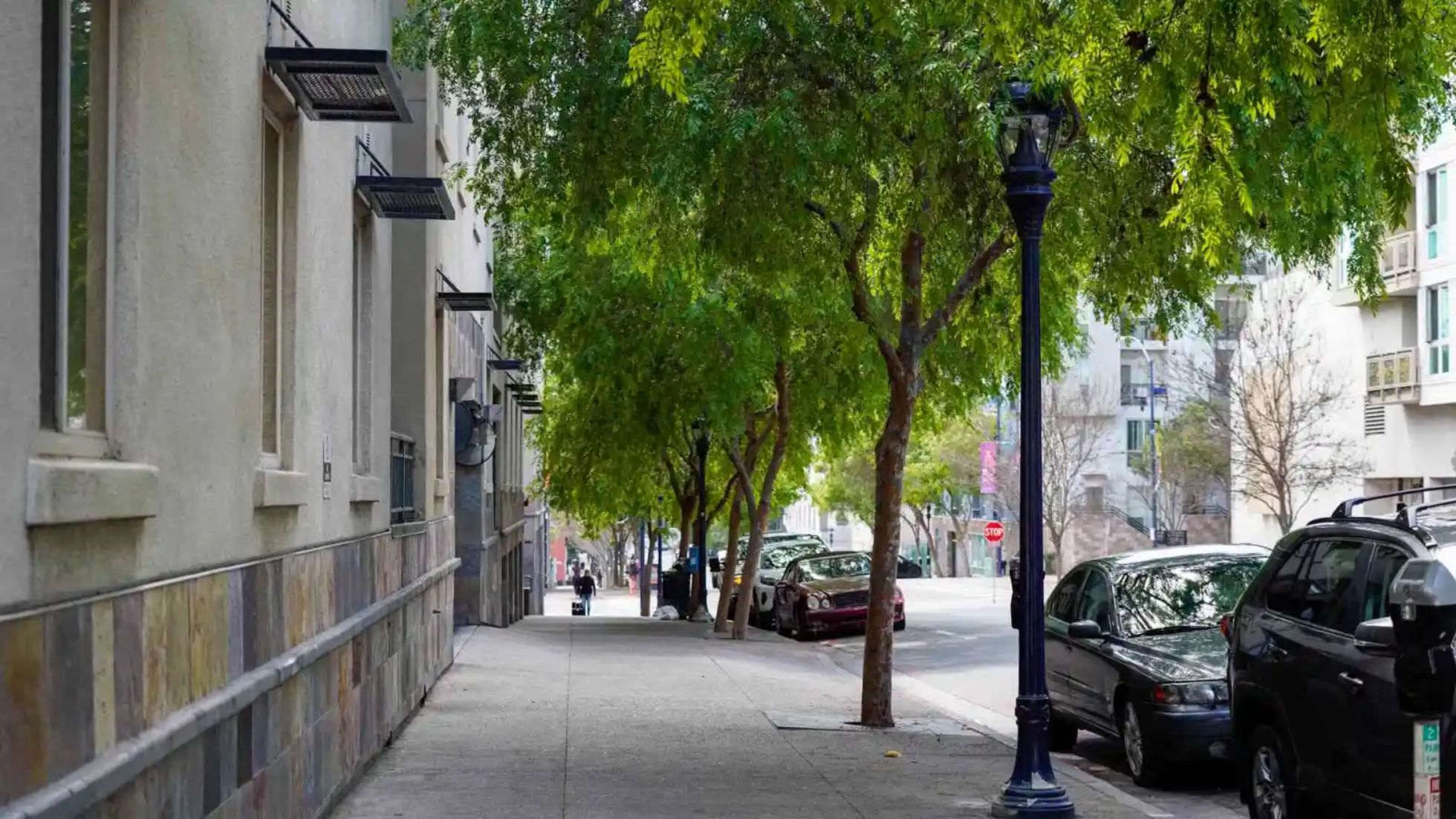 California’s accessibility requirements extend beyond federal ADA standards, creating stricter compliance obligations for property owners. California Title 24, Chapter 11B establishes specific measurements and surface specifications that property owners must maintain: vertical surface changes cannot exceed ¼ inch without beveling, cross-slopes must not exceed 2%, and surfaces must be firm, stable, and slip-resistant.
Property owner responsibility under California Streets and Highways Code §5610 creates clear legal obligation: “Owners of lots or portions of lots fronting on any portion of a public street…shall maintain any sidewalk in such condition that the sidewalk will not endanger persons or property.” This places maintenance responsibility and liability directly on property owners, regardless of whether cities technically own the sidewalk surface.
Violations carry significant financial consequences through California’s Unruh Civil Rights Act, which establishes minimum penalties of $4,000 per violation. Beyond statutory penalties, property owners face additional exposure through personal injury litigation—typical slip-and-fall settlements range from $30,000 to $100,000 depending on injury severity and legal liability determination.
San Diego’s Safe Sidewalks Program Opportunity (Winter 2025-June 2026)
The City of San Diego’s Safe Sidewalks Program currently provides permit fee holidays for property owners completing qualified sidewalk repairs, eliminating standard permitting costs through June 30, 2026. This time-limited opportunity reduces one significant barrier to preventative maintenance implementation, making it an ideal window for property managers to address existing trip hazards and plan forward-looking maintenance schedules.
Eligibility focuses on property owners with sidewalk damage resulting from age, deterioration, or private trees on their property—the very conditions that California law defines as owner maintenance responsibility. Understanding this framework helps property managers prioritize which repairs fall under their responsibility versus municipal city obligations.
Compliance Assessment and CASp Inspections
Certified Access Specialist (CASp) inspections provide property owners with documented compliance assessment and legal protection. Having professional inspection and repair documentation creates defensible evidence of good-faith compliance efforts—an important legal consideration if accessibility issues subsequently emerge. Many property owners benefit from combining CASp assessments with specialized repair methods to create a documented compliance strategy.
Patented Horizontal Slicing vs. Traditional Repair Methods
 Trip hazard removal methods vary significantly in effectiveness, cost, timeline, and long-term compliance outcomes. Understanding these differences enables property managers to select repair approaches that maximize budget efficiency while guaranteeing ADA compliance.
Horizontal Slicing (Patented Method): This specialized approach removes trip hazards by precisely slicing the concrete surface at the point of the vertical change, eliminating the hazard at its source while creating a beveled transition that meets ADA requirements. Most sidewalk repairs take approximately 15 minutes per location* using this method, allowing property managers to schedule multiple locations within a single service day. The process generates minimal dust and requires no water or chemical runoff, creating a cleaner, low-impact repair, and repairs are completed without disrupting adjacent properties or tenant access. Precision Concrete Cutting’s patented horizontal slicing technology delivers consistent, durable, long-term compliance when underlying causes are stable or managed that typically cost between $2,000-$5,000 per repair location*.
All timelines and service cost ranges are provided for general information only. Actual project duration and service costs will depend on the specific property conditions, scope of work, accessibility requirements, and agreed-upon scope of service as set forth in the written service agreement.
Traditional Grinding: Grinding addresses only the surface layer and cannot reach the edges of concrete slabs where many trip hazards originate. This method requires repeat treatment because concrete will eventually re-deteriorate, creating recurring maintenance costs and continuing liability exposure. Grinding typically costs $3,000-$7,000 per location* and often fails to achieve the slope compliance required by California Title 24, creating potential re-inspection failures. While initial grinding costs may appear lower per location, repeated treatments and failure to meet ADA slope requirements often lead to higher long-term costs
Full Slab Removal and Replacement: Complete sidewalk replacement costs $10,000-$30,000 per slab* and requires extended street closures, waste disposal, and extended project timelines. This approach represents the highest cost option and is typically necessary only for structural damage rather than trip hazard removal. Replacement also disrupts business operations during multi-day projects, creating significant tenant and customer access issues.
Cost Analysis: Implementing trip hazard removal through specialized horizontal slicing delivers 70-90% cost savings compared to replacement methods. A property with ten trip hazards could eliminate liability through specialized repair for approximately $25,000 using horizontal slicing versus $100,000-$300,000 for replacement—representing substantial capital savings while delivering identical compliance outcomes.
Why Horizontal Slicing Achieves ADA Compliance
California Title 24 requires vertical surface changes to not exceed ¼ inch. Horizontal slicing eliminates this hazard by removing the vertical change itself, creating a beveled transition that satisfies compliance requirements. Unlike grinding—which addresses only surface material—horizontal slicing targets the structural point where the vertical change occurs, preventing recurrence.
GIS-Powered Planning and Preventative Maintenance Strategy
 Modern property management requires data-driven maintenance planning rather than reactive repair approaches. GIS (Geographic Information System) mapping creates digital asset inventories that enable property managers to identify all trip hazards, prioritize repairs by liability risk and accessibility impact, and plan maintenance spending strategically.
Initial GIS Survey and Hazard Identification
A comprehensive GIS sidewalk survey documents every trip hazard, measures compliance violations precisely, and creates a digital map showing hazard locations, severity levels, and accessibility impact. This systematic assessment might take approximately 2-4 hours for a typical commercial property* depending on property size and sidewalk complexity.
All timelines and service cost ranges are provided for general information only. Actual project duration and service costs will depend on the specific property conditions, scope of work, accessibility requirements, and agreed-upon scope of service as set forth in the written service agreement.
The survey process provides multiple strategic benefits: documented evidence of property condition for insurance purposes, baseline data for measuring maintenance effectiveness, and clear prioritization guidance for budget allocation. Property managers receive detailed reporting showing exactly which repairs deliver maximum liability reduction per dollar invested.
Data-Driven Prioritization and Budget Planning
GIS data enables property managers to prioritize repairs based on multiple factors: hazard severity, accessibility impact, traffic volume through the area, and known compliance risk. High-traffic commercial areas typically warrant first priority because they present the greatest liability exposure. Secondary priority repairs address known compliance violations in areas with moderate traffic or previous accessibility complaints.
This strategic approach enables property managers to allocate limited maintenance budgets toward the highest-impact repairs first, documenting compliance improvements and liability reduction year-over-year. GIS dashboards provide visual reporting for stakeholder communication, budget justification, and insurance verification.
Preventative Maintenance Scheduling for Southern California Climate
Southern California’s extreme heat and dry climate create unique sidewalk challenges. Temperature fluctuations accelerate concrete expansion and contraction, while UV exposure degrades surface integrity faster than temperate climates. These conditions cause new trip hazards to emerge more frequently than in other regions, creating compelling justification for preventative maintenance strategies.
Quarterly or semi-annual sidewalk inspections enable property managers to identify emerging hazards before they become serious compliance violations. Scheduling inspections after significant weather events (extreme heat waves, rare rainfall) helps property managers catch climate-induced damage early, implementing repairs before liability exposure materializes.
Liability Reduction and Insurance Implications
[IMAGE: Professional commercial property consultation environment in Southern California featuring meeting space with property management documents, compliance assessment setup, professional office atmosphere, natural light, clean modern workspace, no visible text or readable documents, type=”photo”, alt=”Commercial property ADA compliance assessment San Diego California consultation”, title=”Professional ADA Compliance Consultation San Diego CA | Precision Concrete”, description=”Southern California property consultation environment showcasing professional ADA compliance assessment and strategic maintenance planning by specialized trip hazard experts”, id=”consultation-environment-section-04″]
Property managers understand that litigation represents the highest-cost outcome of sidewalk accessibility issues. Beyond regulatory penalties, personal injury settlements create significant financial exposure. Documenting systematic compliance efforts through professional assessment, data-driven repairs, and maintenance planning directly reduces insurance risk and strengthens legal positions in potential litigation.
Immediate Liability Reduction Through Professional Assessment and Repair
Implementing professional trip hazard assessment and removal provides immediate liability reduction. Once hazards are identified and removed through specialized repair, property owners can document that specific compliance violations no longer exist. This documentation becomes crucial evidence if injury claims subsequently arise—proving that the property owner addressed known hazards in a timely, professional manner.
Insurance companies recognize this liability reduction value. Properties with documented GIS assessments and systematic maintenance planning often qualify for insurance premium reductions because underwriters view preventative approaches as lower-risk profiles than reactive management. Property managers should discuss their maintenance documentation with insurance providers to explore premium adjustment opportunities.
Long-Term Risk Management Through Maintenance Planning
Beyond individual repairs, systematic maintenance planning creates a comprehensive risk management framework. GIS dashboards showing baseline conditions, repair progress, and ongoing monitoring demonstrate institutional commitment to accessibility compliance. This documentation becomes valuable if questions arise about institutional knowledge of hazards or responsiveness to accessibility issues.
Implementing Smart Maintenance Schedules: Process and Next Steps
Successful maintenance planning begins with comprehensive assessment followed by systematic repair execution and ongoing monitoring. Property managers benefit from working with specialized service providers who understand California’s regulatory framework and can integrate individual repairs into broader maintenance strategies.
Assessment and Prioritization Phase
The initial consultation establishes baseline conditions, identifies all trip hazards through professional assessment, and develops a prioritized repair schedule aligned with budget constraints and compliance urgency. This phase might take 1-2 weeks* depending on property complexity and decision-making timelines.
All timelines and service cost ranges are provided for general information only. Actual project duration and service costs will depend on the specific property conditions, scope of work, accessibility requirements, and agreed-upon scope of service as set forth in the written service agreement.
Property managers should consider scheduling initial assessments during the current San Diego Safe Sidewalks Program permit fee holiday window, enabling faster project implementation while fees are waived.
Repair Execution and Documentation
Once prioritization is established, specialized repair teams implement repairs according to schedule, maintaining detailed documentation of completion, photographic evidence of compliance, and GIS records updated to reflect repair status. This systematic documentation creates the compliance evidence that supports insurance applications, ADA compliance assertions, and potential litigation defense.
Ongoing Monitoring and Maintenance Planning
Smart maintenance schedules include periodic inspection intervals aligned with Southern California’s climate conditions. Quarterly or semi-annual inspections enable early identification of emerging hazards, preventing compliance violations from developing. This ongoing vigilance approach converts sidewalk maintenance from reactive emergency response into strategic preventative planning.
Frequently Asked Questions About Southern California Sidewalk Compliance
What makes a sidewalk trip hazard under California law?
California Title 24 defines vertical surface changes exceeding ¼ inch as potential trip hazards requiring correction. Any vertical displacement—whether from concrete settling, tree root damage, or age-related deterioration—that exceeds this threshold creates ADA compliance violation and liability exposure.
How quickly can trip hazards be removed if discovered?
Specialized horizontal slicing repairs typically take 15 minutes per location*, enabling property managers to address multiple hazards within a single service day. This rapid timeline minimizes disruption while providing immediate liability reduction.
All timelines and service cost ranges are provided for general information only. Actual project duration and service costs will depend on the specific property conditions, scope of work, accessibility requirements, and agreed-upon scope of service as set forth in the written service agreement.
Are property owners responsible for sidewalk damage caused by tree roots or other natural factors?
Yes. California law holds property owners responsible for maintaining safe sidewalks regardless of damage cause. Tree roots, weather damage, age deterioration, or any other factor creating trip hazards falls under property owner maintenance obligation.
What documentation should property managers maintain for compliance?
GIS assessments, professional inspection reports, photographs of repairs, and repair completion dates create the documentation foundation. This evidence demonstrates systematic compliance efforts and good-faith accessibility management if questions subsequently arise.
Can property owners implement maintenance schedules without full sidewalk replacement?
Yes, absolutely. Strategic trip hazard removal using specialized cutting techniques enables property owners to maintain safe, compliant sidewalks at a fraction of replacement costs. Most commercial properties can address all identified hazards through targeted removal without requiring full slab replacement.
How often should sidewalks be inspected?
Minimum annual inspection is standard practice for ADA compliance verification. Southern California property owners benefit from semi-annual or quarterly inspections given climate-accelerated deterioration, enabling early identification of emerging hazards.
What are the penalties for failing ADA compliance inspection?
Minimum penalties under California’s Unruh Civil Rights Act are $4,000 per violation. Additional penalties may apply through federal ADA enforcement, and personal injury settlements can reach $30,000-$100,000+ depending on injury severity.
Does San Diego’s Safe Sidewalks Program apply to private property?
Yes, the permit fee holiday applies to qualifying private property repairs during the Winter 2025-June 2026 window. Property owners with existing trip hazards should consider scheduling repairs during this period to eliminate permitting costs.
How does specialized horizontal slicing differ from traditional concrete grinding?
Horizontal slicing eliminates trip hazards by removing the vertical surface change itself, creating an ADA-compliant beveled transition. Grinding addresses only surface material and cannot reach slab edges, often failing to achieve compliance requirements and requiring repeat treatment.
What should property managers look for when selecting a concrete repair contractor?
Property managers should verify California CSLB C-8 concrete contractor licensing, request references for similar commercial projects, and confirm specialized experience with ADA-compliant trip hazard removal. Contractors using patented technology or with GIS planning capabilities provide additional strategic value.
Conclusion and Next Steps
Smart sidewalk maintenance schedules require integrating California’s strict ADA compliance framework with cost-effective repair technologies and data-driven planning strategies. Property managers who move beyond reactive repair approaches toward systematic assessment, prioritized implementation, and ongoing monitoring effectively eliminate liability exposure while optimizing capital spending.
The current San Diego Safe Sidewalks Program permit fee holiday through June 2026 creates an immediate opportunity for property owners to address existing trip hazards and establish systematic maintenance planning without standard permitting costs. Beginning with professional assessment, property managers can develop prioritized repair schedules that deliver maximum compliance and liability reduction per dollar invested.
Precision Concrete Cutting’s patented horizontal slicing technology and 25+ years of Southern California expertise enable property managers to implement strategic maintenance schedules with confidence. For property owners facing sidewalk safety challenges, compliance deadlines, or budget constraints, professional consultation and assessment provide the clarity needed to develop effective, sustainable maintenance strategies.
Service Consultation Disclaimer
This article provides general information about Southern California ADA compliance and sidewalk safety and should not be considered as specific technical advice for your property. Compliance requirements, repair methods, and procedures vary significantly based on individual property conditions, jurisdiction within California, and specific accessibility needs. Project schedules, service timelines, and maintenance processes can be affected by many factors specific to each property.
All timelines and service cost ranges are provided for general information only. Actual project duration and service costs will depend on the specific property conditions, scope of work, accessibility requirements, and agreed-upon scope of service as set forth in the written service agreement.
For confidential assessment and specialized service for your specific Southern California property, contact Precision Concrete Cutting or 760-334-8921. Our patented horizontal slicing specialists will provide personalized technical analysis based on your specific property conditions and compliance requirements. No service agreement is created by reading this article.
Sources
California Regulatory Resources
-
California Streets and Highways Code §5610 – Legal framework establishing property owner maintenance responsibility for adjacent sidewalks and liability obligations
-
California Unruh Civil Rights Act (Civil Code §51) – State law establishing minimum $4,000 penalties per ADA violation and enforcement framework
-
California Title 24 Building Code Chapter 11B – California-specific ADA accessibility standards requiring stricter compliance than federal requirements
-
City of San Diego Safe Sidewalks Program – Municipal sidewalk maintenance policy and current permit fee holiday information through June 2026
Federal ADA Compliance Resources
-
U.S. Access Board ADA Accessibility Standards – Federal ADA baseline accessibility requirements for public sidewalks and commercial properties
-
U.S. Department of Justice ADA Title III Requirements – Federal compliance framework for private businesses and commercial property owners
Professional and Industry Sources
-
California Contractors State License Board (CSLB) – Verification of contractor licensing requirements and C-8 concrete contractor credentials
-
California Division of State Architect CASp Program – Certified Access Specialist inspection protocols and compliance documentation standards
-
Preventive Maintenance Best Practices for Municipal Infrastructure – ROI framework demonstrating $1 preventive maintenance investment saves $5-25 in reactive emergency repairs

