
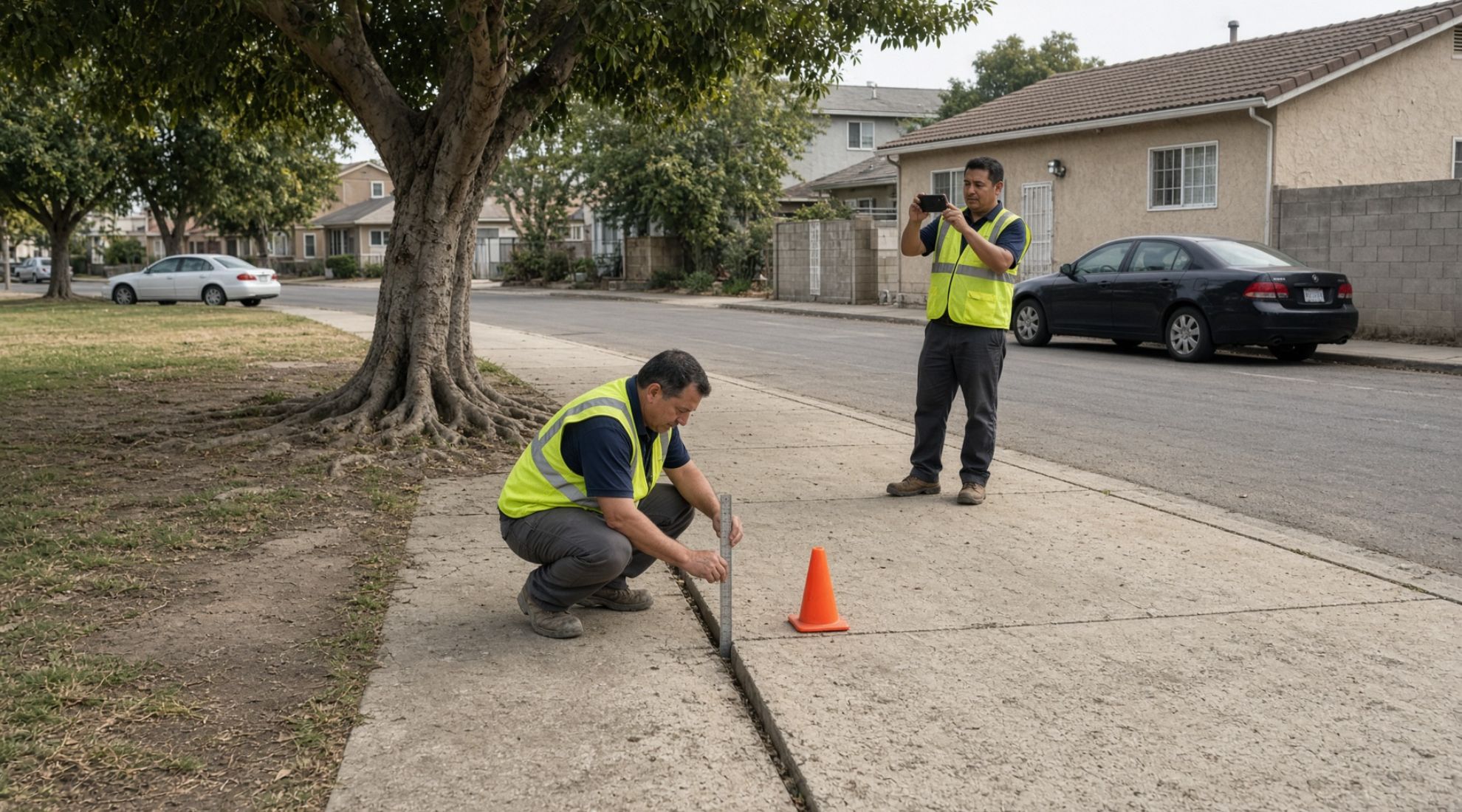
For California public works departments, sidewalk maintenance represents a complex balancing act: limited budgets,
miles of aging infrastructure, strict ADA compliance requirements, and growing liability exposure. When a single
trip-and-fall lawsuit can cost a municipality $50,000 to $500,000, effective trip hazard management
isn’t optional—it’s essential fiscal responsibility.
Yet many departments struggle with reactive approaches: responding to complaints, addressing only the most severe
hazards, and watching repair backlogs grow while budgets remain flat. This article explores how public works
sidewalk repair strategies can shift from costly crisis management to efficient, proactive programs
that reduce liability, improve community safety, and maximize taxpayer value.
Precision Concrete Cutting works with Southern California municipalities to implement cost-effective
trip hazard removal using patented horizontal slicing—a technique that addresses high volumes of hazards faster and
more affordably than traditional methods.
The Scale of the Sidewalk Safety Challenge
Understanding the scope helps public works directors prioritize resources effectively.
California’s Aging Sidewalk Infrastructure
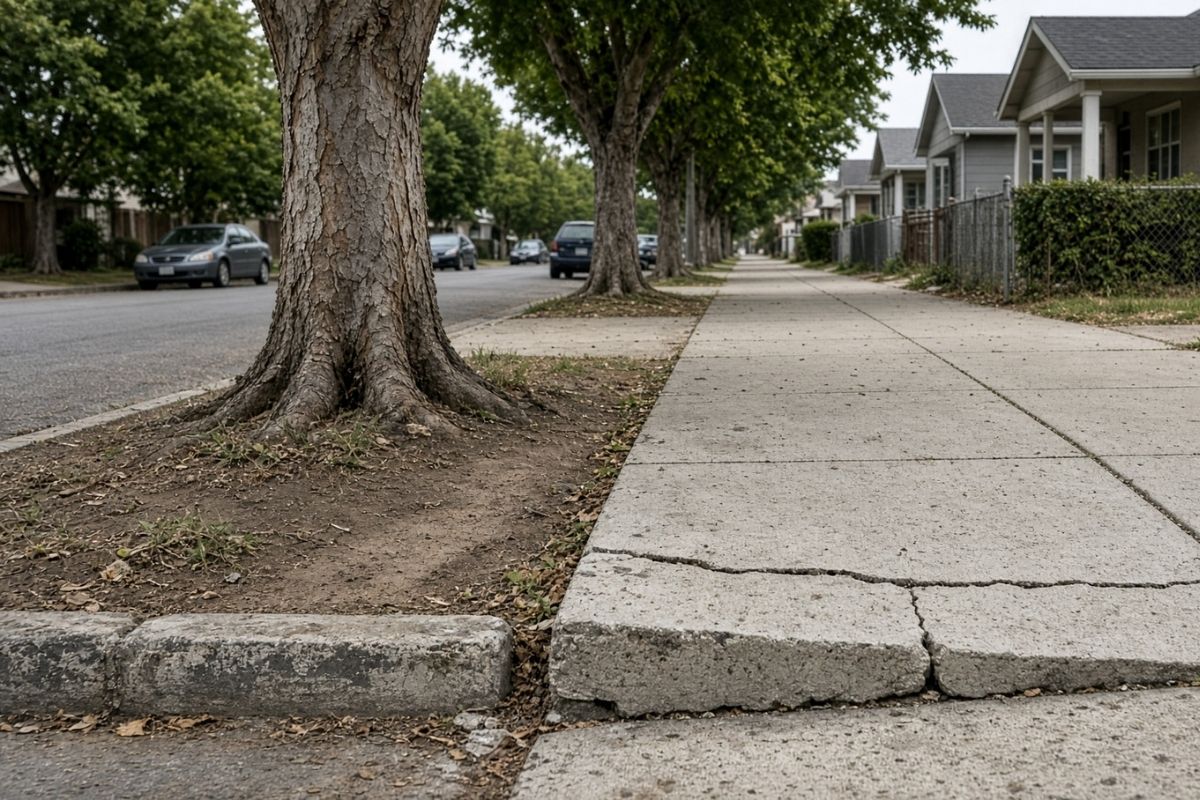
Many California cities manage sidewalk systems installed 40-70 years ago. Decades of tree root growth, soil movement,
seismic activity, and weathering have created widespread trip hazards across municipalities.
A typical mid-sized Southern California city manages:
- 200-500 miles of sidewalk
- Hundreds or thousands of identified trip hazards
- Limited annual repair budgets ($500K-2M)
- Competing priorities (roads, utilities, parks)
The Liability Burden
California Government Code Section 835 establishes municipal liability for dangerous conditions on public property.
When sidewalks create foreseeable risks that cause injuries, cities face:
- Direct settlement costs: $15,000-$100,000+ per claim
- Legal defense fees: Even successful defenses cost thousands
- Insurance premium increases: Claims history drives rates up
- Staff time: Investigation, depositions, court appearances
For many municipalities, liability claims now exceed the annual sidewalk maintenance budget—making prevention a clear
financial priority.
ADA Compliance Requirements
The Americans with Disabilities Act requires public entities to maintain accessible pathways. California courts have
consistently held that:
- Vertical displacements exceeding ¼ inch constitute barriers
- Municipalities must have transition plans for achieving compliance
- Documented inaction can increase liability exposure
- Reactive-only approaches may not demonstrate adequate effort
Proactive trip hazard management isn’t just about safety—it’s about meeting legal obligations to
provide accessible public spaces.
 Strategy 1: Implement Systematic Inspection Programs
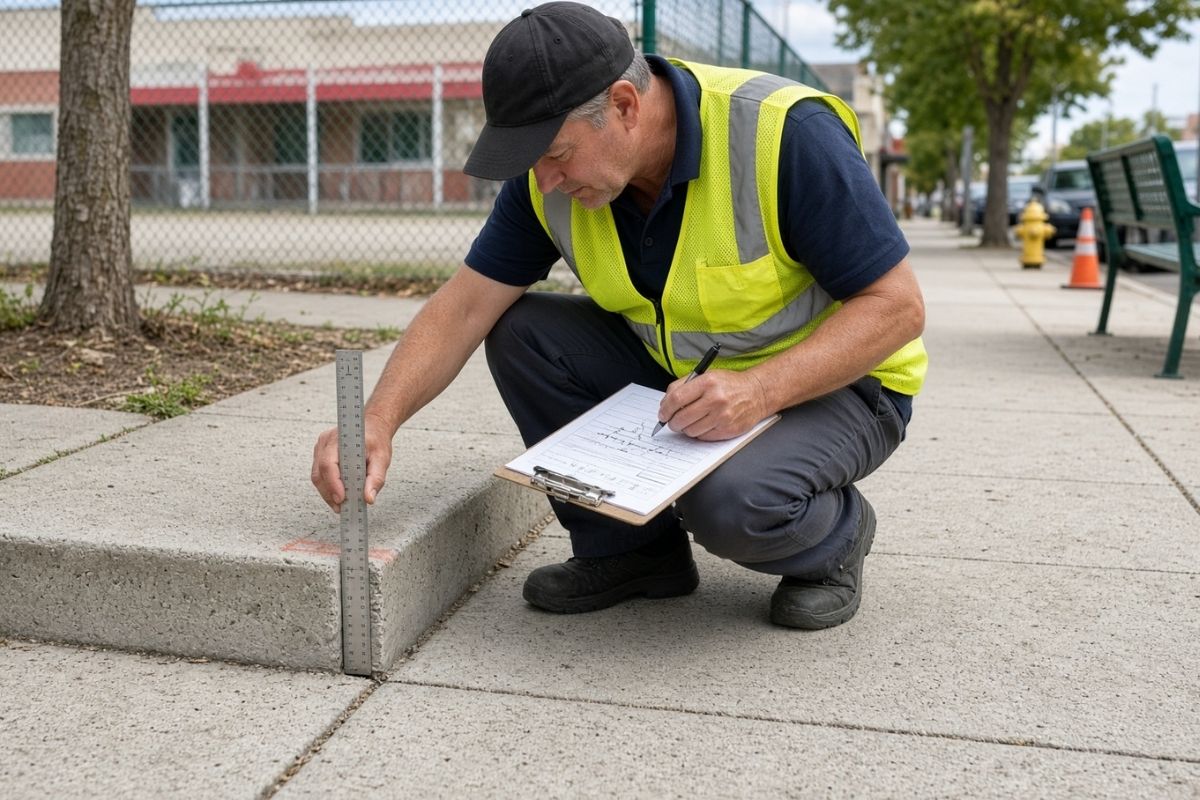
You can’t prioritize what you haven’t identified. Systematic inspections transform public works sidewalk
repair from reactive to strategic.
Annual Assessment Cycles
Establish regular inspection schedules rather than relying solely on citizen complaints:
- High-traffic areas: Downtown, schools, transit stops annually
- Moderate-traffic zones: Residential neighborhoods every 2-3 years
- Low-traffic areas: Industrial, low-density zones every 3-5 years
Prioritization Criteria
When inspections reveal more hazards than budget allows, prioritize based on:
Risk factors:
- Height difference severity (¾”+ = highest priority)
- Pedestrian volume (schools, transit, downtown)
- Vulnerable populations (senior centers, hospitals)
- Previous incident history
- Lighting conditions (poorly lit areas increase risk)
ADA considerations:
- Access routes to public facilities
- Bus stops and transit connections
- Crosswalk approaches
- Government building pathways
Technology-Enhanced Inspections
Modern tools improve inspection efficiency:
- Mobile inspection apps: Field staff document hazards with GPS coordinates and photos
- GIS integration: Map hazards, track repairs, analyze patterns
- Automated measurement tools: Digital gauges ensure consistency
- Pedestrian traffic data: Focus resources where exposure is highest
Strategy 2: Adopt Cost-Effective Repair Methods
Traditional full-depth replacement costs $30-50 per square foot—unsustainable for high-volume municipal programs.
Alternative approaches deliver better value.
Horizontal Slicing for Trip Hazard Removal
Precision Concrete Cutting’s patented horizontal slicing technique removes raised concrete sections flush with
adjacent slabs, creating ADA-compliant surfaces at a fraction of replacement costs.
How it works:
- Specialized equipment precisely cuts raised concrete horizontally
- Removes only the elevated portion
- Leaves a clean, flush finish meeting ¼-inch ADA standards
- Preserves the existing sidewalk structure
Municipal advantages:
- Cost efficiency: Typically 40-60% less than replacement
- Speed: Address 10-20+ hazards per day
- Minimal disruption: No extended closures or curing time
- Low environmental impact: Minimal dust, no disposal of large concrete sections
- Immediate use: Pathways open immediately after work
Strategic Patching
For cracks and minor surface defects, professional patching prevents progression into larger failures. This maintains
sidewalk integrity between major capital improvements.
Expansion Joint Maintenance
Maintaining expansion joints prevents the cracks and settling that create future trip hazards. This preventive
measure offers excellent ROI by extending sidewalk lifespan and reducing emergency repairs.
When Full Replacement Is Necessary
Some situations require general contractors for extensive work:
- Structural failure or deep deterioration
- Large-scale reconstruction projects
- Drainage modifications
- Complete corridor rebuilds
By reserving replacement for truly necessary cases and using horizontal slicing for trip hazard removal, departments
stretch limited budgets significantly further.
Note: While some repairs (like complex drainage issues or large-scale concrete pouring) may
require general contractors, Precision Concrete Cutting specializes in patented horizontal slicing and also
offers patching and expansion joint maintenance. We do not perform grinding or full concrete replacement.
Strategy 3: Develop Multi-Year Capital Improvement Plans
Single-year budgets create stop-start cycles that limit efficiency. Multi-year planning enables strategic
trip hazard management.
Five-Year Sidewalk Programs
Develop comprehensive plans that include:
- Baseline assessment: Complete inventory of sidewalk conditions
- Prioritized repair schedule: Highest-risk areas first, working toward comprehensive coverage
- Budget projections: Realistic annual allocations based on inspection data
- Performance metrics: Track hazards removed, incidents reduced, compliance progress
Predictable Contractor Relationships
Multi-year commitments enable volume pricing and scheduling efficiency:
- Negotiate favorable rates for guaranteed work volumes
- Reduce mobilization costs through batched projects
- Build working relationships with reliable contractors
- Streamline administrative overhead
Grant Funding Opportunities
Comprehensive plans strengthen applications for:
- State ADA compliance grants
- Safe Routes to School funding
- Active transportation infrastructure programs
- Climate resilience and sustainability grants
Strategy 4: Leverage Data to Demonstrate Progress
Elected officials and community members need evidence that public works sidewalk repair investments
deliver results.
Key Performance Indicators
Track metrics that demonstrate program effectiveness:
- Hazards identified vs. remediated: Show backlog reduction
- ADA compliance percentage: Document progress toward full accessibility
- Trip-and-fall incidents: Demonstrate safety improvements
- Liability claim trends: Show financial impact of prevention
- Cost per hazard removed: Prove efficiency gains
- Citizen complaint response time: Track service responsiveness
Before/After Documentation
Photos and measurements provide powerful evidence:
- Document pre-repair hazard severity
- Measure height differences precisely
- Photograph completed repairs
- Verify compliance with ADA standards
Public Communication
Share progress through:
- Annual sidewalk safety reports
- Interactive online maps showing repair status
- Social media updates on completed projects
- City council presentations with data visualization
Transparency builds public support for continued investment in sidewalk safety.
Strategy 5: Establish Clear Maintenance Responsibility Policies
California law varies by jurisdiction regarding property owner vs. municipal sidewalk responsibility. Clear policies
reduce confusion and improve compliance.
Define Jurisdictional Standards
Municipalities should establish and communicate:
- Who is responsible for repairs (city, property owner, or shared)
- What constitutes a hazard requiring repair (¼ inch vertical displacement)
- Timeframes for addressing identified hazards
- Cost-sharing programs if applicable
- Enforcement mechanisms for non-compliance
Property Owner Partnership Programs
Some jurisdictions successfully share responsibility through:
- 50/50 programs: City and property owner split repair costs
- Rebate programs: Reimbursement for owner-funded repairs meeting standards
- Approved contractor lists: Ensure quality work through pre-qualified vendors
These approaches leverage private resources to expand repair capacity beyond municipal budgets alone.
Proactive Notification
When property owners are responsible, establish notification procedures:
- Written notice of identified hazards
- Reasonable repair timeframes (60-90 days)
- Information about approved methods and contractors
- Consequences of non-compliance
- Appeal or hardship accommodation processes
Addressing Common Municipal Challenges
Public works directors face practical obstacles to implementing effective trip hazard management.
Here’s how to overcome common barriers.
Budget Constraints
Challenge: Sidewalk repair competes with roads, utilities, and other critical infrastructure.
Solutions:
- Demonstrate ROI through liability cost avoidance
- Use cost-effective methods like horizontal slicing to maximize coverage
- Pursue grants specifically for accessibility improvements
- Partner with property owners through cost-share programs
- Show how preventive maintenance reduces long-term costs
Political Pressure for Immediate Action
Challenge: Elected officials respond to constituent complaints demanding instant fixes.
Solutions:
- Develop transparent prioritization criteria that withstand scrutiny
- Provide council with data showing how resources are allocated
- Offer rapid response for highest-risk hazards
- Communicate multi-year plans showing all neighborhoods will benefit
- Temporary measures (warning signs, markings) for hazards awaiting repair
Staffing Limitations
Challenge: Small departments lack dedicated sidewalk inspection teams.
Solutions:
- Train field crews across departments to report hazards
- Leverage citizen reporting through online portals and apps
- Contract inspection services during comprehensive assessments
- Use GIS tools to streamline documentation and tracking
Tree vs. Sidewalk Conflicts
Challenge: Tree roots cause sidewalk lifting, creating ongoing hazards.
Solutions:
- Horizontal slicing addresses immediate trip hazards
- Coordinate with urban forestry on long-term root management
- Consider root barriers during major sidewalk reconstruction
- Tree replacement programs using less-invasive species
- Refer complex root/drainage issues to general contractors as needed
Case Study Benefits: Proactive vs. Reactive Approaches
Consider two hypothetical Southern California cities of similar size to illustrate the impact of strategic
public works sidewalk repair:
City A: Reactive Approach
- Repairs only in response to complaints and claims
- Uses primarily full-depth replacement
- Annual budget: $1.2M for repairs
- Addresses approximately 200 hazards per year
- Liability claims: 8-12 annually, costing $300K-600K
- Growing backlog of identified hazards
- ADA compliance estimated at 45%
City B: Proactive Approach
- Systematic inspection program with prioritization
- Uses horizontal slicing for most trip hazard removal
- Annual budget: $1.2M for repairs
- Addresses approximately 600-800 hazards per year
- Liability claims: 2-4 annually, costing $80K-150K
- Steadily reducing backlog
- ADA compliance estimated at 70% and improving
City B’s strategic approach addresses 3-4 times more hazards with the same budget while significantly reducing
liability exposure—demonstrating the financial and safety impact of prioritized, cost-effective methods.
Working with Precision Concrete Cutting
Precision Concrete Cutting helps Southern California public works departments implement efficient trip hazard
management through:
High-Volume Capacity
Our specialized equipment and experienced crews address multiple hazards daily, enabling municipalities to make
significant progress on backlogs.
ADA-Compliant Solutions
Our patented horizontal slicing technique meets compliance standards by reducing vertical displacements to ¼ inch or
less, creating durable, accessible pathways.
Flexible Scheduling
We work with municipal schedules, traffic management requirements, and community considerations to minimize
disruption.
Transparent Pricing
Volume pricing for multi-year contracts helps departments maximize budget efficiency and plan accurately.
Documentation Support
We provide detailed records of work performed, including before/after measurements and photos, supporting your
compliance documentation and performance reporting.
 Get Started: Improve Your Sidewalk Safety Program
Effective public works sidewalk repair requires strategic planning, cost-effective methods, and
commitment to proactive trip hazard management. The municipalities that succeed are those that
shift from reactive crisis response to systematic, data-driven programs.
Whether your department is just beginning to address sidewalk safety or looking to optimize an existing program, the
strategies outlined here provide a roadmap for reducing liability, improving accessibility, and maximizing taxpayer
value.
Partner with Precision Concrete Cutting
Contact us at 760-334-8921 to discuss how our patented horizontal slicing technique can help your
Southern California municipality address trip hazards more efficiently.
We’ll provide:
- Free assessment of your specific needs
- Cost comparisons showing potential savings
- Volume pricing for multi-year programs
- Recommendations tailored to your budget and priorities
Call 760-334-8921 today to schedule your consultation. Let’s work together to make your
community’s sidewalks safer and more accessible.

