

Your home’s sidewalks endure more stress than you might realize. Daily foot traffic, delivery carts, bicycles,
and—most damaging—vehicles driving or parking on concrete not designed for automotive weight all take their toll.
Over time, this stress creates cracks, settling, and trip hazards that compromise both safety and
curb appeal.
The good news? Simple preventive measures can significantly extend your sidewalk’s lifespan and reduce costly
repairs. This guide covers practical sidewalk damage prevention strategies for Southern California
homeowners, plus what to do when damage does occur.
 Understanding What Damages Sidewalks
Effective prevention starts with understanding the primary causes of sidewalk damage.
Vehicle Overloading
Residential sidewalks are designed for pedestrian traffic—typically rated for 50-100 pounds per square inch. Vehicles
exert far greater pressure:
- Passenger cars: 30-40 PSI per tire
- SUVs and trucks: 35-50 PSI per tire
- Delivery trucks: 80-120+ PSI per tire
When vehicles repeatedly cross or park on standard 4-inch residential sidewalks, the concrete flexes beyond its
design limits, creating stress fractures that eventually become visible cracks and settlement.
Concentrated Foot Traffic
While individual footsteps don’t damage concrete, concentrated patterns cause uneven wear:
- High-traffic paths to frequently used doors
- Areas where people regularly stand or gather
- Paths worn by daily routines (mailbox, garbage can routes)
Tree Root Pressure
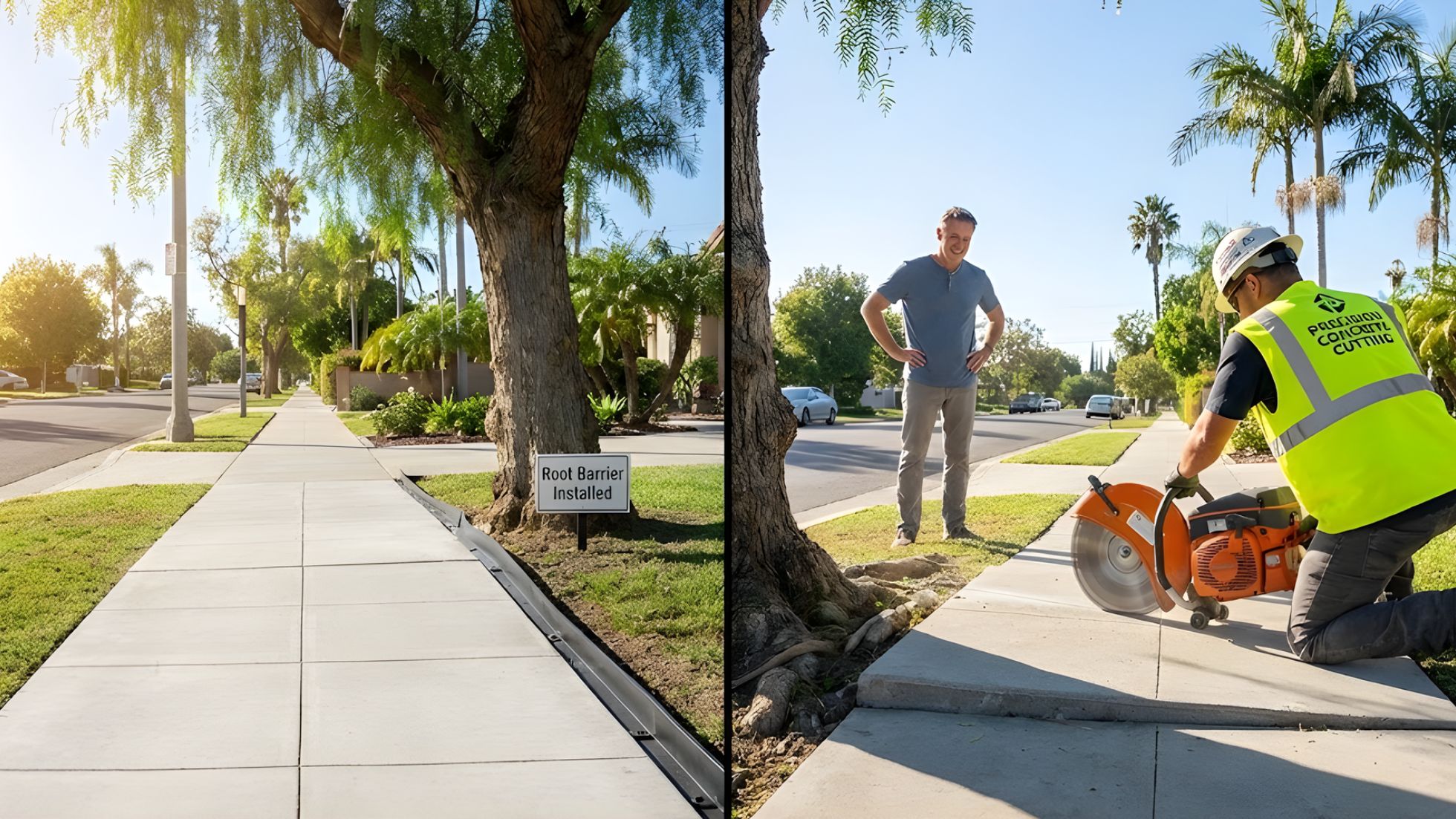
Southern California’s mature trees add significant value to properties but commonly lift adjacent sidewalks as roots
expand. This creates raised sections and trip hazards that worsen over time.
Soil Movement
California’s diverse soil types—particularly expansive clays—shift with moisture changes. This movement stresses
concrete from below, causing sections to settle unevenly or crack.
Weather and Age
Years of sun exposure, occasional rain penetration, and temperature cycling gradually weaken concrete. Combined with
other stressors, aging concrete becomes increasingly vulnerable to damage.
Prevention Strategy 1: Control Vehicle Access
The most impactful sidewalk damage prevention measure is keeping vehicles off residential walkways.
Physical Barriers
Consider installing barriers where vehicles commonly encroach:
- Decorative bollards: Attractive posts that prevent vehicle access while enhancing curb appeal
- Large planters: Heavy containers with plants serve as natural barriers
- Landscape boulders: Natural-looking obstacles that deter shortcuts
- Low walls or fencing: Define boundaries while protecting walkways
Driveway Considerations
If vehicles regularly cross your sidewalk to access the driveway:
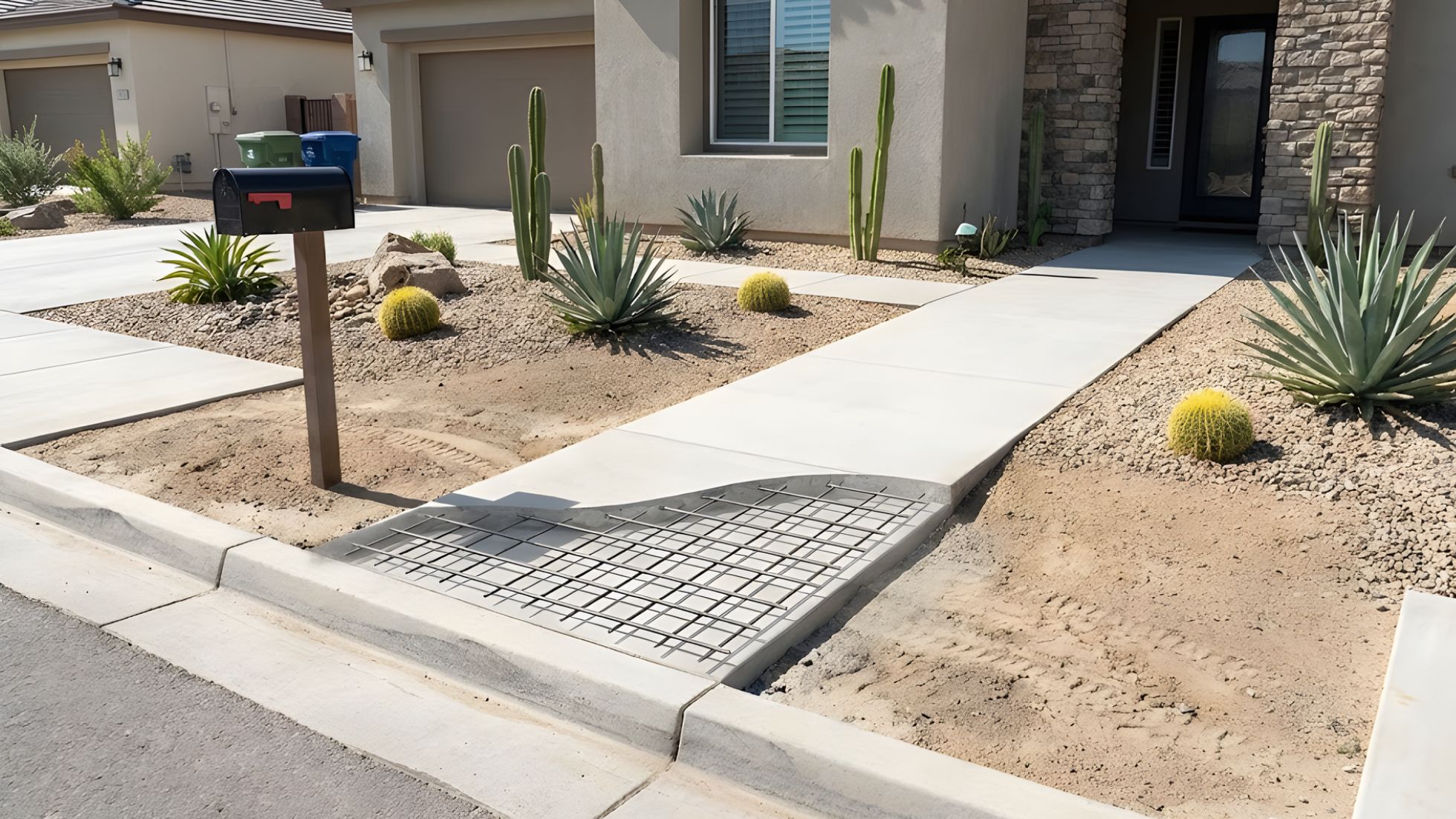
- Ensure the driveway apron (where it crosses the sidewalk) is properly reinforced
- This section should be thicker concrete designed for vehicle weight
- If damage occurs at this crossing, professional assessment can determine if reinforcement is needed
Delivery and Service Vehicles
Large delivery trucks and service vehicles cause significant damage when they drive on or across sidewalks:
- Provide clear driveway access to discourage sidewalk shortcuts
- Consider designated delivery zones that don’t require sidewalk crossing
- If repeated damage occurs from utility or service access, consult with providers about alternatives
Prevention Strategy 2: Maintain Proper Drainage
Water is concrete’s hidden enemy. Proper drainage prevents multiple damage mechanisms.
Why Drainage Matters
- Soil erosion: Water washing away soil beneath slabs causes settlement and cracking
- Freeze-thaw damage: While rare in San Diego, water in cracks can expand during cold snaps
- Soil expansion: Clay soils absorb water and swell, putting upward pressure on concrete
- Foundation undermining: Persistent moisture weakens the base supporting your sidewalk
Drainage Best Practices
- Grade landscaping away from walkways: Soil should slope so water flows away, not toward
sidewalks - Clean gutters and downspouts: Ensure roof water drains away from sidewalk areas
- Maintain sprinkler direction: Adjust irrigation heads that spray directly onto concrete
- Address pooling promptly: Standing water after rain indicates drainage issues needing
correction
Note: While some repairs (like complex drainage issues or large-scale concrete pouring) may
require general contractors, Precision Concrete Cutting specializes in patented horizontal slicing and also
offers patching and expansion joint maintenance. We do not perform grinding or full concrete replacement.
Prevention Strategy 3: Protect Expansion Joints
Expansion joints—the gaps between sidewalk sections—are critical for sidewalk damage prevention.
Why Joints Matter
Concrete expands and contracts with temperature changes. Joints provide space for this movement, preventing:
- Pressure buildup that causes cracking
- Buckling when sections push against each other
- Stress fractures from constrained movement
Joint Maintenance Tips
- Keep joints clear: Remove debris, soil, and vegetation that accumulates in joints
- Check joint filler: Original filler material deteriorates over time and may need replacement
- Prevent water infiltration: Gaps in joint material allow water beneath the slab
- Professional maintenance: Precision Concrete Cutting offers expansion joint maintenance to keep
these critical features functioning properly
Prevention Strategy 4: Manage Tree Root Impact
Trees and sidewalks can coexist with proper management.
Proactive Monitoring
- Inspect sidewalks near trees annually for signs of lifting
- Watch for subtle changes before they become major displacement
- Address small height differences early, before they exceed ¼ inch ADA thresholds
When Roots Cause Damage
If tree roots have already lifted sidewalk sections:
- Precision Concrete Cutting’s patented horizontal slicing removes the raised concrete, eliminating the immediate
trip hazard - For ongoing root problems, consult with arborists about root management options
- In severe cases, general contractors may be needed for more extensive work
Choosing New Trees
When planting near sidewalks, select species with less aggressive root systems. Your local nursery or arborist can
recommend trees appropriate for Southern California that are less likely to damage hardscaping.
Prevention Strategy 5: Address Small Problems Early
The most cost-effective sidewalk damage prevention is catching issues before they grow.
What to Watch For
During routine property maintenance, look for:
- Hairline cracks: May be cosmetic but can allow water penetration that worsens damage
- Height differences: Any noticeable step between sections—¼ inch or more is a trip hazard
- Corner chips: Often indicate underlying stress or impact damage
- Spalling: Surface flaking that exposes aggregate
- Settlement: Sections that have sunk relative to neighbors
Early Intervention Options
For cracks: Professional patching prevents water infiltration and stops progression
For raised sections: Horizontal slicing removes trip hazards while they’re still minor, at lower
cost than waiting for major displacement
For settling: Early attention prevents the problem from worsening; severe settlement may eventually
require contractor involvement
 What to Do When Damage Occurs
Despite best prevention efforts, damage sometimes happens. Here’s how to respond:
Assess the Severity
- Minor cracking: Monitor for progression; consider patching
- Raised sections (trip hazards): Address promptly for safety—horizontal slicing is often the
most cost-effective solution - Major structural damage: Consult professionals to determine appropriate repair method
Document the Condition
Take photos showing:
- Overall condition of affected area
- Close-ups of specific damage
- Measurements of height differences if applicable
This documentation helps contractors provide accurate quotes and serves as a record of property maintenance.
Get Professional Assessment
For trip hazards and significant damage, contact Precision Concrete Cutting for evaluation. We’ll
determine whether horizontal slicing, patching, or other solutions best address your specific situation.
Seasonal Considerations for Southern California
San Diego’s climate creates specific sidewalk damage prevention considerations:
Summer Heat
- Concrete expands in extreme heat—properly maintained joints accommodate this movement
- Thermal cycling stresses weakened areas
- Ideal time for repairs: moderate temperatures improve patching results
Winter Rain
- Increased moisture can cause soil movement beneath slabs
- Water infiltrating cracks accelerates deterioration
- Inspect after rainy periods for new settlement or damage
Year-Round Vigilance
- Southern California’s mild climate means tree roots grow continuously
- No “off-season” for sidewalk monitoring
- Regular attention catches problems regardless of season
When Prevention Isn’t Enough
Even with excellent maintenance, sidewalks eventually develop problems requiring professional attention. The key is
choosing appropriate solutions:
Horizontal Slicing for Trip Hazards
Precision Concrete Cutting’s patented technique removes raised sections flush with adjacent slabs:
- Eliminates trip hazards meeting ADA compliance standards
- Preserves existing sidewalk structure
- Creates durable, long-term results
- Minimal dust and low environmental impact
- Typically costs significantly less than replacement
Professional Patching
For cracks and surface damage, quality patching prevents progression and maintains appearance.
Expansion Joint Maintenance
Replacing deteriorated joint filler protects against future damage from concrete expansion and water infiltration.
The Value of Proactive Maintenance
Investing in sidewalk damage prevention and early intervention pays dividends:
- Safety: Protected walkways reduce trip-and-fall risks for family and visitors
- Cost savings: Early repairs cost far less than major replacements
- Curb appeal: Well-maintained sidewalks enhance property appearance
- Property value: Buyers notice deferred maintenance and adjust offers accordingly
- Liability protection: Proactive care demonstrates reasonable property maintenance
Get Started: Protect Your Sidewalks Today
Whether your sidewalks show early warning signs or you want to establish a preventive maintenance plan, taking action
now protects your investment and your family’s safety.
Precision Concrete Cutting helps Southern California homeowners address trip hazards and maintain
safe walkways through our patented horizontal slicing technique, patching services, and expansion joint maintenance.
Schedule Your Free Assessment
Call 760-334-8921 to have our team evaluate your sidewalks. We’ll identify any existing hazards,
recommend appropriate solutions, and provide transparent pricing for any needed work.
Contact Precision Concrete Cutting today at 760-334-8921. Keep your walkways safe and
your property looking great!

