
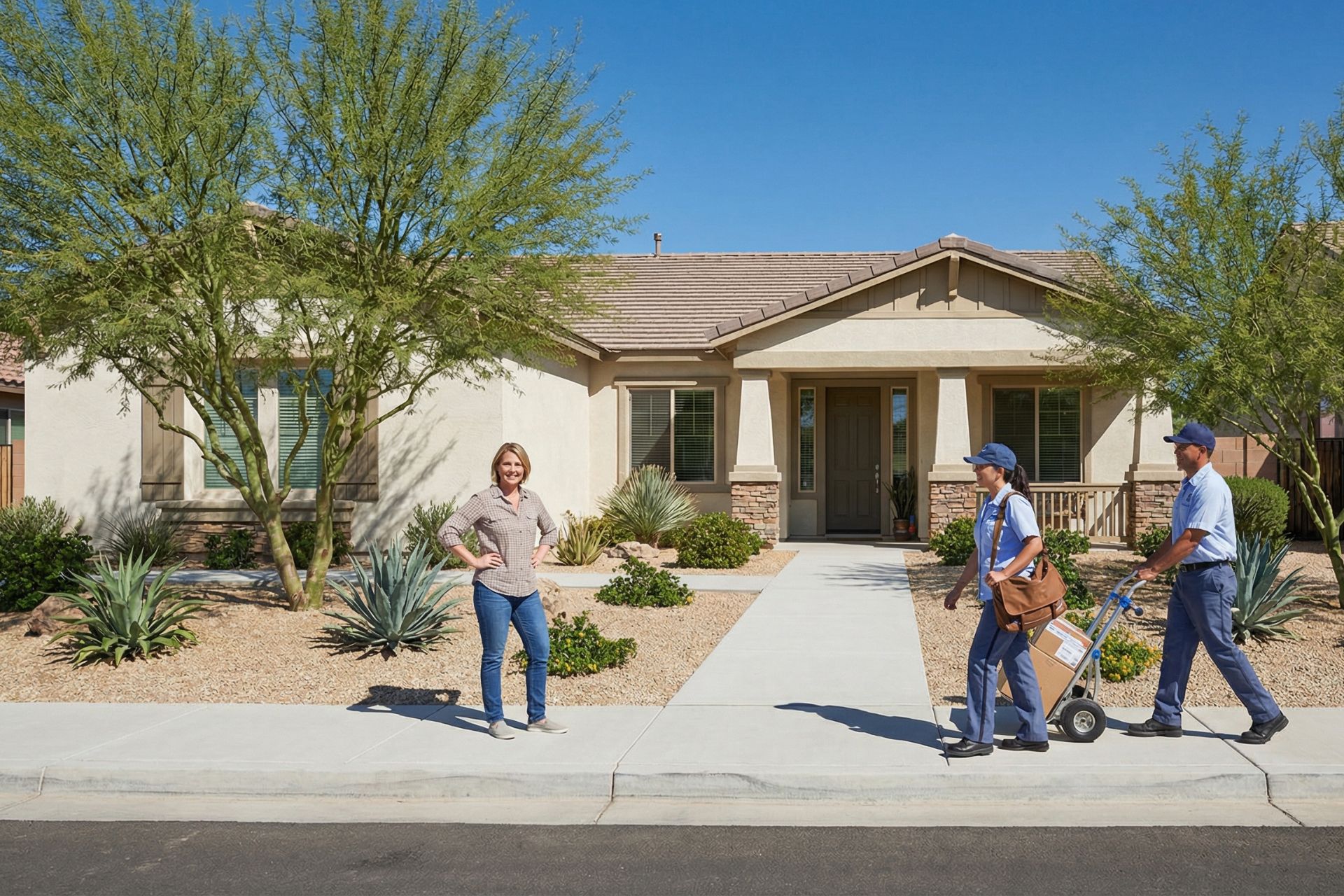
Property owners face substantial financial and legal consequences when pedestrians trip and fall on uneven sidewalks, raised concrete sections, or deteriorated walkways. California law holds homeowners responsible for maintaining safe conditions on their property, and a single serious injury can result in settlements ranging from $15,000 to $50,000—with catastrophic injuries potentially exceeding $100,000. Understanding how to prevent trip hazard claims through proactive sidewalk safety measures protects both your finances and the people who use your property.
At Precision Concrete Cutting, we help Southern California homeowners implement comprehensive trip hazard prevention strategies that eliminate dangerous conditions before accidents occur. The investment in preventive maintenance represents a fraction of the cost of defending against injury claims while providing peace of mind that your property meets reasonable safety standards.
 Understanding Your Legal Responsibility as a Property Owner
California premises liability law
Under California premises liability statutes, property owners owe a “duty of care” to maintain reasonably safe conditions for anyone lawfully on their property—including invited guests, mail carriers, delivery workers, neighbors, and even children cutting through your yard. This duty specifically includes maintaining sidewalks free from hazards that could cause foreseeable injuries.
When someone trips on an uneven sidewalk section, cracks, or raised concrete and sustains injury, they may pursue compensation through premises liability claims. To succeed, injured parties must prove the property owner knew or should have known about the dangerous condition and failed to correct it or provide adequate warning.
The “should have known” standard creates broad liability
Many homeowners assume they’re protected if they weren’t aware of specific hazards. However, California courts apply a “reasonable inspection” standard—property owners should conduct periodic inspections sufficient to identify obvious hazards. A raised concrete section visible during routine property maintenance qualifies as something owners “should have known” about, even if they never specifically noticed it.
This legal framework means documented sidewalk safety inspections and prompt hazard correction provide crucial liability protection. Conversely, obvious trip hazards left unaddressed for months or years demonstrate negligence that courts view unfavorably.
Municipal sidewalk repair ordinances
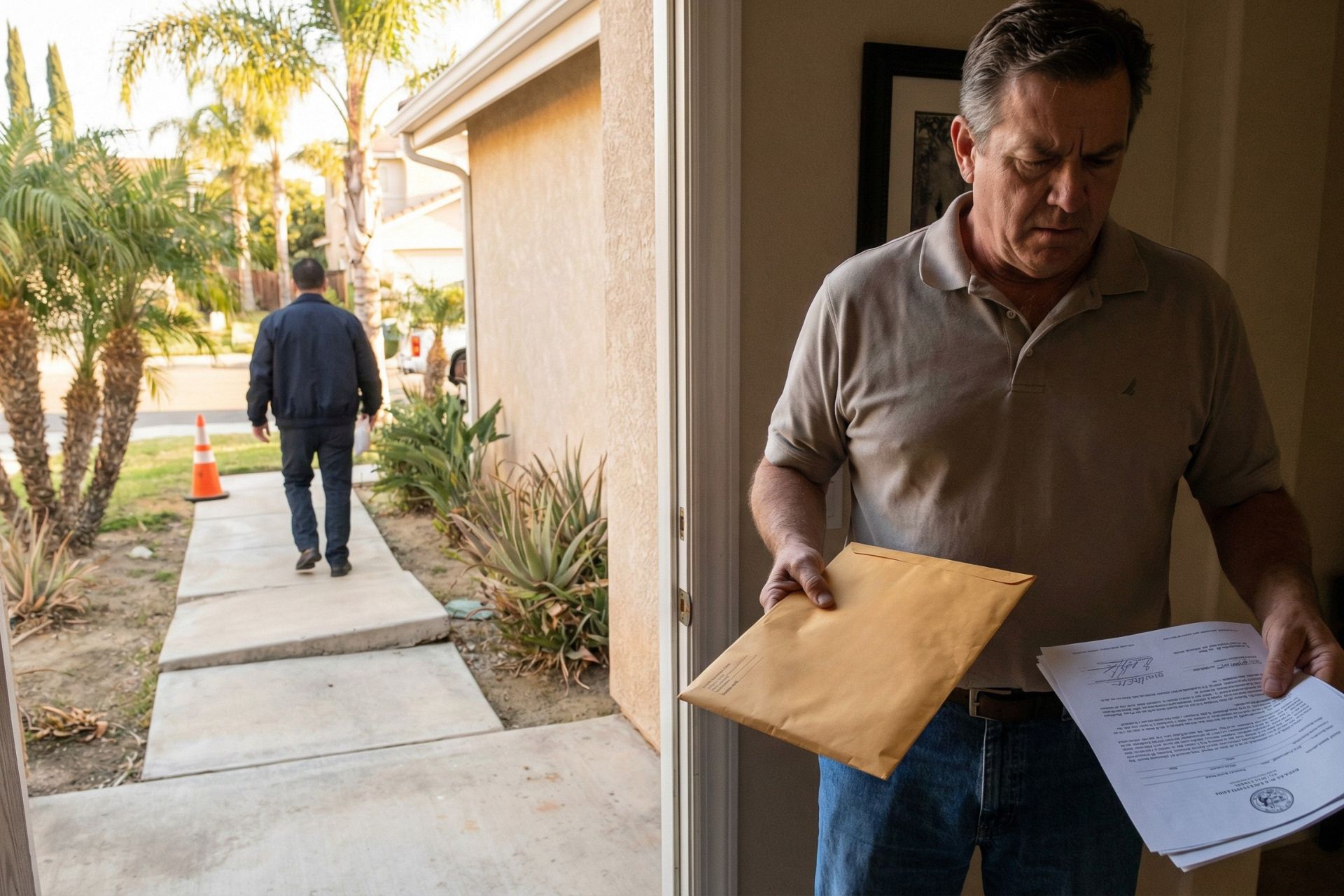
Many California municipalities impose additional legal obligations through sidewalk maintenance ordinances. These local laws typically hold property owners responsible for sidewalk repairs adjacent to their property, even though sidewalks often exist within public right-of-way. Failure to comply with repair notices can result in municipal penalties, liens, or the city performing work and billing the property owner at premium rates.
Common Sources of Trip Hazard Claims
Height differentials between concrete sections
The most frequent source of trip hazard claims involves height differences between adjacent sidewalk slabs. These differentials develop from soil settling, tree root pressure, ground freezing (rare in Southern California), or deteriorating subbase materials. Height differences of ¼ inch—the threshold for ADA compliance concerns—already create tripping risks; differentials of ½ inch or more present serious hazards to pedestrians of all ages and mobility levels.
Cracked and deteriorating concrete
Wide cracks, spalling (surface flaking), and eroded concrete edges create uneven surfaces where pedestrians catch toes or trip over irregular edges. These conditions worsen progressively as weather, traffic, and water infiltration continue damaging compromised concrete. What begins as minor surface damage transforms into significant trip hazards over 1–3 years without intervention.
Tree root displacement
Southern California’s mature trees—while providing shade and aesthetic value—frequently lift sidewalk sections as root systems expand. Species common in established neighborhoods like eucalyptus, pines, and various palms develop particularly aggressive root growth patterns that create ongoing sidewalk heaving. These root-caused trip hazards progress continuously, with raised sections becoming incrementally worse each year roots expand.
Failed or missing expansion joints
Expansion joints allow concrete to expand and contract with temperature changes without cracking. When joint material deteriorates—typical after 10–15 years—concrete sections contact directly during expansion, creating stress cracks adjacent to failed joints. These cracks develop raised edges as sections shift, creating trip hazards from what was previously level walkway.
Potential Damages from Trip Hazard Claims
Direct injury compensation
Successful trip hazard claims against property owners typically recover several categories of damages. Medical expenses include emergency care, hospitalization, surgery, rehabilitation, and ongoing treatment for injuries ranging from broken bones to serious head trauma. Lost wages compensate injured parties for work time missed during recovery. Pain and suffering damages—often the largest component—compensate for physical pain, emotional distress, and reduced quality of life.
Legal defense costs
Even when property owners successfully defend against claims, legal fees accumulate rapidly. Attorney fees, expert witness costs, investigation expenses, and court costs typically range $10,000–30,000 for defended claims—expenses incurred regardless of outcome. Homeowner’s insurance may cover defense costs, but deductibles apply and premiums increase following claims.
Insurance implications
Filing trip hazard claims against your homeowner’s insurance triggers rate increases that persist for years. Multiple claims can result in policy non-renewal, forcing you into assigned-risk pools with substantially higher premiums. Some insurance carriers now specifically ask about sidewalk condition during underwriting and may deny coverage or charge surcharges for properties with documented hazards.
Property value impacts
Visible sidewalk hazards reduce property appeal during sales, with buyers either walking away or demanding significant price reductions to account for necessary repairs. Real estate disclosures requiring sellers to reveal known defects include trip hazards, and attempting to conceal these issues creates fraud liability exceeding the original trip-and-fall exposure.
 Proactive Trip Hazard Prevention Strategies
Conduct regular sidewalk inspections
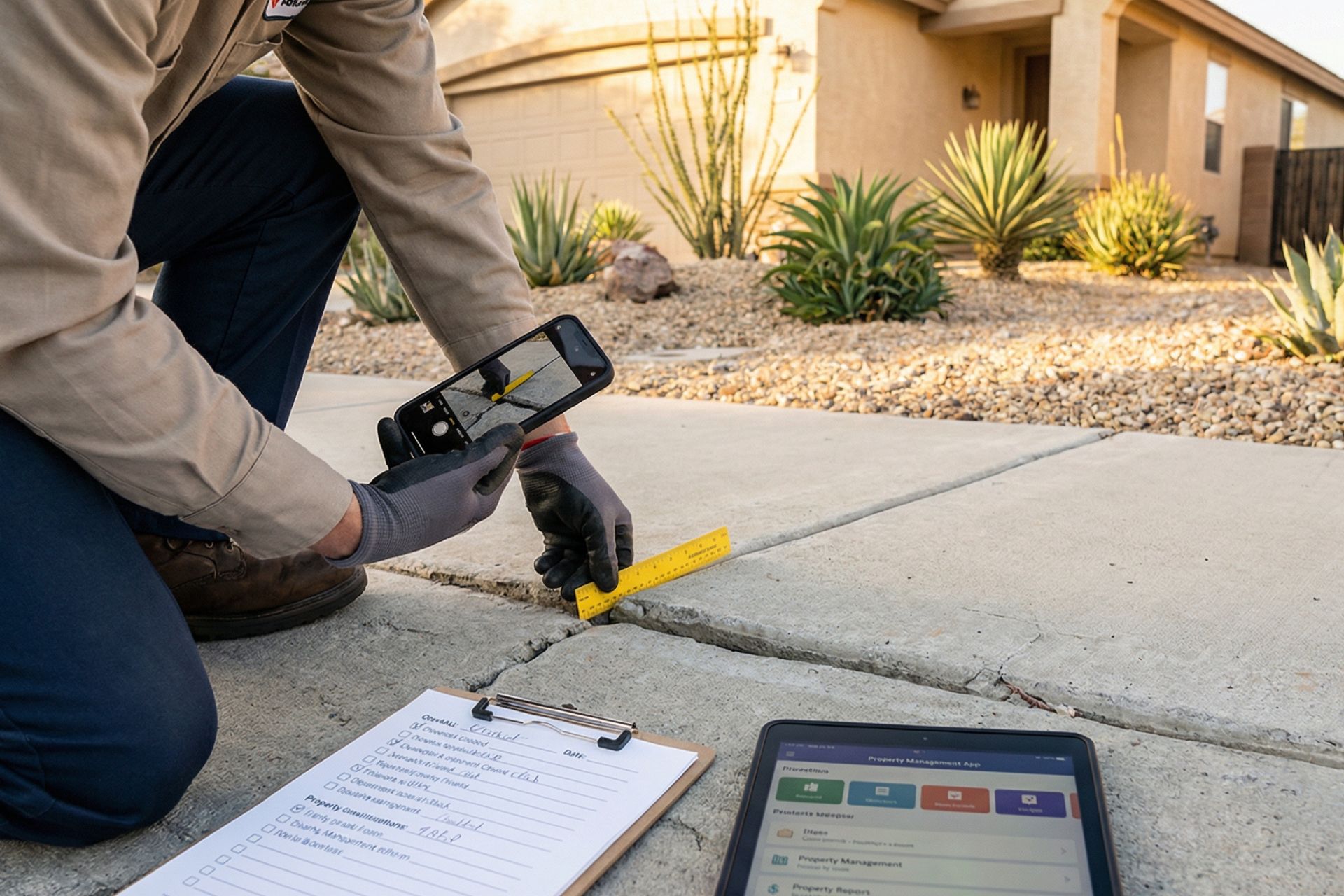
Quarterly property inspections should specifically assess sidewalk condition, documenting observations with photos and measurements. Look for height differences between sections (even ¼ inch warrants attention), cracks wider than hairlines, deteriorating concrete edges, raised sections near trees, and failed or missing expansion joint material.
Document inspection dates and findings in permanent records—this evidence demonstrates reasonable care if claims arise despite good-faith maintenance efforts. When inspections reveal hazards, prompt correction shows responsible property stewardship that courts view favorably.
Address hazards while repairs remain affordable
Early intervention dramatically reduces sidewalk safety maintenance costs. A height differential of ¼–½ inch discovered during inspection typically costs $300–600 to correct through horizontal slicing. That same hazard ignored for 2–3 years often requires $800–1,500+ repair as damage spreads to surrounding sections and underlying subbase deteriorates.
Prompt hazard correction also prevents injuries during the delay period—protection that financial savings alone cannot quantify. Every month a known trip hazard remains unaddressed increases exposure to the very claims preventive maintenance aims to avoid.
Choose repair methods meeting compliance standards
Not all concrete repair approaches provide equivalent results. Grinding—sometimes recommended as a budget solution—often lowers raised sections without eliminating height differentials completely and cannot guarantee the proper 1:12 slope transitions that ADA compliance requires. This incomplete correction leaves residual trip hazards that may reduce immediate risk but fail to eliminate liability exposure.
Precision Concrete Cutting’s patented horizontal slicing method meets compliance standards through precision cutting that achieves ¼-inch maximum height differentials and proper slope requirements. This comprehensive approach eliminates trip hazards completely rather than merely reducing their severity—crucial for liability protection.
Maintain expansion joints proactively
Include expansion joint inspection in your regular property assessments. Deteriorating joint material should receive prompt replacement using appropriate flexible fillers—typically $50–100 per joint. This preventive investment stops the crack development that leads to raised edges and trip hazards requiring far more expensive correction.
What Horizontal Slicing Addresses
Raised concrete section removal
Our patented horizontal slicing technique excels at removing raised portions of concrete caused by tree root displacement, soil heaving, or differential settling. The precision cutting creates flush, smooth transitions between adjacent sections that meet compliance standards requiring ¼-inch maximum height differentials. This targeted approach preserves functional concrete while eliminating specific sidewalk safety hazards—ideal for homeowners seeking cost-effective solutions.
Creating proper slope transitions
Beyond simply lowering raised sections, our slicing method creates the proper 1:12 slope transitions that accessibility standards require. This attention to slope requirements ensures repairs provide durable, long-term trip hazard elimination rather than partial corrections that leave residual liability exposure.
Understanding method limitations
Homeowners should understand that horizontal slicing addresses raised sections and trip hazards specifically. The method does not repair sunken areas, potholes, or locations where concrete has deteriorated significantly and requires replacement. For these conditions, we also offer professional patching services to address minor damage, while severe deterioration may require general contractors for extensive concrete work.
While environmental factors like continued root growth or soil movement can eventually create new hazards in previously repaired locations, properly executed slicing provides durable, long-term safety improvements. This extended performance gives homeowners years of protection while deferring the higher costs of full section replacement.
Documentation That Protects You Legally
Maintain inspection records
Detailed records of regular property inspections—dates, findings, photos, measurements—demonstrate the reasonable care California law requires. When trip hazard claims arise despite good-faith maintenance efforts, this documentation shows you met your duty to identify and address hazards.
Document all repairs
Keep invoices, work orders, before-and-after photos, and professional assessments for all sidewalk repairs. This paper trail proves hazards were corrected promptly once identified—crucial evidence contradicting claims that you negligently ignored dangerous conditions.
Professional assessment value
When significant hazards exist, professional evaluation by qualified concrete specialists provides expert documentation of conditions and appropriate repairs. Courts give substantial weight to professional recommendations followed by timely implementation, viewing this as responsible property management.
Warning and Temporary Protection Measures
Immediate hazard mitigation
When you identify serious trip hazards but cannot immediately schedule permanent repairs, temporary warning measures reduce immediate liability. Caution tape, temporary signage, or physical barriers alerting pedestrians to dangerous conditions demonstrate awareness and good-faith effort to protect people.
However, temporary measures never substitute for permanent repairs—they only mitigate risk during the brief period before correction. Temporary warnings that remain in place for months signal negligence rather than responsible interim protection.
Communication with regular visitors
Inform regular visitors—mail carriers, delivery services, neighbors—about known hazards during the period before repairs. While this doesn’t eliminate liability, it demonstrates reasonable care and may reduce injury severity if warned individuals exercise additional caution.
Insurance Considerations and Coverage
Understanding homeowner’s policy provisions
Review your homeowner’s insurance policy to understand premises liability coverage limits, deductibles, and exclusions. Standard policies typically provide $100,000–300,000 liability coverage, but serious injuries can exceed these limits, exposing personal assets to judgment collection.
Some policies specifically exclude claims arising from known hazards the owner failed to correct—provisions that make documented sidewalk safety maintenance even more crucial. Policies may also require prompt notification of potential claims and impose obligations to mitigate damages.
Umbrella liability protection
Consider umbrella liability policies providing additional coverage beyond homeowner’s policy limits. These policies typically cost $200–500 annually for $1–2 million additional coverage—modest premiums compared to the financial exposure serious injuries create.
What Precision Concrete Cutting Offers Homeowners
Comprehensive trip hazard solutions
We specialize in eliminating trip hazard claims exposure through our patented horizontal slicing technique that meets compliance standards, professional concrete patching for minor damage, and expansion joint maintenance preventing future hazard development. Our services provide homeowners with complete sidewalk safety solutions that address current hazards while preventing future problems.
Note: While some repairs (like complex drainage issues or large-scale concrete pouring) may require general contractors, Precision Concrete Cutting specializes in patented horizontal slicing and also offers patching and expansion joint maintenance. We do not perform grinding or full concrete replacement.
Cost-effective liability protection
Our horizontal slicing approach typically costs 60–75% less than removing and replacing concrete sections, allowing homeowners to address multiple hazards within modest budgets. This cost efficiency transforms sidewalk maintenance from overwhelming expense into manageable investment in property protection.
Minimal disruption during repairs
Individual trip hazard corrections typically complete in 15–20 minutes, allowing normal property access throughout the repair process. Our method generates minimal dust and low environmental impact—important for maintaining comfortable living conditions during work.
Take Action to Protect Your Property
Every day known trip hazards remain unaddressed increases your exposure to trip hazard claims that threaten your financial security. Proactive sidewalk safety maintenance through regular inspections, prompt hazard correction, and appropriate repair methods provides comprehensive protection while costing far less than defending against injury claims.
Call Precision Concrete Cutting at 760-334-8921 to schedule a professional sidewalk assessment. We’ll evaluate your property’s walkways, identify any trip hazards, and provide clear recommendations for maintaining safe, compliant surfaces that protect both visitors and your financial interests. Our specialized expertise in horizontal slicing and targeted repairs helps Southern California homeowners eliminate liability exposure without the expense of unnecessary full replacements.

