

For a commercial property manager in Southern California, a 1/2-inch raised sidewalk joint might seem like a minor item on a long to-do list. But in California, that “minor” issue represents a minimum $4,000 liability. Many property owners and facility managers unknowingly make common, costly commercial sidewalk maintenance mistakes that lead directly to lawsuits, compliance failures, and expensive, disruptive repairs.
Understanding these mistakes—and the specialized, modern solutions that prevent them—is the key to protecting your property, your tenants, and your budget. With over 25 years of experience serving Southern California, Precision Concrete Cutting has identified the top errors properties make and the expert-driven strategies to correct them.
Key Information
- Mistake #1: Ignoring “Minor” Hazards. In California, any vertical offset over 1/4 inch is a defined hazard. Ignoring it exposes you to significant liability under the Unruh Civil Rights Act.
- Mistake #2: Defaulting to Grinding. Traditional grinding is an outdated, damaging, and temporary fix that can harm the concrete’s integrity and appearance.
- Mistake #3: Having No Proactive Plan. Reacting to hazards after they form is a failed strategy that guarantees higher costs and greater liability.
- Mistake #4: Budgeting for Replacement. Delaying repairs until a full replacement is the only option is the most expensive mistake. Precision repairs can save 100% of this cost*.
- PCC’s Solution: A proactive strategy combining patented horizontal slicing and GIS-powered maintenance planning solves all these issues efficiently and cost-effectively.
Overview
This guide details the five most common sidewalk maintenance errors we see commercial properties make in Southern California. We will explain why these are critical mistakes under local and state law, and what technical solutions are available. Learn how to shift from a reactive, high-cost maintenance cycle to a proactive, compliant strategy that protects your assets.
Mistake 1: Ignoring “Minor” Hazards (The $4,000+ Miscalculation)
 The single most costly mistake is underestimating a “minor” trip hazard. Many property managers assume a hazard is only a problem if it’s several inches high. In California, this assumption is wrong.
Why 1/4 Inch Is a Major Liability
The California Building Code (CBC), Chapter 11B, defines any abrupt vertical change over 1/4 inch in a path of travel as a potential hazard. This isn’t a vague guideline; it’s a specific, measurable standard.
This “minor” hazard is the legal gateway for lawsuits filed under California’s Unruh Civil Rights Act, which allows for a minimum of $4,000 in statutory damages per violation, plus attorney’s fees. A single ignored 1/4-inch lip can lead to a devastatingly expensive lawsuit. This makes ADA compliance a critical financial priority.
Mistake 2: Choosing Traditional Grinding Over Precision Cutting

When a hazard is finally addressed, the next common mistake is choosing the wrong repair method. Many contractors offer concrete “grinding” or “scarifying” as a cheap and fast solution. However, this method is deeply flawed.
Grinding is an aggressive, imprecise process that chips away at the concrete. It leaves unsightly “patch” marks, can damage the surface integrity, and creates significant dust and noise. Worse, it often fails to create a truly smooth, compliant slope and the repair can be temporary.
The Superior Alternative: Patented Horizontal Slicing
A far superior technical solution is patented horizontal slicing. This specialized service uses proprietary equipment to make a single, precise, clean cut across the concrete. It removes the entire hazard from joint to joint, leaving a perfectly smooth, ADA-compliant transition. It is faster (often 15 minutes* per repair), cleaner, and does not damage the concrete, preserving the property’s appearance and structural integrity.
Note: While some repair methods discussed here (e.g., sidewalk lifting or drainage work) may require general contractors, Precision Concrete Cutting specializes specifically in trip hazard removal using patented horizontal slicing. We also offer patching and expansion joint maintenance when needed, but do not perform concrete pouring, grinding, or full-panel lifting.
Mistake 3: Delaying Repairs and Budgeting for Replacement
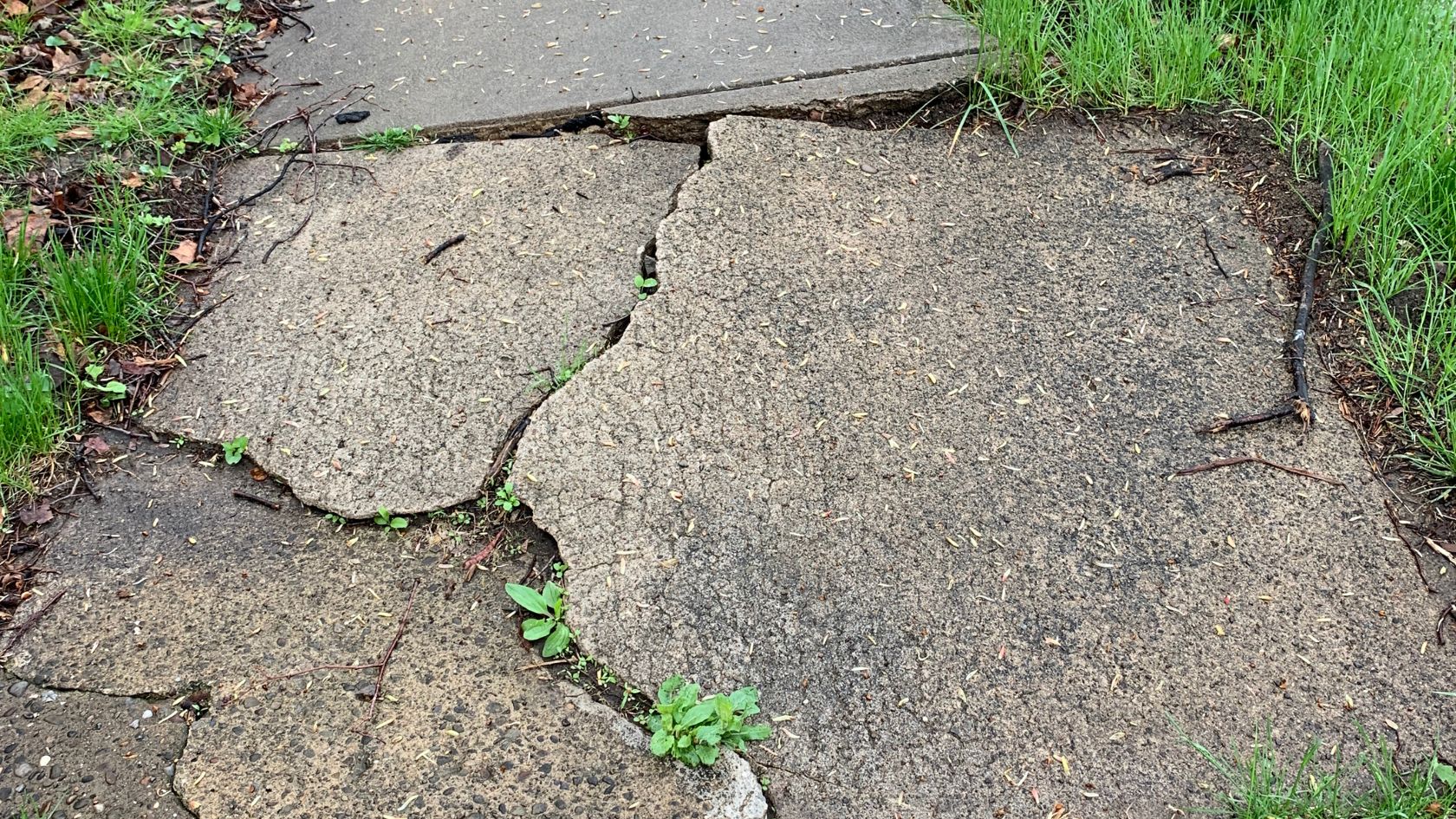 This is the “false economy” mistake. A property manager sees several small hazards and decides to wait, letting them worsen until a full replacement seems like the only option. This is the most expensive error possible.
Full concrete replacement is slow, disruptive to tenants, and incredibly expensive. The cost of demolition, debris removal, pouring, and curing can be 100% more* than a precision repair. By delaying, you not only carry 100% of the sidewalk liability risk in the interim, but you also guarantee the maximum possible repair bill.
A strategy of precision trip hazard removal can reduce repair costs dramatically by preventing the need for replacement. Addressing hazards when they are small with horizontal slicing is a small, manageable operating expense that eliminates a massive future capital expenditure.
*All timelines and service cost ranges are provided for general information only. Actual project duration and service costs will depend on the specific property conditions, scope of work, accessibility requirements, and agreed-upon scope of service as set forth in the written service agreement.
Mistake 4: Having No Proactive Maintenance Plan
The most common strategic error is having no plan at all. Most properties operate in a reactive mode, only fixing hazards after an incident, a complaint, or a “fix-it” ticket from the city. This is a failed strategy that guarantees maximum liability and zero cost control.
The Modern Solution: GIS-Powered Maintenance
A proactive sidewalk maintenance plan, powered by GIS (Geographic Information System) surveying, is the modern solution. This specialized service involves a complete digital mapping of all your property’s walkways.
This survey identifies, measures, and pinpoints every single hazard. The data is then used to create a comprehensive report that allows property managers to:
Prioritize Repairs: Fix the most severe hazards immediately.
Budget Accurately: Know the exact cost to achieve 100% compliance.
Prove Diligence: Maintain a digital record of inspections and maintenance, which is a powerful defense against liability claims.
Mistake 5: Overlooking Southern California’s Climate Impact
The final mistake is assuming sidewalk maintenance is the same everywhere. Southern California’s climate creates unique and constant challenges. Our long, dry seasons cause soil to shrink and settle, allowing slabs to sink. When seasonal rains arrive, the dry soil can heave, or water can cause erosion, creating new hazards overnight.
A “one-and-done” repair is not a strategy in SoCal. Because the ground is always moving, a year-round, proactive maintenance plan is essential. This is why a partnership with a local specialist who understands SoCal’s soil and climate is critical to long-term sidewalk safety.
From Reactive Mistakes to a Proactive Strategy
These five mistakes all stem from a single reactive mindset. By shifting to a proactive strategy, you can avoid these costly errors. A proactive plan built on patented horizontal slicing and GIS-powered data doesn’t just fix problems—it prevents them.
With 25+ years of experience and over 2,000 satisfied customers in Southern California, Precision Concrete Cutting is the technical expert in proactive trip hazard prevention. We provide the specialized technology and expert guidance to help you protect your property from liability and control your maintenance budget.
Don’t wait for a complaint or a lawsuit. Contact Precision Concrete Cutting today for a free site assessment and learn how to build a compliant, defensible, and cost-effective sidewalk safety plan for your commercial property.
Sources
California Regulatory Resources
- California Civil Rights Department (Unruh Act FAQ) – Explains the state law (Civil Code § 51) and the basis for high-stakes accessibility claims.
- California Streets and Highways Code § 5610 – Details the legal responsibility of property owners to maintain adjacent sidewalks.
Professional and Industry Sources
- California Contractors State License Board (CSLB) – Verifies contractor licensing for any concrete-related work in California.
Building Code and Compliance Authorities
- California Building Standards Commission (BSC) – Official source for the California Building Code (CBC), including Chapter 11B on accessibility.
- US Access Board – Provides the federal baseline for ADA standards, which California often exceeds.
Service Consultation Disclaimer
This article provides general information about Southern California ADA compliance and sidewalk safety and should not be considered as specific technical advice for your property. Compliance requirements, repair methods, and procedures vary significantly based on individual property conditions, jurisdiction within California, and specific accessibility needs. Project schedules, service timelines, and maintenance processes can be affected by many factors specific to each property.
All timelines and service cost ranges are provided for general information only. Actual project duration and service costs will depend on the specific property conditions, scope of work, accessibility requirements, and agreed-upon scope of service as set forth in the written service agreement.
For confidential assessment and specialized service for your specific Southern California property, contact Precision Concrete Cutting at https://socalpcc.com/ or 760-334-8921. Our patented horizontal slicing specialists will provide personalized technical analysis based on your specific property conditions and compliance requirements. No service agreement is created by reading this article.

