
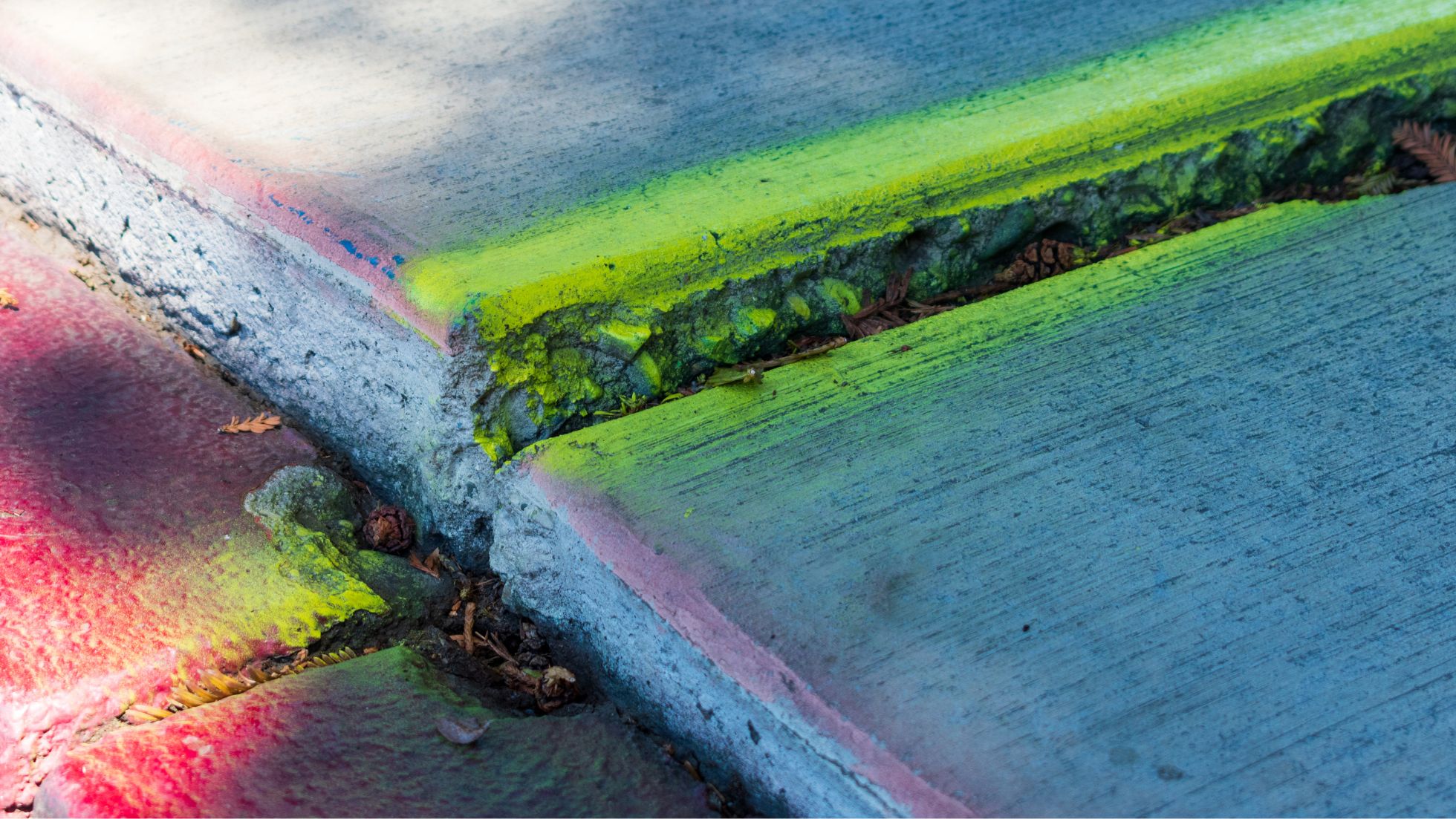
Property managers and facility owners throughout Southern California face a critical challenge in public space maintenance: preventing trip hazards that expose properties to regulatory penalties, liability claims, and potential injury incidents. The stakes are particularly high in public parks and commercial spaces where pedestrian traffic is heavy and park sidewalk safety compliance requirements are strict.
Key Information
Trip hazards in parks and public spaces represent more than aesthetic concerns—they create genuine legal and financial exposure under California law. California Streets and Highways Code § 5610 places responsibility for sidewalk maintenance on property owners, while the Unruh Civil Rights Act establishes minimum statutory damages of $4,000 per accessibility violation, with potential penalties reaching $12,000 or higher for willful non-compliance. The San Diego County Grand Jury documented that trip-and-fall injuries in the region average $46,000 per settlement, creating substantial financial exposure for property owners who delay compliance.
ADA-compliant trip hazard prevention requires understanding California’s specific accessibility standards, identifying which surface irregularities violate compliance requirements, and selecting the most cost-effective remediation method. Unlike traditional concrete removal or grinding approaches, specialized horizontal slicing technology creates durable, compliant surfaces in minutes rather than weeks, delivering 100% cost savings compared to full replacement while maintaining zero pedestrian disruption.
Overview
This comprehensive guide equips Southern California property managers, facility owners, and municipal decision-makers with the specialized knowledge needed to systematically prevent trip hazards and achieve documented ADA compliance. You’ll understand California’s specific trip hazard standards (not generic federal guidance), identify exactly which surface irregularities violate accessibility laws, calculate true repair costs versus replacement alternatives, and implement preventative maintenance strategies tailored to Southern California’s climate and market conditions.
Unlike generic playground safety articles or general concrete repair content, this resource combines three specialized expertise dimensions: California-specific regulatory authority with relevant penalty and compliance data, patented technology differentiation explaining why advanced cutting methods succeed where traditional approaches fail, and proven Southern California market experience addressing region-specific challenges that generic national guidance overlooks.
California ADA Compliance Standards: What Property Owners Must Understand
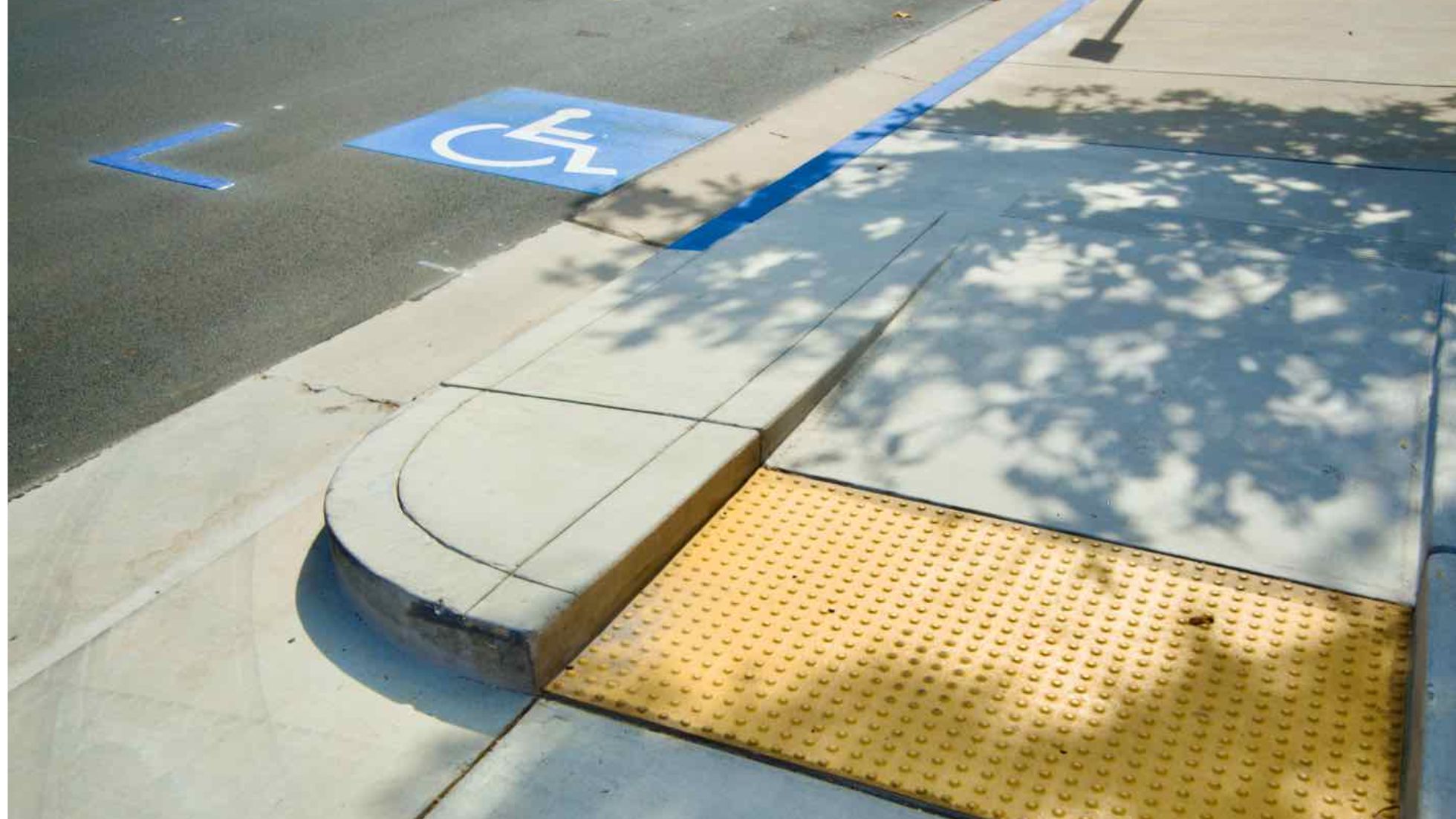 California’s accessibility requirements operate at multiple regulatory levels, creating layered compliance obligations for property owners. At the federal level, the 2010 ADA Accessibility Guidelines establish the baseline standard: vertical surface changes of ¼ inch or greater constitute trip hazards requiring remediation. However, California adds specific state-level enforcement through the Unruh Civil Rights Act, which establishes minimum damages of $4,000 per violation (per visit or occurrence), with attorney’s fees automatically awarded to plaintiffs.
The ¼-inch threshold is measured using a 4-foot straightedge; if daylight is visible under the straightedge at any point, the gap exceeds compliance standards. Vertical changes between ¼ and ½ inch can be beveled at a 1:2 slope; changes exceeding ½ inch typically require removal and replacement or ramp installation. Additionally, running slope (forward slope of walkway) must not exceed 5%, and cross slope (side-to-side) must not exceed 2%.
San Diego Council Policy 200-12 specifically delineates property owner versus municipal responsibility for sidewalk maintenance within the city. Property owners remain responsible for maintaining sidewalks in front of their property in safe, usable condition, while municipalities handle enforcement and public property maintenance. This creates dual liability exposure: property owners can face direct injury claims while also facing municipal enforcement penalties for non-compliance.
California’s SB 84 (effective 2024) introduced a “fix-it-first” 120-day cure period before statutory damages apply to accessibility violations—but only after proper legal notice is received. Property owners demonstrating proactive compliance efforts through documented assessments can potentially avoid notice entirely, making preventative action strategically advantageous.
Horizontal Slicing vs. Traditional Repair Methods: Understanding Your Options
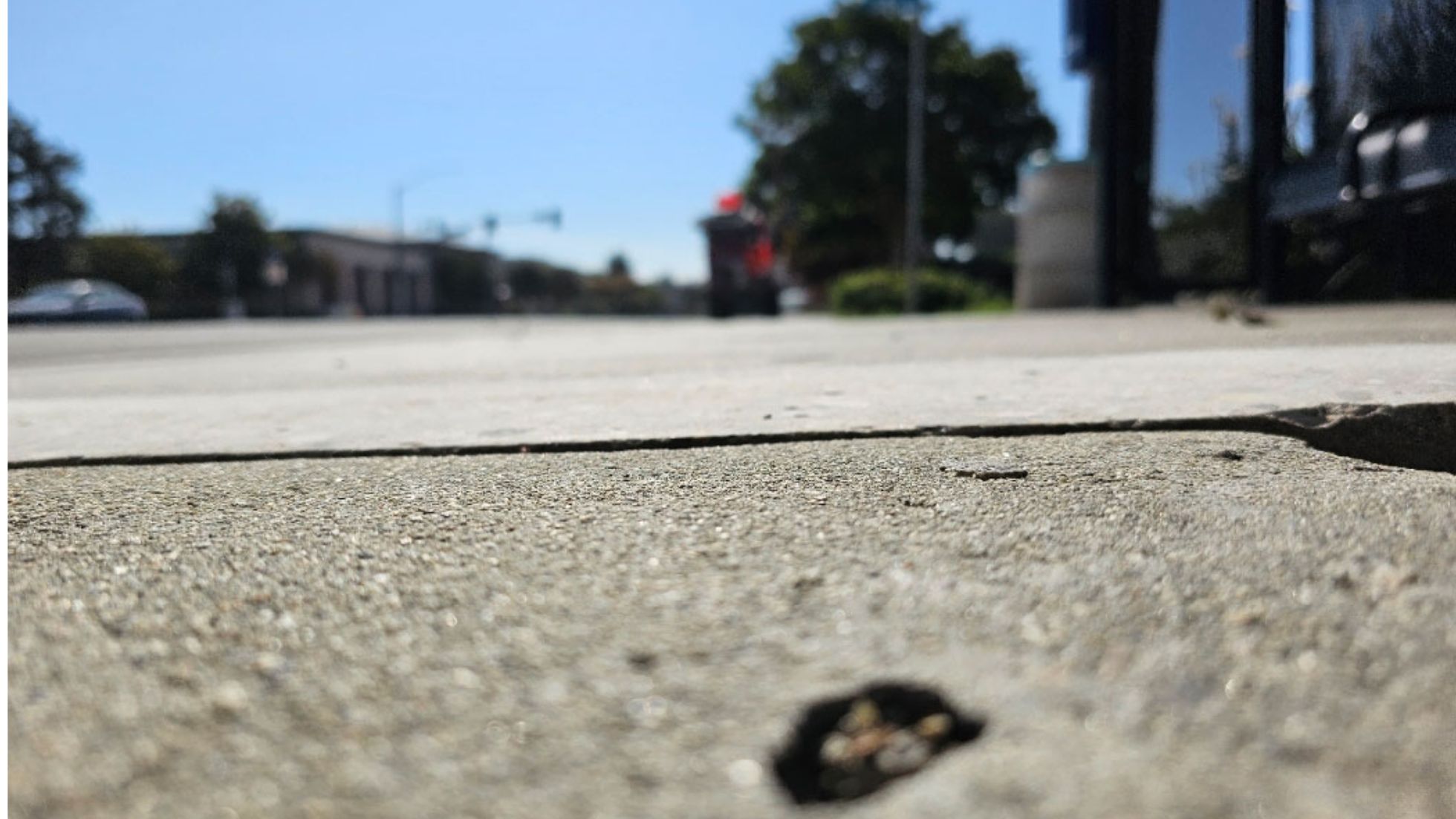 Property managers typically encounter three primary repair approaches when addressing trip hazards: traditional grinding, full concrete removal-and-replacement, and patented horizontal slicing. Understanding the technical and practical differences between these methods is essential for making cost-effective decisions.
Traditional Grinding Limitations
Grinding uses abrasive wheels to reduce the surface height of concrete panels. While grinding addresses the top surface of a single panel, it fundamentally fails to eliminate hazards at panel transitions. The vertical edge where adjacent concrete sections meet typically remains unchanged. Result: property owners invest in grinding, only to discover the ¼-inch+ vertical change at the panel junction still violates ADA standards. Additionally, grinding creates micro-fractures in the concrete surface that re-crack within 12–24 months, particularly problematic in Southern California’s thermal expansion cycles where daily temperature swings of 20–30°F create stress on damaged surfaces.
Full Removal-and-Replacement Challenges
Complete concrete removal and replacement eliminates trip hazards permanently but creates substantial logistical and financial burdens. Removal-and-replacement projects typically cost $3,000–$5,000 per 20-foot sidewalk section and require 2–4 weeks of continuous pedestrian disruption while concrete cures. Commercial properties face business impact from restricted foot traffic, delivery access complications, and customer inconvenience. Municipalities and property managers managing multiple locations find removal-and-replacement prohibitively expensive when addressing 50+ trip hazards across a property portfolio.
Patented Horizontal Slicing Methodology
Precision’s patented horizontal slicing technique creates ADA-compliant repairs in a fundamentally different way. The methodology involves precise horizontal cutting at the vertical edge where adjacent concrete panels meet, creating a smooth beveled transition that eliminates the trip hazard completely. Unlike grinding (which addresses only surface height) or replacement (which removes entire panels), horizontal slicing removes the exact volume needed to achieve an ADA-compliant slope—typically 1:2 or steeper—while preserving existing concrete integrity.
The monolithic joint created by horizontal slicing resists the re-cracking problems plaguing grinding repairs. Southern California’s thermal cycles cause patched and ground surfaces to fail; sliced surfaces maintain compliance indefinitely because they eliminate the vertical irregularity rather than merely reducing it.
Cost efficiency is substantial: horizontal slicing repairs typically range from $300–$500 per 20-foot section*, delivering 85–90% cost reduction versus removal-and-replacement. A 100-property portfolio with 2–3 trip hazards per location faces $60,000–$150,000 investment using horizontal slicing versus $600,000–$1,500,000 using traditional replacement.
All timelines and service cost ranges are provided for general information only. Actual project duration and service costs will depend on the specific property conditions, scope of work, accessibility requirements, and agreed-upon scope of service as set forth in the written service agreement.
Individual repair timelines are particularly advantageous for commercial properties: horizontal slicing repairs complete in approximately 15 minutes* per location, with immediate pedestrian access restoration. Removal-and-replacement requires weeks of closure.
GIS-Powered Preventative Maintenance: From Reactive Repairs to Strategic Planning
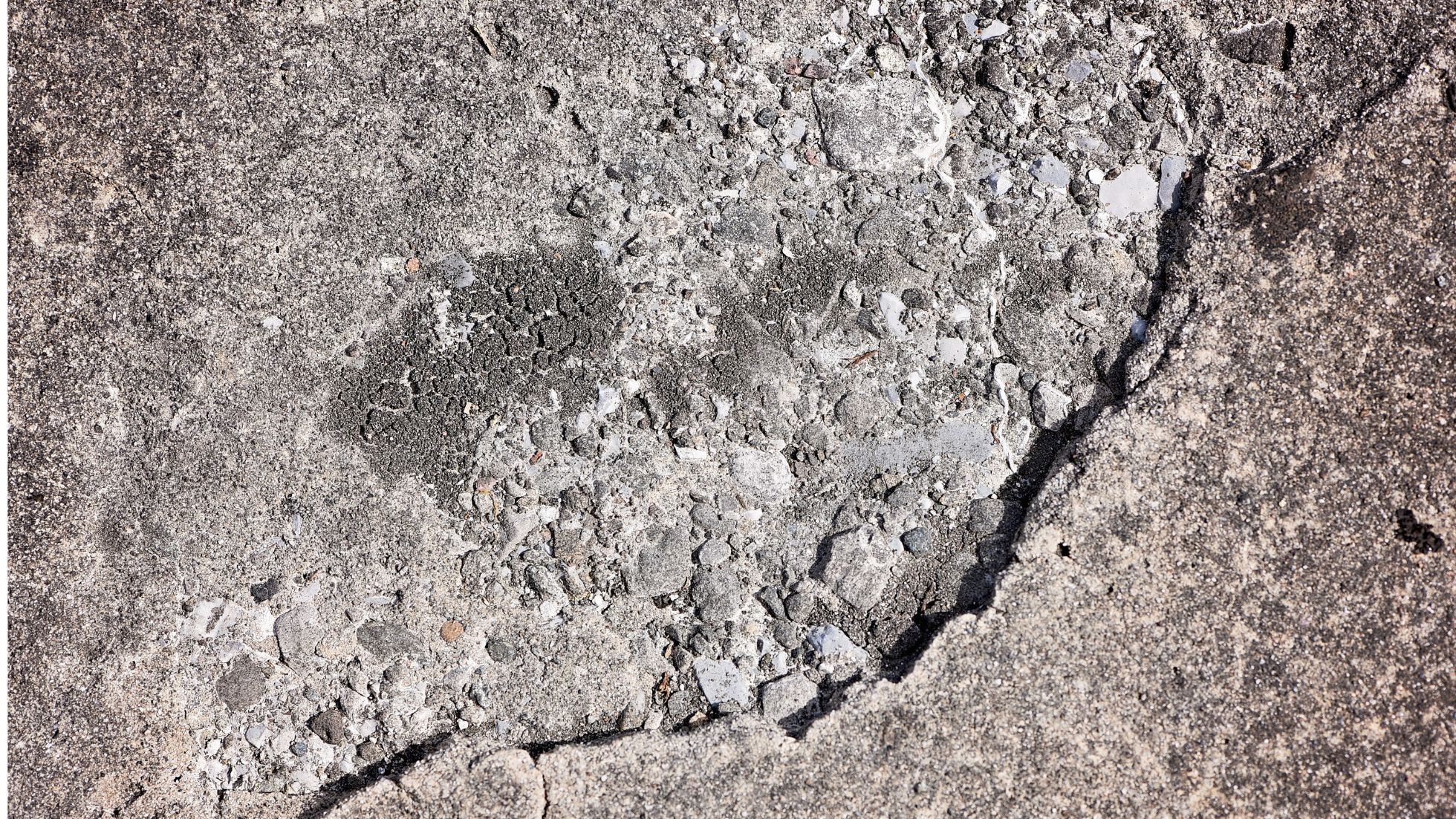 Most property managers operate in reactive mode: address complaints, respond to injuries, manage liability after incidents occur. This approach generates ongoing expense without building compliance infrastructure.
GIS (Geographic Information System) methodology transforms sidewalk maintenance into strategic asset management. Instead of identifying hazards randomly, systematic GIS survey creates a comprehensive baseline of all trip hazards across a property portfolio. The process involves mapping 10-meter sidewalk sections, assigning condition ratings on a 1–5 scale, capturing GPS coordinates for each hazard, and documenting underlying causes.
Hazard identification maps all vertical surface irregularities ≥¼ inch, with severity ratings enabling prioritization. High-traffic commercial corridors and playgrounds receive priority scheduling; lower-traffic areas follow. Underlying causes are documented: tree root pressure, soil settling, thermal cracking, age-related deterioration. This intelligence enables root cause recommendations preventing repeat damage.
Documentation Creating Liability Protection
GIS survey records create compelling legal defense documentation. If injuries occur or ADA compliance is challenged, documented systematic inspections prove property owner awareness and diligence. Courts consider proactive prevention when assessing statutory damage severity under the Unruh Act. Additionally, GIS trend analysis showing year-over-year compliance improvement demonstrates ongoing commitment to accessibility.
Insurance carriers increasingly incentivize GIS-based prevention programs: property owners maintaining documented sidewalk assessment and maintenance programs often qualify for 10–15% liability insurance premium reductions. For a $100,000 annual liability policy, documented prevention can generate $10,000–$15,000 annual savings, offsetting maintenance investment substantially over multi-year periods.
Preventative Maintenance Scheduling
Southern California’s climate creates predictable seasonal hazard patterns. Spring and summer thermal expansion cycles (March–August) cause existing cracks to widen and new surface cracking to initiate. Fall and winter cooling cycles (September–February) close cracks but create new surface irregularities. GIS systems generate quarterly maintenance recommendations: pre-summer repair completion before thermal expansion stress, fall inspections identifying summer damage, winter repair schedules before freeze-thaw precipitation (when applicable to SoCal).
Tree root patterns respond to Southern California’s drought-irrigation extremes. Landscape irrigation creates irregular moisture availability beneath sidewalks; tree roots exploit these zones aggressively. GIS mapping identifies tree-adjacent sidewalk sections requiring accelerated monitoring and preemptive maintenance.
Liability Reduction and Insurance Benefits: Financial Protection Through Compliance
Trip hazard prevention delivers financial benefits extending far beyond repair costs. California’s accessibility liability framework creates specific financial exposures that documented compliance strategically reduces.
The baseline liability calculation is straightforward: unrepaired trip hazard exposure equals minimum $4,000 statutory damages (Unruh Act) plus average $46,000 injury settlement (San Diego County data) plus $25,000 litigation defense cost = $75,000+ potential exposure per incident. Preventing one injury claim through systematic preventative maintenance offsets 15–38 years of prevention investment.
Insurance premium reduction represents secondary financial benefit. Property management companies maintaining documented GIS-based sidewalk maintenance programs typically qualify for 10–15% liability policy reductions. For property managers with $100,000 annual liability insurance*, documented prevention programs generate $10,000–$15,000* annual savings. Over 5 years, this equals $50,000–$75,000 in premium reductions—direct financial benefit from compliance infrastructure.
All timelines and service cost ranges are provided for general information only. Actual project duration and service costs will depend on the specific property conditions, scope of work, accessibility requirements, and agreed-upon scope of service as set forth in the written service agreement.
SB 84’s 120-day cure period provides additional strategic advantage. If accessibility violations are discovered through properly documented preventative maintenance, the cure period applies, potentially reducing statutory damages exposure by delaying litigation 120 days. Property owners demonstrating proactive prevention efforts position themselves for negotiated resolutions rather than maximum penalty exposure.
Southern California Climate Considerations: Region-Specific Maintenance Strategies
Southern California’s unique climate creates specific sidewalk deterioration patterns requiring region-tailored prevention strategies. Understanding these patterns enables property managers to anticipate maintenance needs rather than reacting to failures.
Thermal Expansion Cycles
Southern California experiences significant daily temperature swings: 20–30°F fluctuations between daytime highs and nighttime lows are common. Concrete responds to these cycles through thermal expansion and contraction. Morning cold causes concrete to contract; afternoon heat causes expansion. This daily stress cycle accelerates crack development in already-compromised concrete. Existing surface irregularities become progressively worse as thermal cycles widen cracks and deepen surface separations.
Strategic implication: Spring schedule maintenance before summer thermal expansion peaks. Properties repaired before March–April thermal acceleration maintain longer compliance periods than those repaired in fall.
Drought-Irrigation Dynamics
Southern California’s drought history combined with landscape irrigation creates unusual moisture patterns beneath sidewalks. Irrigation lines create concentrated moisture zones; tree roots exploit these areas aggressively. Uneven soil moisture causes differential settling: some areas of sidewalk settle more than others as soil beneath them dries out. Result: progressive vertical surface irregularities developing over years.
UV Degradation
Direct sun exposure accelerates concrete surface deterioration. South-facing sidewalks and those in open commercial districts experience more UV exposure than shaded residential areas. UV degradation manifests as surface spalling (small surface flaking) and micro-cracking. These areas require accelerated monitoring and earlier intervention.
Implementation Strategy: Moving from Assessment to Compliance
Property managers can implement systematic trip hazard prevention through five phases: initial consultation, comprehensive assessment, compliance planning, repair execution, and ongoing monitoring.
Phase 1: Initial Consultation and Property Assessment
The process begins with confidential consultation reviewing current sidewalk conditions, existing compliance concerns, and regulatory obligations. Precision’s specialists discuss California ADA requirements specific to the property type—commercial, municipal, residential, or recreational—explaining liability exposure and SB 84 strategic advantages.
Phase 2: Comprehensive GIS Survey
Licensed ADA auditors and GIS technicians conduct full property assessment, identifying all trip hazards using standardized measurement protocols. The assessment typically takes 2–4 hours* depending on property size. Field data enters enterprise GIS systems accessible to property managers 24/7, enabling immediate visibility into hazard locations, severity ratings, and recommended action sequence.
Phase 3: Compliance Planning and Prioritization
Specialists work with property managers to sequence repairs based on risk level, budget constraints, and operational timing. High-traffic commercial corridors and playgrounds receive priority; lower-traffic areas follow in subsequent maintenance windows. Property managers determine annual budget; Precision calculates sustainable repair schedules fitting financial parameters.
Phase 4: Repair Execution and Compliance Verification
Licensed specialists conduct repairs using patented horizontal slicing methodology. Repairs typically complete in 15 minutes* per location, with immediate pedestrian access restoration. Post-repair ADA compliance testing confirms results meet accessibility standards. Before/after photography and GIS record updates document completion.
Phase 5: Long-Term Monitoring and Annual Re-Assessment
Annual GIS re-inspections identify new hazards, environmental changes, or deterioration patterns. Trend analysis shows compliance trajectory; property managers see year-over-year improvement. Annual reports recommend optimal timing for next repair cycle based on observed deterioration patterns.
Case Study: Municipal-Scale Compliance Success
The City of Piedmont engaged Precision for comprehensive trip hazard removal across its entire commercial sidewalk network. The contract valued $89,000 addressed 535* locations systematically. Results included 100% ADA compliance achievement with zero re-repair requests in subsequent 3-year monitoring period. Industry re-repair rates average 20%; Piedmont’s experience demonstrates the durability advantage of patented horizontal slicing methodology.
Per-location efficiency ($166 per location) demonstrates scalability of systematic GIS-based approach versus reactive repairs costing $3,000–$5,000 per location using traditional methods.
Frequently Asked Questions
What is the ¼-inch ADA trip hazard threshold, and how is it measured?
The ¼-inch threshold refers to the maximum vertical change between adjacent concrete surfaces under ADA accessibility standards. Any vertical irregularity ≥¼ inch constitutes a trip hazard. Measurement uses a 4-foot straightedge; if daylight is visible under the straightedge at any point, the gap exceeds the ¼-inch threshold. Changes between ¼–½ inch can be beveled at 1:2 slope; changes >½ inch typically require ramp installation or removal-and-replacement.
Who bears legal responsibility for sidewalk trip hazards in California?
California Streets and Highways Code § 5610 places primary responsibility on property owners for maintaining sidewalks in front of their property in safe, usable condition. Municipalities have secondary enforcement responsibility but do not assume primary maintenance obligation.
What are the specific penalties for ADA compliance violations in California?
The Unruh Civil Rights Act establishes minimum statutory damages of $4,000 per violation (per visit or occurrence), with potential treble damages reaching $12,000 or higher for willful non-compliance. Attorney’s fees are automatically awarded to plaintiffs. The San Diego County Grand Jury documented average trip-and-fall injury settlements of $46,000.
How does horizontal slicing differ from grinding for trip hazard removal?
Grinding uses abrasive wheels to reduce surface height of a single concrete panel but leaves the vertical edge at panel transitions unchanged, meaning ¼-inch+ trip hazards remain despite grinding. Horizontal slicing creates ADA-compliant transitions across adjacent panel edges, eliminating hazards completely. Sliced surfaces resist re-cracking from thermal cycles better than ground surfaces.
What is the cost difference between horizontal slicing and full concrete replacement?
Horizontal slicing typically costs $300–$500 per 20-foot section*, while removal-and-replacement costs $3,000–$5,000 for the same section. Horizontal slicing delivers 85–90% cost reduction plus zero pedestrian disruption compared to weeks-long replacement projects.
How long do horizontal slicing repairs typically take to complete?
Individual repairs average approximately 15 minutes* per location. Multiple locations on the same property can be addressed in single maintenance windows, with properties reopening to pedestrian traffic immediately upon completion.
How can GIS surveys help prevent trip hazards?
GIS surveys systematically map all trip hazards across a property portfolio with severity ratings and GPS coordinates. This enables strategic prioritization, preventative maintenance scheduling, and documented compliance proof for insurance carriers and regulatory review.
What is California’s SB 84 “fix-it-first” cure period, and how does it affect property owners?
SB 84 (effective 2024) provides a 120-day cure period before statutory damages apply to accessibility violations—but only after proper legal notice is received. Property owners demonstrating proactive compliance efforts through documented assessments can potentially prevent notice entirely.
How often should commercial sidewalks be inspected for trip hazards?
San Diego standards recommend bi-annual minimum inspections for commercial sidewalks; quarterly for liability-sensitive properties like medical offices or government buildings. Playgrounds and high-traffic parks require monthly visual inspections plus quarterly detailed ADA measurement checks.
Can insurance premium reductions offset preventative maintenance costs?
Property managers maintaining documented GIS-based sidewalk maintenance programs often qualify for 10–15% liability insurance premium reductions. For $100,000 annual liability insurance*, this generates $10,000–$15,000* annual savings, which over 5 years offsets ongoing prevention investment substantially.
What documentation should property owners maintain to prove ADA compliance?
Required documentation includes GIS assessment records, inspection schedules, remediation project records with before/after photography, post-repair ADA compliance testing results, and year-over-year trend analysis. This documentation satisfies municipal audits, insurance carrier requirements, and litigation defense needs.
What should property managers do if they discover numerous trip hazards across their property?
Systematic GIS assessment prioritizes hazards by risk level and location concentration. High-traffic commercial areas and playgrounds receive immediate attention; remaining locations follow in scheduled maintenance windows. This phased approach distributes repair costs across budget cycles while maintaining compliance on highest-risk areas.
Sources
California Regulatory Resources
-
California Streets and Highways Code § 5610 – Establishes property owner responsibility for sidewalk maintenance and condition standards in California
-
California Civil Code §§ 52 & 54.3 (Unruh Civil Rights Act) – Specifies accessibility violation penalties including minimum $4,000 statutory damages and attorney’s fees
-
California SB 84 – Establishes 120-day “fix-it-first” cure period for accessibility violations (effective 2024)
-
San Diego Council Policy 200-12 – Delineates municipal versus property owner responsibility for sidewalk maintenance within San Diego city limits
Federal Accessibility Standards
-
2010 ADA Accessibility Guidelines – Establishes federal accessibility standards including trip hazard thresholds and slope requirements
Service Consultation Disclaimer
This article provides general information about Southern California ADA compliance and sidewalk safety and should not be considered as specific technical advice for your property. Compliance requirements, repair methods, and procedures vary significantly based on individual property conditions, jurisdiction within California, and specific accessibility needs. Project schedules, service timelines, and maintenance processes can be affected by many factors specific to each property.
All timelines and service cost ranges are provided for general information only. Actual project duration and service costs will depend on the specific property conditions, scope of work, accessibility requirements, and agreed-upon scope of service as set forth in the written service agreement.
Note: While some repairs (like complex drainage issues or large-scale concrete pouring) may require general contractors, Precision Concrete Cutting specializes in patented horizontal slicing and also offers patching and expansion joint maintenance. We do not perform grinding or full concrete replacement.
For confidential assessment and specialized service for your specific Southern California property, contact Precision Concrete Cutting at 760-334-8921. Our patented horizontal slicing specialists will provide personalized technical analysis based on your specific property conditions and compliance requirements. No service agreement is created by reading this article.

