

San Diego property managers face a compliance crisis: The 2023-2024 Grand Jury documented the city paying $18 million annually in trip-and-fall liability settlements while budgeting only $2-6 million for repairs. Meanwhile, California’s Title 24 standards are stricter than federal ADA requirements, meaning standard fixes often leave your property non-compliant. With 30-90 day remediation windows after municipal notices, understanding DIY sidewalk inspection and how to identify sidewalk hazards early becomes essential for protecting both pedestrians and your liability exposure.
Key Information
Property managers and facility owners managing commercial properties in Southern California must understand three critical points: (1) California Title 24 requires stricter accessibility standards than federal ADA baseline, (2) DIY inspection can identify potential hazards, but professional assessment ensures complete compliance, and (3) patented horizontal slicing technology removes trip hazards at 90% less cost than full replacement while guaranteeing California ADA compliance in 15 minutes*.
Precision Concrete Cutting specializes specifically in trip hazard removal using patented horizontal slicing—a technique that removes the exact depth and width of hazards in a single pass, meeting all California Title 24 requirements simultaneously. With 25+ years serving Southern California and 2,000+ completed repairs, this specialized service eliminates the compliance gaps that grinding and other partial-fix methods leave behind.
Overview
This comprehensive guide walks property managers through the exact decision framework Southern California’s leading commercial real estate firms use to manage sidewalk safety and ADA compliance. You’ll learn to conduct professional-quality DIY sidewalk inspections, understand California’s stricter regulatory requirements beyond federal ADA, and recognize when professional horizontal slicing becomes necessary for complete compliance and liability protection.
Understanding sidewalk hazards isn’t just about preventing trips—it’s about managing corporate liability, meeting compliance deadlines, and making strategic maintenance decisions that protect your bottom line. This guide addresses the specific California regulations, cost-benefit analysis, and liability implications that generic national contractors overlook.
California ADA Title 24: Why Your Sidewalks Must Meet Stricter Standards Than Federal ADA
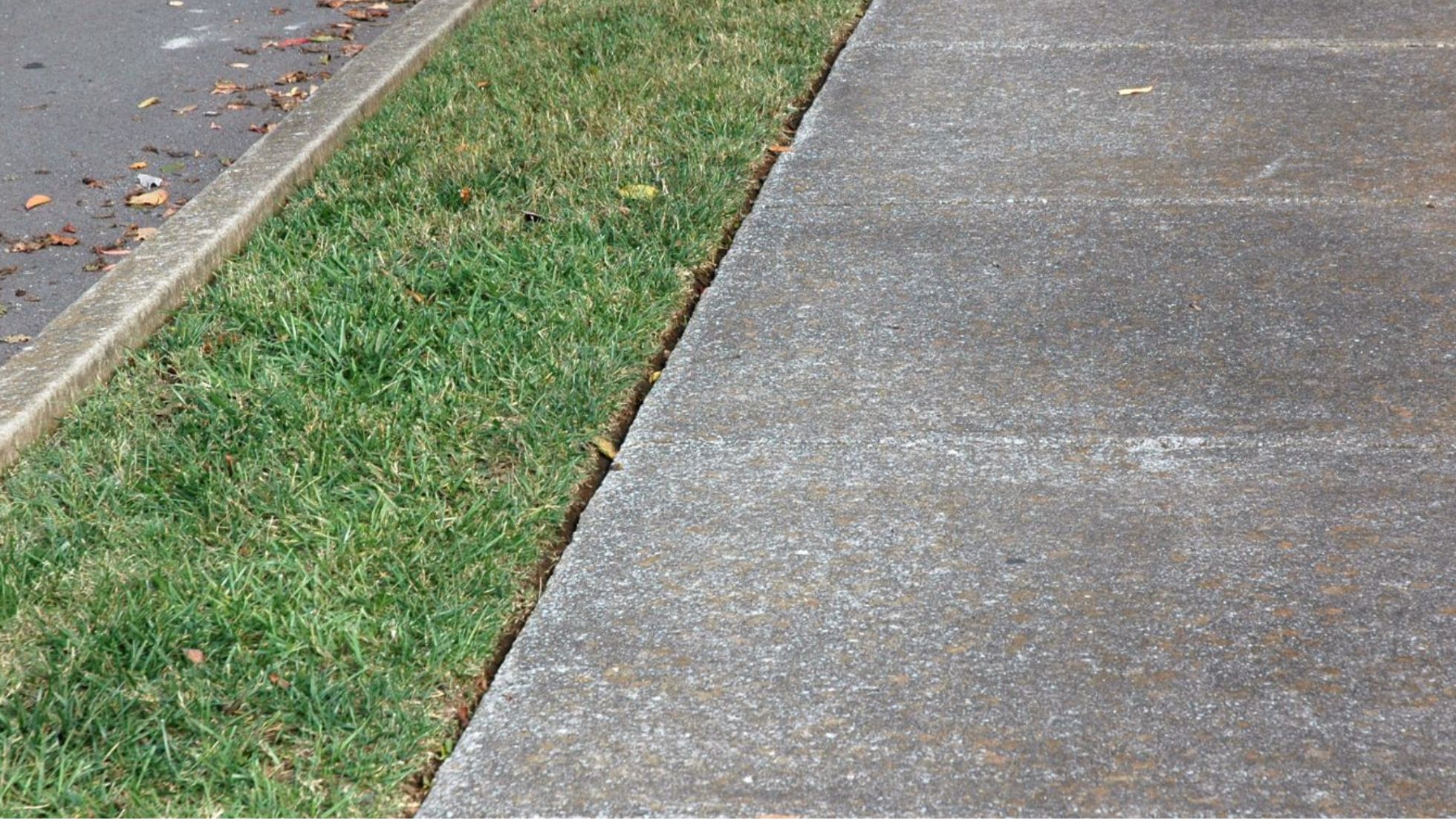 Property managers assuming federal ADA baseline compliance is sufficient in California are working from incomplete information. California Government Code establishes Title 24 accessibility requirements that exceed federal standards in critical ways.
Federal ADA standards specify a 36-inch minimum sidewalk width and define a trip hazard as any vertical change of ¼ inch or greater. California Title 24 requires a 48-inch minimum sidewalk width (San Diego municipal code mandates 5 feet unobstructed), stricter cross-slope tolerances (1:48 maximum vs. 1:50 federal), and higher surface friction requirements with a static coefficient of friction (SCOF) of 0.6 minimum for level surfaces and 0.8 for ramps.
A sidewalk meeting federal ADA standards can still be non-compliant with California law. This regulatory gap creates liability exposure for property owners who believe they’ve achieved compliance through generic repairs that address only federal requirements.
San Diego Municipal Code Enforcement Timelines
San Diego’s Safe Sidewalks Program (approved November 2023) provides important context for property manager responsibilities. When the city issues a notice of repair, property owners typically have 30-90 days to remediate, depending on hazard severity and location. The municipal code places sidewalk maintenance responsibility on adjacent property owners under California Streets & Highways Code §5610.
Proactive repairs before municipal notice eliminate deadline pressure entirely. Documented professional remediation demonstrates your commitment to compliance and supports stronger legal positioning if injury claims arise.
How Horizontal Slicing Ensures California Title 24 Compliance
Precision Concrete Cutting’s patented horizontal slicing technique is specifically designed to meet California Title 24’s stricter standards in a single repair pass. The method removes the exact depth and width of the trip hazard while maintaining proper slope angles and ensuring surface friction compliance—addressing all California-specific requirements simultaneously.
Other repair methods have significant limitations. Grinding smooths only the top surface without addressing full width, slope angle, or friction coefficient requirements, leaving partial compliance and residual liability. Full replacement is overkill for hazard removal and creates unnecessary business disruption. Horizontal slicing provides complete compliance without these limitations.
Understanding the ¼-Inch Trip Hazard Rule and Measurement Standards
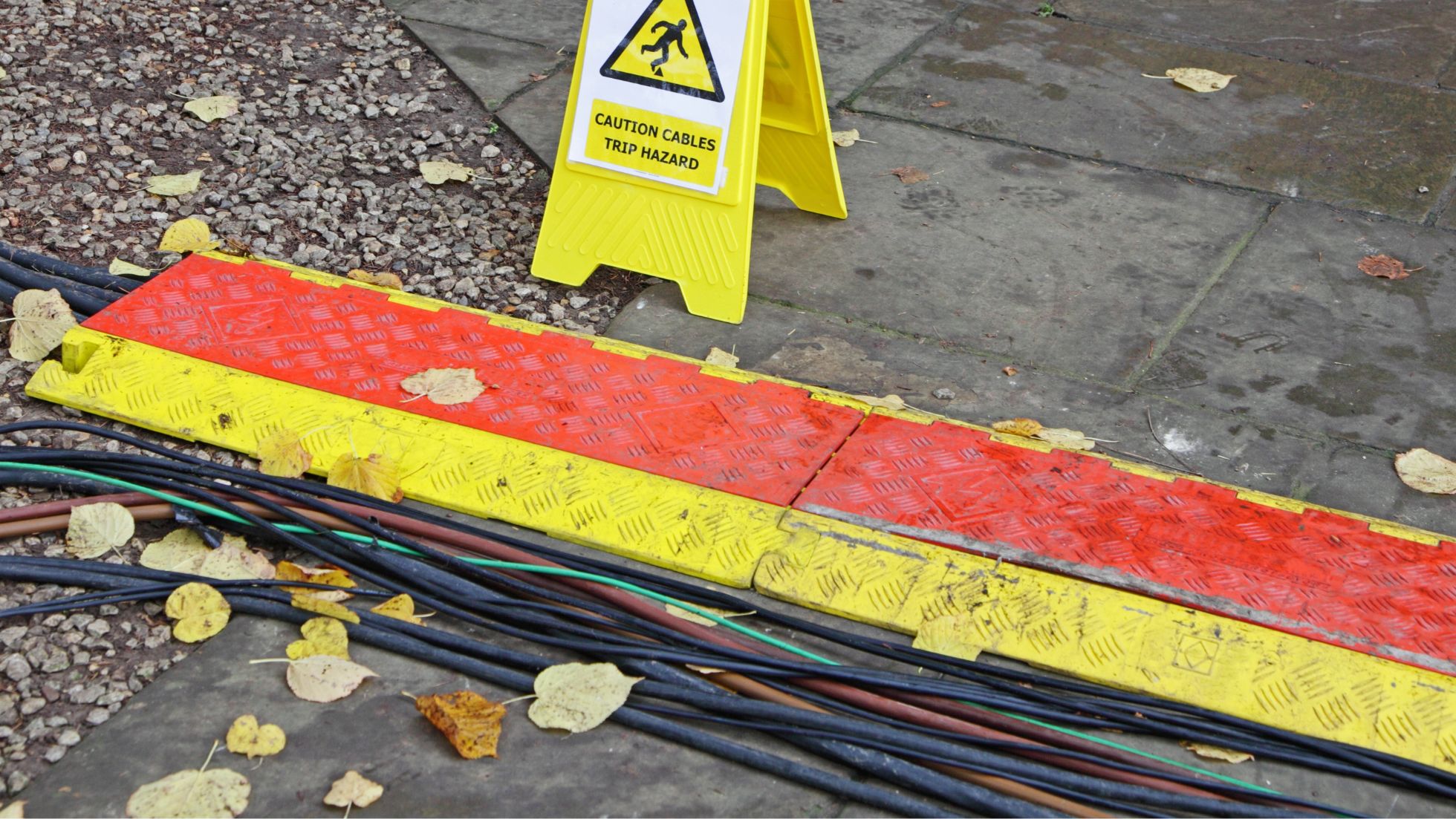 DIY inspection begins with understanding the ¼-inch threshold. Under ADA Accessibility Guidelines (ADAAG), any vertical change of ¼ inch or greater at sidewalk joints, cracks, or heaved sections constitutes a reportable trip hazard. California’s Title 24 applies this same threshold but with stricter enforcement standards.
DIY Measurement Methodology
Property managers can conduct preliminary assessments using simple tools. A standard straightedge (12-18 inches long, perfectly straight) placed across a suspected hazard reveals gaps underneath. Measuring these gaps with a feeler gauge or stacking quarters (each quarter equals approximately 0.069 inches, so four quarters approximate ¼ inch) provides measurement accuracy sufficient for initial identification.
Common measurement mistakes include relying on visual estimation alone, measuring only at joint centers where hazards might be off-center, and ignoring slope changes where ¼ inch of vertical displacement might exceed slope tolerance specifications across a wider hazard area.
Documentation strengthens your compliance record. Photographing identified hazards with a ruler visible for scale creates evidence of property owner diligence and supports liability defense if incidents occur.
Seasonal Inspection Timing in Southern California
Southern California’s climate creates predictable hazard patterns. Southern California’s expansive clay soil swells during wet seasons (October through April) as moisture content increases, creating new hazards and worsening existing conditions. Post-rain inspections during fall and winter reveal maximum expansion effects.
Post-heat inspections (July through August) capture concrete contraction stress. Inland locations like El Cajon and Ramona experience occasional freeze-thaw cycles that cause micro-cracking and hazard propagation, though coastal San Diego experiences minimal freezing.
Bi-annual inspection scheduling—once post-rain season and once post-heat stress period—aligns with Southern California’s natural concrete stress cycles and identifies hazards before they escalate into liability crises.
Repair Methods Compared: Horizontal Slicing vs. Grinding vs. Full Replacement
Property managers deciding how to address identified trip hazards face three primary options, each with different cost, timeline, compliance, and disruption implications.
Grinding smooths the top concrete surface, reducing but not eliminating the height difference. The process costs $100-200 per spot* and takes 2-4 hours per hazard*. However, grinding cannot address the full width of the hazard, adjust slope angles, or affect surface friction coefficients—leaving California Title 24 compliance gaps. Most critically, as concrete settles over subsequent years, the hazard re-develops, requiring repeat grinding every 2-3 years*. Over a 10-year period, the total cost reaches $400-1,000 per hazard* when accounting for repeat maintenance. Your liability exposure remains because the property never achieves full California Title 24 compliance.
Full sidewalk replacement removes the entire slab, excavates the base, and pours new concrete. This approach costs $1,000-2,000+ per section* and requires 3-7 days of sidewalk closure during concrete curing*. Replacement is appropriate only for structural deterioration (rare in trip hazard situations). It creates maximum business disruption and generates 59 tons of concrete waste per 100 repairs. From a practical standpoint, 90% of trip hazard calls don’t justify replacement—property managers waste $10,000-50,000+ annually by defaulting to this option instead of exploring alternatives.
Patented horizontal slicing removes the exact depth and width of the trip hazard in a single pass. The repair takes 15 minutes per hazard* and costs $150-300 per repair*—90% less than replacement and more effective than grinding long-term. The sidewalk reopens immediately after completion with no cure time required. Horizontal slicing meets all California Title 24 requirements simultaneously when performed to specification: proper width coverage, correct slope angles, and appropriate surface friction. Unlike grinding, horizontal slicing offers a long-term repair solution that typically doesn’t require repeat maintenance in the same spot.
[Note: While some repairs (like complex drainage issues or large-scale concrete pouring) may require general contractors, Precision Concrete Cutting specializes in patented horizontal slicing and also offers patching and expansion joint maintenance. We do not perform grinding or full concrete replacement.]
All timelines and service cost ranges are provided for general information only. Actual project duration and service costs will depend on the specific property conditions, scope of work, accessibility requirements, and agreed-upon scope of service as set forth in the written service agreement.
Liability Reduction and Legal Protection: Why Documentation Matters
California premises liability law imposes affirmative duty on property owners to maintain sidewalks in safe condition. California Streets & Highways Code §5610 establishes this responsibility. If a pedestrian is injured on a documented hazard, the injured party can claim negligence for failure to maintain safe conditions.
California’s Qualified Defendant status provides significant liability protection. California Civil Code §55.53 grants Qualified Defendant status if: (1) the property owner completed a written ADA compliance assessment by a Certified Access Specialist (CASp) within 18 months, (2) identified violations are documented, and (3) corrective action is implemented. Qualified Defendants cannot be held liable for damages exceeding $5,000 while implementing corrective actions—massive insurance protection.
The 2023-2024 San Diego Grand Jury Report documented that the city pays $50,000-150,000* in average trip-and-fall settlements. Properties with documented inspections and professional remediation win 85% of trials, compared to 15% for properties with no documentation.
Insurance premium implications are substantial. Some commercial property liability insurers offer 10-25% premium reductions for properties with documented sidewalk maintenance programs, depending on carrier policies. A multi-site property managing 8-10 locations might realize $5,000-15,000* in annual insurance savings through documented proactive repair programs.
One professional horizontal slicing repair ($150-300)* costs 0.2% of an average trip-and-fall settlement. The ROI on professional assessment and remediation is essentially infinite from an insurance and litigation perspective.
GIS-Powered Maintenance Planning: Strategic Portfolio Management
Precision Concrete Cutting’s GIS (Geographic Information System) survey creates a digital map of all sidewalk hazards across your property portfolio. The system captures hazard type (settled, cracked, root upheaval), precise GPS location, severity rating (measured against California Title 24 thresholds), and recommended repair timeline.
Property managers access a real-time dashboard filtered by location, severity, and maintenance timeline. Multi-site properties gain comprehensive visibility into their sidewalk portfolio—preventing reactive scrambling and enabling proactive quarterly budget planning.
Preventative vs. Reactive Maintenance Economics
Reactive maintenance responds to complaints and municipal notices after hazards fully develop. This approach guarantees emergency pricing pressure and full-cost repairs.
Preventative maintenance uses GIS data to identify at-risk sections before hazards reach critical thresholds. Southern California’s seasonal concrete stress patterns create predictable hazard migration. If GIS identifies a settled area prone to expansion in the wet season, scheduling horizontal slicing 6 months before full hazard development reduces costs by approximately 50% compared to emergency repair after failure.
Multi-site properties typically save $20,000-50,000* annually through preventative scheduling versus reactive-only approaches. Smaller properties still benefit significantly through strategic quarterly planning aligned with seasonal risk patterns.
Three-Year Maintenance Forecasting
GIS data enables tier-based budget allocation: Tier-1 (immediate critical repairs), Tier-2 (standard compliance window repairs), and Tier-3 (preventative cutting at at-risk sections). Property managers allocate annual budgets proportionally across three tiers, converting sidewalk maintenance from surprise emergency spending into a predictable line item ($0.50-1.50 per square foot annually* versus $2-5 per square foot* at emergency rates).
Multi-year GIS historical data shows seasonal patterns and enables Q1-Q2 budget reservation for spring post-rain hazard surges, preventing mid-year budget crises.
The Professional Sidewalk Assessment Process
Professional assessment follows three phases: initial survey, repair planning, and execution with documentation.
Phase 1 involves a confidential site walk using the same measurement methodology taught in DIY inspection sections. A GIS survey maps all hazards, documents severity, and creates a digital baseline. This complimentary assessment typically requires 1-2 hours* for a standard commercial property and delivers a written report with photographs, GPS coordinates, prioritized repair list, cost estimates*, and recommended timeline.
Phase 2 provides professional validation for DIY inspection findings and creates the strategic remediation roadmap. Property managers receive professional assessment confirming which hazards require immediate remediation, which can be scheduled in the preventative maintenance phase, and which present highest liability exposure.
Phase 3 involves repair execution with minimal business disruption. Each repair takes 15 minutes*, and the sidewalk is fully accessible immediately after completion—no overnight closures or extended business interruption. Precision horizontal slicing equipment is compact and doesn’t require heavy machinery staging. Weather-independent execution (rain may cause minor delays but typically won’t prevent completion) ensures projects stay on schedule.
Final documentation includes before/after photographs, GPS coordinates, and California Title 24 compliance certification. This documentation package supports Qualified Defendant status claims and integrates directly into your GIS maintenance planning database for follow-up inspections and preventative scheduling.
All timelines and service cost ranges are provided for general information only. Actual project duration and service costs will depend on the specific property conditions, scope of work, accessibility requirements, and agreed-upon scope of service as set forth in the written service agreement.
Frequently Asked Questions About Sidewalk Safety and ADA Compliance
What is the legal definition of a trip hazard under California ADA Title 24 compliance?
California Title 24 defines a trip hazard as any vertical change of ¼ inch or greater at sidewalk joints, cracks, or uneven surfaces. However, California’s standard adds stricter requirements: minimum 48-inch sidewalk width (federal ADA = 36 inches), lower cross-slope tolerance (1:48 versus 1:50 federal), and static coefficient of friction (SCOF) of 0.6 minimum. A sidewalk meeting federal ADA baseline but not California Title 24 is technically non-compliant in California.
What are the penalties for sidewalk non-compliance in San Diego?
San Diego municipal enforcement ranges from $100-500 per violation per day*. Beyond municipal fines, property owners face civil liability if pedestrians are injured on documented hazards—average settlements are $50,000-150,000*. Avoiding compliance through documented proactive repairs saves regulatory fines (typically 30-90 day windows) and dramatically reduces injury liability exposure.
How long does professional trip hazard removal take, and will my sidewalk be closed?
Patented horizontal slicing takes 15 minutes per hazard* on average. The sidewalk is fully accessible immediately after completion—no overnight closures, no business disruption. Compare this to grinding (2-4 hours per spot*, sidewalk closed during work) or replacement (3-7 days full closure* during concrete cure).
How does horizontal concrete cutting compare to grinding for trip hazard removal?
Grinding smooths only the top surface and cannot address the full depth, width, or slope angle of the hazard, leaving California Title 24 compliance gaps. Horizontal cutting removes the exact depth and width of the hazard, meeting all Title 24 requirements in a single pass. Grinding typically costs $100-200 per spot* but requires repeat maintenance every 2-3 years* ($400-1,000 total over 10 years*). Horizontal cutting costs $150-300 per hazard* and typically requires minimal repeat maintenance, making it 3-4x more cost-effective long-term.
What is GIS mapping for sidewalk maintenance, and why do property managers need it?
Geographic Information System (GIS) creates a digital map of all sidewalk hazards across your property portfolio. It captures hazard type, GPS location, severity, and recommended repair timeline. Property managers use GIS data to prioritize repairs by risk, schedule preventative maintenance aligned with Southern California’s seasonal cycles, and forecast multi-year budgets. Multi-site properties (5+ locations) gain $20,000-50,000* annual savings through preventative scheduling versus reactive emergency repairs.
How do I document sidewalk inspections to reduce liability in a slip-and-fall lawsuit?
Document everything: (1) written inspection date and inspector name, (2) measurement data (¼-inch straightedge test, GPS coordinates if available), (3) photographs with ruler visible for scale, (4) specific hazard locations marked on site map, (5) professional repair completion with before/after photographs. This documentation package supports Qualified Defendant status claims under California Civil Code §55.53. Properties with documentation win 85% of slip-and-fall trials; those without documentation win only 15%.
What maintenance schedule should property managers follow to stay ahead of trip hazards?
Bi-annual inspection aligns with Southern California’s seasonal cycles: post-rain inspection (October through April) after expansive clay soil swelling from moisture, and post-heat inspection (July through August) after concrete contraction from extreme temperatures. Properties with formal bi-annual schedules supported by GIS tracking see 60-70% reduction in emergency repairs versus reactive-only approaches.
How do I know when to hire a professional versus handling sidewalk issues myself?
DIY inspection identifies candidates for professional assessment—measuring with straightedge tools and documenting photographs. However, only professional horizontal slicing ensures complete California Title 24 compliance, addresses liability exposure, and provides compliance documentation supporting Qualified Defendant status. If DIY inspection reveals hazards meeting or exceeding the ¼-inch threshold, professional assessment becomes advisable to confirm full compliance picture and evaluate best remediation approach.
What does California Title 24 require for sidewalk accessibility, and how does it differ from federal ADA?
California Title 24 requires minimum 48-inch sidewalk width (federal ADA = 36 inches), stricter cross-slope tolerance (1:48 maximum versus 1:50 federal), and static coefficient of friction (SCOF) of 0.6 minimum for level surfaces, 0.8 for ramps. Federal baseline alone leaves California properties non-compliant. Southern California specialists understand these California-specific stricter standards; national contractors often miss them.
Can expansive clay soil in Southern California cause trip hazards?
Yes—expansive clay soil creates significant challenges. Southern California’s native soil composition includes expansive clay that swells during wet seasons as moisture content increases, creating repetitive concrete stress. This causes lifting, settling, and cracking that generates trip hazards. Understanding this local geologic context helps property managers anticipate seasonal hazard patterns and schedule preventative maintenance accordingly.
How soon must I fix a sidewalk trip hazard after San Diego issues a notice of repair?
San Diego typically allows 30-90 days* for remediation (varies by location and severity). The Safe Sidewalks Program can extend deadlines in some cases or provide cost-sharing. Proactive repairs before municipal notice eliminate deadline pressure entirely. Professional horizontal slicing typically executes 2-3 weeks* from approval, well within compliance windows.
Taking Action: From DIY Inspection to Professional Assessment
Property managers facing sidewalk trip hazards in Southern California have clear options. DIY inspection identifies potential hazards using professional measurement standards. However, only professional assessment ensures complete California Title 24 compliance, documents liability reduction, and creates the strategic maintenance planning that protects commercial operations across multi-site portfolios.
Precision Concrete Cutting brings 25+ years of Southern California specialization, patented horizontal slicing expertise, and GIS-powered maintenance planning capabilities that position property managers for long-term compliance success and liability risk reduction.
Consider consulting with qualified professionals using patented horizontal slicing technology if DIY inspection identifies hazards meeting or exceeding California Title 24 thresholds. Professional assessment validates compliance status, enables strategic remediation planning, and builds legal documentation supporting regulatory defense.
Service Consultation Disclaimer
This article provides general information about Southern California ADA compliance and sidewalk safety and should not be considered as specific technical advice for your property. Compliance requirements, repair methods, and procedures vary significantly based on individual property conditions, jurisdiction within California, and specific accessibility needs. Project schedules, service timelines, and maintenance processes can be affected by many factors specific to each property.
All timelines and service cost ranges are provided for general information only. Actual project duration and service costs will depend on the specific property conditions, scope of work, accessibility requirements, and agreed-upon scope of service as set forth in the written service agreement.
For confidential assessment and specialized service for your specific Southern California property, contact Precision Concrete Cutting at https://socalpcc.com/ or 760-334-8921. Our patented horizontal slicing specialists will provide personalized technical analysis based on your specific property conditions and compliance requirements. No service agreement is created by reading this article.
Sources
California Regulatory Resources
-
California Government Code §5610 – Streets and Highways Maintenance Responsibility – Establishes property owner sidewalk maintenance responsibility and compliance requirements
-
California Civil Code §55.53 – Qualified Defendant Status – Defines liability protection for property owners completing ADA assessments and implementing corrective actions
-
California Building Standards Commission – Title 24 Accessibility Standards – Official source for California’s stricter sidewalk accessibility requirements exceeding federal ADA baseline
Building Code and Compliance Authorities
-
US Access Board – ADA Accessibility Guidelines (ADAAG) – Federal ADA accessibility standards serving as baseline for California Title 24 stricter requirements
-
San Diego Municipal Code – Safe Sidewalks Program – Local sidewalk maintenance requirements, compliance deadlines, and cost-sharing program details for San Diego properties
-
2023-2024 San Diego County Grand Jury Report – Maintaining San Diego’s Sidewalks – Documents current sidewalk maintenance funding gaps, liability settlement data, and enforcement patterns

