
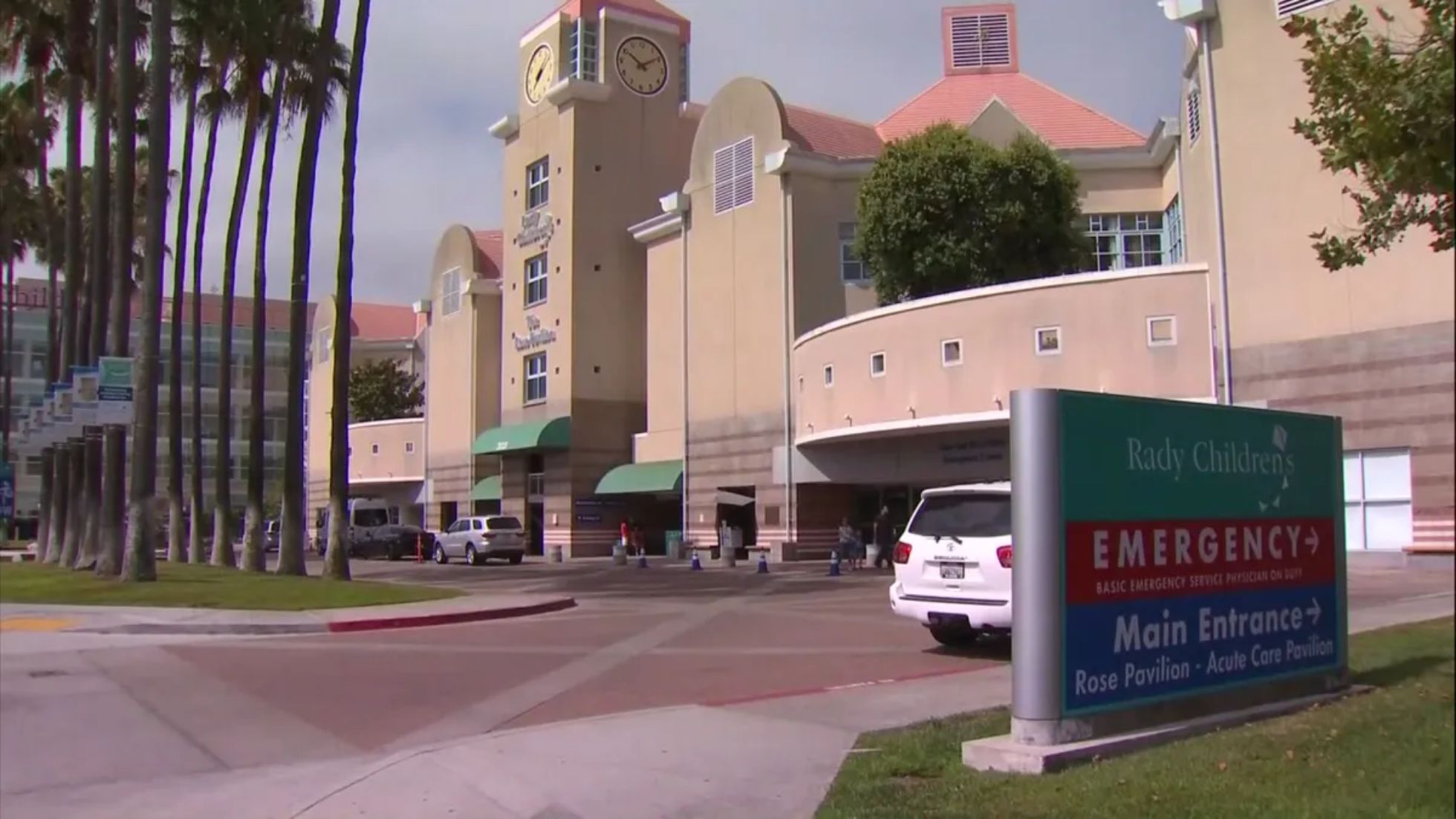
Healthcare facility managers face a critical reality about hospital sidewalk safety that most property owners don’t consider until it’s too late. A single concrete lip—just 3/8-inch high—created a $47,000 liability crisis at a Southern California healthcare facility when a patient fell. Under California Streets & Highways Code § 5610, that facility was liable. Yet most property managers don’t realize they’re personally responsible for these hazards, or that ADA violations can carry $5,000–$25,000 fines per infraction.
Healthcare facilities across Southern California operate under unique pressures that generic sidewalk safety content ignores completely. Your facility serves elderly and mobility-impaired patients at inherently higher risk for trip-and-fall incidents. Your operational constraints prevent weeks-long construction disruptions. Your compliance audits demand documentation that proves your safety commitment. This guide reveals how 2,000+ healthcare facilities in Southern California solved sidewalk safety challenges using specialized trip hazard removal solutions.
Key Information
Healthcare facility sidewalk safety isn’t optional—it’s a regulatory mandate with immediate consequences. California’s accessibility requirements exceed federal ADA minimums through Title 24 Building Code enforcement that actively penalizes non-compliance. Trip hazards exceeding 1/4 inch at concrete joints violate accessibility standards and create facility liability. Traditional repair methods—grinding, patching, or full replacement—either fail to solve the problem permanently or disrupt patient care for weeks. Specialized horizontal slicing technology eliminates trip hazards in 15 minutes* without operational interruption, meeting California’s strictest accessibility standards while saving 50–90% compared to replacement methods.
Overview
This comprehensive guide addresses the complete sidewalk safety challenge that healthcare facility decision-makers face in Southern California. You’ll discover California-specific ADA requirements that exceed federal standards, understand your actual liability exposure under state law, and learn how patented horizontal slicing technology delivers durable, ADA-compliant repairs designed for long-term performance. Unlike generic sidewalk safety articles, this resource speaks directly to healthcare facility constraints—patient safety, operational continuity, compliance documentation, and insurance implications. By the end, you’ll understand exactly why major healthcare systems across Southern California chose specialized trip hazard removal over traditional methods.
Understanding California ADA Compliance Requirements for Healthcare Facilities
 California’s accessibility requirements create a stricter enforcement environment than most property owners realize. While federal ADA standards establish baseline accessibility requirements, California Title 24 Building Code imposes additional restrictions and active enforcement through building inspectors and accessibility auditors. Healthcare facilities are particularly exposed because they serve vulnerable populations—elderly visitors, mobility-impaired patients, and injured individuals using assistive devices.
The legal framework is straightforward but carries serious consequences. Under California law, property owners fronting public streets must maintain safe sidewalks. The definition of “safe” is precise: any vertical change exceeding 1/4 inch at a concrete joint violates ADA standards and California accessibility requirements. This isn’t a guideline—it’s a compliance threshold that determines whether your facility passes accessibility audits or faces regulatory action.
San Diego property owners benefit from a temporary compliance opportunity through the San Diego Safe Sidewalks Program, which runs through June 30, 2026*. This program offers permit fee holidays and expedited approval for sidewalk repairs, creating a strategic window for healthcare facilities to address compliance issues faster and at lower permitting costs.
Regulatory Penalties and Your Facility’s Exposure
Non-compliance carries immediate financial consequences. Healthcare facilities face tiered penalty structures: single infractions ($5,000–$7,500), multiple violations on the same property ($10,000–$25,000), and failure-to-repair violations that accumulate penalties over time. Beyond regulatory fines, facility managers confront slip-and-fall settlements that average $13,000–$47,000* in healthcare settings.
This creates a compounding liability scenario. Your facility faces potential regulatory fines plus personal injury settlements, plus insurance premium increases when you have documented accessibility violations. The financial case for immediate professional assessment becomes clear: investing in compliance now prevents exponentially larger costs later.
California-Specific ADA Updates (2024–2025)
Recent updates intensified healthcare facility compliance scrutiny. The July 2024 ADA Final Rule expanded accessibility requirements for medical diagnostic equipment and telehealth services. While these updates don’t directly address sidewalks, they intensify overall ADA enforcement pressure on healthcare facilities, creating domino-effect compliance pressure across all accessibility areas, including exterior routes. While the Final Rule focuses on interior accessibility and digital services, it signals broader enforcement momentum that places pressure on healthcare facilities to ensure full ADA compliance—including sidewalks and external routes.
Why Patented Horizontal Slicing Outperforms Traditional Repair Methods
 Healthcare facility decision-makers often encounter competing recommendations for trip hazard solutions—and most recommendations oversimplify the technical reality. Grinding, patching, and full replacement are commonly suggested alternatives, yet each has critical limitations that make them unsuitable for permanent ADA compliance.
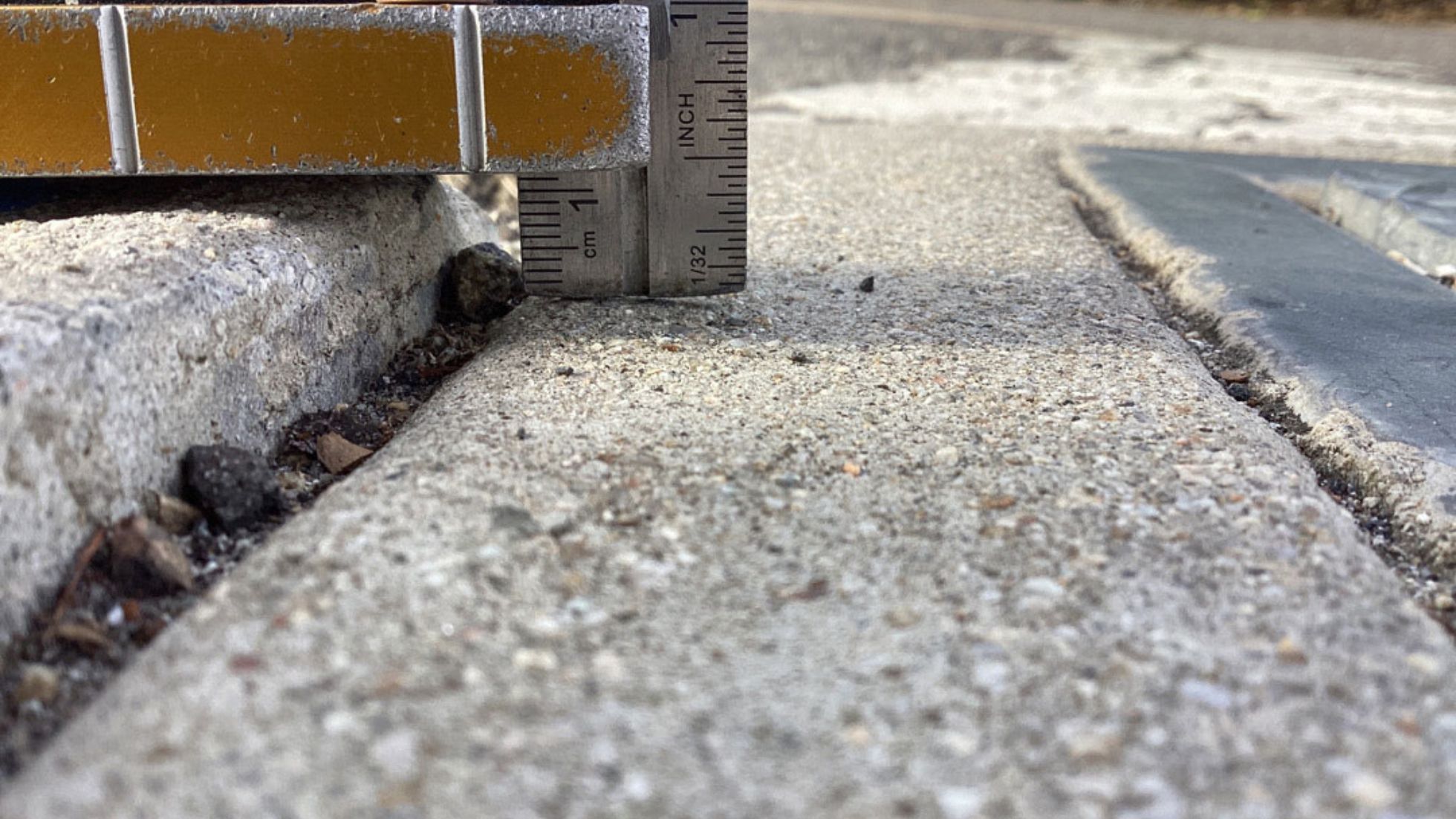
Standard concrete grinding addresses surface roughness but cannot eliminate vertical edges where trip hazards actually originate. Sidewalk trip hazards occur at concrete panel joints—the interface between two panels at different heights. When panels shift due to ground settling, tree roots, or thermal movement, a vertical “lip” forms. Grinders are flat, horizontal tools that smooth plane surfaces. They cannot access vertical interfaces due to design limitations. This means grinding temporarily reduces surface texture but leaves the vertical edge intact, allowing the trip hazard to recur within 6–12 months.
Patented horizontal slicing technology solves this fundamental limitation. Rather than smoothing a surface, horizontal slicing creates a precise 1:8 slope taper that transitions from the higher panel to the lower panel, eliminating the vertical edge entirely. This transforms the trip hazard into an ADA-compliant accessible surface.
Technical Specifications: Why 1:8 Slope Tapers Ensure Compliance
The 1:8 slope taper created by horizontal slicing meets California accessibility standards through precise engineering. ADA standards allow ramps up to 1:12 slope (approximately 8.3% grade). The 1:8 slope (12.5% grade) created by horizontal slicing provides a gentle transition that eliminates vertical discontinuities, meeting ADA guidelines for accessible surfaces where a ramp is not required. The surface firmness remains unchanged—no grinding reduces friction—so slip resistance meets accessibility standards.
Most importantly, horizontal slicing reaches the full concrete joint interface where grinding cannot access. This eliminates the vertical edge completely, not temporarily. The result is a permanent structural solution where the trip hazard is literally no longer present.
Cost-Benefit Analysis: Horizontal Slicing vs. Full Replacement
Healthcare facility budgets depend on clear ROI justification. The financial comparison is compelling. Horizontal slicing typically ranges from $400–$600 per panel*, while full concrete replacement costs $3,100–$8,000 per panel*. For a 50-panel parking lot, this represents $200,000 in savings (89% reduction) plus elimination of weeks of construction timeline and heavy equipment disruption.
Beyond direct costs, consider operational expenses. Full replacement requires:
-
Multi-day work windows consuming facility resources
-
Heavy equipment on-site (concrete removal, dust control)
-
Temporary access route planning and signage
-
Equipment staging consuming valuable facility parking
-
Staff coordination around construction schedules
Horizontal slicing requires 15 minutes per location* and can be scheduled during non-peak hours—early morning, evening, or weekend repairs completing before patient volumes increase.
Speed and Operational Continuity
Healthcare facilities cannot afford operational downtime. The 15-minute repair time* per location enables strategic scheduling that maintains continuous facility operations. Repairs happen during off-hours windows, parking lots remain open, patient access routes stay clear. Emergency access routes—critical for ambulance traffic and patient arrivals—return to ADA compliance immediately after repair.
By contrast, full replacement creates operational paralysis. Multi-day work windows require temporary barriers, rerouting foot traffic, and staffing coordination that disrupts normal facility operations.
GIS-Powered Assessment and Compliance Documentation
Property managers underestimate the documentation value of comprehensive sidewalk assessment. Healthcare facility ADA compliance audits—whether Joint Commission accreditation, CMS reviews, or insurance inspections—demand proof that you’ve identified and corrected hazards systematically.
Professional GIS surveying creates audit-ready documentation that proves your compliance efforts. Initial assessment involves comprehensive sidewalk mapping with GPS coordinate tagging of every identified hazard. This produces a digital map showing hazard locations, severity ratings, and repair prioritization. Photographic documentation captures before-repair conditions with precise measurements. Upon completion, after-repair photos verify remediation.
This documentation chain demonstrates systematic hazard identification and rapid remediation. When facility inspectors ask “What sidewalk hazards exist on your property?” you produce a professional GIS map proving comprehensive monitoring and swift correction. This differentiates well-managed facilities from neglectful ones in regulatory assessments.
Preventative Maintenance ROI
Facilities implementing GIS-based preventative maintenance realize significant cost reductions compared to reactive approaches. Preventative planning identifies problem areas before incidents occur, enables scheduled repairs during low-disruption windows, and allows budget predictability rather than emergency service premiums.
The financial impact is substantial. Facilities shifting from reactive to preventative maintenance typically save 40% annually* through avoided emergency repairs and reduced incident-related costs. Beyond financial benefits, preventative programs provide legal defensibility: “We proactively monitor all hazards and address them immediately” creates a compelling litigation defense if an incident occurs post-repair.
Liability Reduction and Insurance Implications
Healthcare facility administrators often focus on regulatory compliance without fully grasping liability exposure. California premises liability creates strict accountability for property conditions. Under California Streets & Highways Code § 5610, property owners are responsible for maintaining safe sidewalks regardless of fault or prior notice. If a trip hazard exists and causes injury, liability exposure is immediate.
Healthcare facilities face amplified settlement risks due to patient demographics. Elderly and mobility-impaired visitors suffer more severe injuries from falls. Medical documentation of injuries is precise and comprehensive. Damages awards tend to be higher in healthcare settings due to both injury severity and facility reputation concerns.
Immediate Liability Reduction Through Compliance
The moment horizontal slicing removes a trip hazard, liability exposure drops dramatically. Before repair, your facility maintains an active ADA violation with documented hazard. After repair, that hazard no longer exists. This transformation provides legal defensibility: “We identified and immediately corrected the hazard.”
Insurance carriers recognize this distinction. Documented hazard identification plus rapid correction reduces risk profile, potentially improving coverage terms or reducing premiums. The documentation proof matters as much as the repair itself.
Long-Term Risk Management Through Documented Maintenance
Courts evaluate three factors when assessing property owner liability: Did you know about the hazard? Did you take reasonable remediation steps? Was the remedy appropriate and timely? GIS-based maintenance records prove “yes” to all three questions.
Systematic inspection programs demonstrate commitment to safety. Documented repair timelines show responsiveness. Before/after photo records prove effective remediation. This documentation creates a compelling legal defense narrative: your facility systematically monitors conditions, identifies hazards promptly, and corrects them rapidly. This good-faith compliance effort significantly reduces jury perception of negligence.
Healthcare Facility-Specific Sidewalk Safety Considerations
Healthcare facility sidewalks experience uniquely high slip-and-fall incident rates. Patient demographics create inherent risk: elderly visitors, mobility-impaired individuals, post-surgical patients, and medication-affected individuals present constantly. High foot traffic multiplies incident probability. Regulatory scrutiny intensifies liability consequences.
Large healthcare systems managing multiple buildings benefit significantly from coordinated GIS-based maintenance planning. Centralized hazard databases enable system-wide compliance tracking, allow prioritization of highest-liability areas (emergency entrances, primary patient routes), and support multi-year maintenance scheduling across all properties. This coordination becomes particularly valuable for healthcare organizations with sprawling campuses across San Diego and Southern California.
Emergency access route prioritization ensures that ambulance routes, emergency patient entrances, and evacuation paths remain continuously ADA-compliant. Sidewalk safety cannot be compromised during repair activities. Horizontal slicing enables emergency route repair during non-peak hours without operational disruption—critical for maintaining continuous facility emergency access.
Getting Started: Free Compliance Assessment Process
Healthcare facility decision-makers should begin with a complimentary baseline assessment. Initial consultation involves discussing facility layout, patient demographics, recent incidents, and identifying primary concern areas. This 15-minute* phone conversation establishes your facility’s specific context.
Professional GIS survey follows, typically requiring 1–2 hours* depending on facility size. The survey team walks your grounds with GPS-enabled inspection equipment, photographing and tagging all identified hazards. Vertical changes are measured at each location, and hazards are classified by severity and ADA violation status.
Within 48 hours*, you receive a detailed digital report including GIS maps showing all hazards with severity ratings, priority repair schedules, cost estimates comparing horizontal slicing vs. traditional methods, ROI analysis for preventative maintenance planning, and compliance timelines aligned with San Diego Safe Sidewalks Program deadlines.
Implementation scheduling coordinates repairs strategically to minimize operational impact. Repairs happen during non-peak hours—early morning before patient arrivals, evening, or weekend windows. Your parking lot remains approximately 95% operational while repairs proceed.
Frequently Asked Questions About Healthcare Facility Sidewalk Safety
What constitutes a trip hazard under California ADA standards?
A trip hazard is any vertical change exceeding 1/4 inch (0.25″) at a concrete joint or crack. The threshold is precise: 1/4-inch edges are compliant; 3/8-inch edges violate standards. Healthcare facilities must address all identified hazards exceeding this measurement.
How do California Title 24 requirements differ from federal ADA standards?
California Title 24 Building Code imposes stricter accessibility requirements than federal ADA minimums. While federal ADA sets baseline standards, California actively enforces pre-construction compliance, ongoing facility inspections, and higher penalties for violations. Healthcare facilities must exceed federal minimums through Title 24 compliance.
What are typical penalties for ADA sidewalk violations in California?
Single infractions range from $5,000–$7,500. Multiple violations on the same property reach $10,000–$25,000. Failure-to-repair violations after notice accumulate to $15,000–$25,000 plus ongoing penalties. Additionally, slip-and-fall injury settlements in healthcare settings average $13,000–$47,000* per incident.
Who bears liability for sidewalk repairs under California law?
Property owners fronting public streets are liable for maintaining safe sidewalks. Healthcare facilities owning their real estate are directly responsible. If repairs aren’t completed, the city can perform repairs and bill the property owner—often at premium rates.
How does horizontal slicing differ from standard concrete grinding?
Grinding smooths horizontal surfaces but cannot eliminate vertical edges where trip hazards originate. Horizontal slicing creates a precise 1:8 slope taper that eliminates the vertical edge entirely, providing permanent solution compared to grinding’s temporary fix (6–12 months before recurrence).
Is horizontal slicing safe for concrete structure?
Yes. Horizontal slicing removes minimal concrete (typically 1–2 inches depth) necessary for slope creation. Remaining concrete maintains full structural integrity and load-bearing capacity. Facilities remain operational; equipment access is unaffected.
How quickly can horizontal slicing repairs be completed?
Most repairs complete in 15 minutes per location*. Once finished, surfaces are immediately safe for traffic. No curing time or area closure is required. Repairs schedule during non-peak hours with zero operational disruption.
What does the 1:8 slope taper accomplish for ADA compliance?
The 1:8 slope taper (12.5% grade) exceeds ADA ramp allowances (up to 1:12 slope) and creates smooth, accessible transitions for wheelchairs, walkers, canes, and elderly pedestrians. It eliminates the detectable trip hazard while maintaining accessibility standards.
Why do property managers need GIS-based sidewalk documentation?
GIS documentation provides audit-ready records proving systematic hazard monitoring and rapid remediation. Joint Commission inspections, CMS reviews, and insurance audits demand evidence of compliance efforts. Professional documentation creates legal defensibility and demonstrates good-faith safety commitment.
What’s the timeline for a typical healthcare facility assessment?
Initial consultation requires approximately 15 minutes*. GIS survey typically takes 1–2 hours* depending on facility size. Detailed report delivery occurs within 48 hours*. Implementation scheduling accommodates facility operational needs.
How much does professional horizontal slicing cost compared to full replacement?
Horizontal slicing typically ranges from $400–$600 per panel*, while full replacement costs $3,100–$8,000 per panel*. For multi-panel areas, savings reach 50–90% compared to replacement methods. Contact Precision Concrete Cutting for property-specific cost estimates.
Can repairs occur during facility operating hours?
Yes. Repairs schedule during non-peak hours—early morning, evening, or weekends—enabling completion before significant patient volumes. Parking lots remain operational, patient access routes stay clear, and emergency services maintain full access.
Sources
California Regulatory Resources
-
California Streets & Highways Code § 5610 – Property owner liability and maintenance obligations for sidewalk safety
-
San Diego Safe Sidewalks Program – Municipal compliance procedures, permit timelines, and fee holiday information through June 2026
-
California Title 24 Building Code ADA Requirements – California-specific accessibility standards exceeding federal ADA minimums
Professional and Industry Sources
-
US Access Board ADA Accessibility Standards – Technical trip hazard definitions, slope requirements, and federal accessibility guidelines
-
Sidewalk Assessment and Maintenance Best Practices – Healthcare facility liability frameworks and premises liability considerations
-
Healthcare Facility Slip-and-Fall Risk Factors – Hospital-specific incident prevention and patient safety strategies
Building Code and Compliance Authorities
-
California Department of General Services ADA Resources – State-level accessibility compliance guidance and regulatory interpretation
-
2024 ADA Updates for Healthcare Facilities – Recent rule changes affecting medical equipment accessibility and telehealth service requirements
Service Consultation Disclaimer
This article provides general information about Southern California ADA compliance and sidewalk safety and should not be considered as specific technical advice for your property. Compliance requirements, repair methods, and procedures vary significantly based on individual property conditions, jurisdiction within California, and specific accessibility needs. Project schedules, service timelines, and maintenance processes can be affected by many factors specific to each property.
All timelines and service cost ranges are provided for general information only. Actual project duration and service costs will depend on the specific property conditions, scope of work, accessibility requirements, and agreed-upon scope of service as set forth in the written service agreement.
Note: While some repairs (like complex drainage issues or large-scale concrete pouring) may require general contractors, Precision Concrete Cutting specializes in patented horizontal slicing and also offers patching and expansion joint maintenance. We do not perform grinding or full concrete replacement.
For confidential assessment and specialized service for your specific Southern California healthcare facility, contact Precision Concrete Cutting or 760-334-8921. Our patented horizontal slicing specialists will provide personalized technical analysis based on your specific property conditions and compliance requirements. No service agreement is created by reading this article.

