
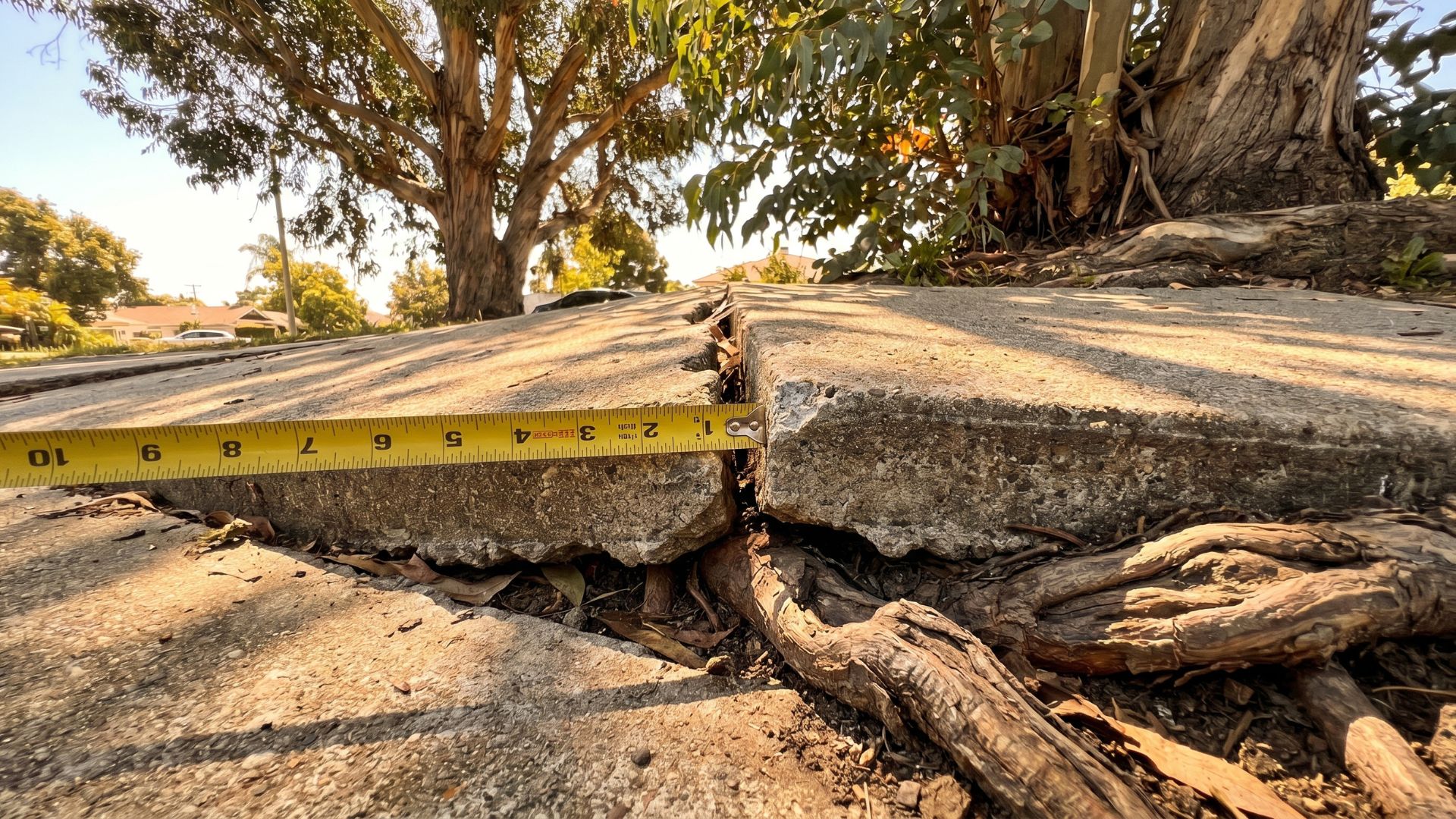
If you own property in San Diego and have received a sidewalk hazard notice from the City, you are now legally required to remove and replace the specific panel identified by inspectors. That mandate is non-negotiable. However, the most expensive mistake property owners make is treating this as a one-time event. The City’s Safe Sidewalks Program does not follow a predictable schedule, and once one panel is flagged, adjacent panels with similar trip hazards are likely next. The true financial risk lies in what happens after that first notice. This guide explains exactly what the notice means, why costs escalate, and how a proactive strategy using precision concrete cutting can protect the rest of your property and reduce the likelihood of future notices.
Key Takeaways
- A City of San Diego sidewalk notice requires full removal and replacement of the flagged panel — no alternatives are accepted for that specific hazard.
- Property owners often face multiple future notices because trip hazards elsewhere on the property remain unaddressed.
- Proactive trip hazard removal using patented horizontal slicing costs 70–90% less than full replacement and meets ADA compliance standards.
- Tree root lifting and dry-climate soil shifting are the primary causes of sidewalk hazards in Southern California.
- California law holds property owners liable for injuries caused by sidewalk trip hazards, making proactive maintenance a legal and financial imperative.
- A free site assessment identifies all existing hazards before the City issues another notice, enabling budget-conscious planning.
Understanding the City of San Diego Safe Sidewalks Program
The City of San Diego’s Safe Sidewalks Program places responsibility for sidewalk maintenance squarely on adjacent property owners. This includes single-family homes, HOAs, apartment complexes, and commercial properties. When a City inspector identifies a vertical displacement of a quarter-inch or more — the threshold for an ADA trip hazard — they issue a notice requiring the owner to hire a licensed contractor to perform a full removal and replacement of the affected panel. The City may apply a temporary asphalt patch, but this does not satisfy the requirement. According to the City’s published guidelines, failure to comply can result in liens against the property or the City performing the work and billing the owner at premium rates.
What the Notice Requires — And What It Doesn’t
When you receive a sidewalk hazard notice, the City mandates removal and replacement of the specific panel identified. This involves demolishing the existing concrete, preparing the subgrade, pouring new concrete, and finishing it to match the surrounding grade. The work must be performed by a contractor licensed in California, and a permit is typically required. There is no alternative method accepted for the flagged panel. Precision Concrete Cutting does not perform this work, and we are transparent about that. We do not offer full removal and replacement, grinding, or concrete leveling.
However, the notice does not address the other trip hazards on your property. In San Diego, common causes of sidewalk displacement — tree root intrusion from mature ficus and liquidambar trees, soil expansion and contraction from our dry-wet seasonal cycles, and seismic settling — rarely affect just one panel. A property with one flagged hazard often has three to seven additional panels that exceed the ADA quarter-inch threshold. These are future notices waiting to happen. This is where a proactive approach changes the financial equation.
The Escalating Cost of Reactive Sidewalk Management
Full sidewalk panel replacement in San Diego typically costs between $1,800 and $3,500 per panel, depending on access, size, and finish requirements. If a property has five hazardous panels and the owner waits for the City to flag each one individually, the total cost can exceed $15,000. Each replacement also involves permitting delays, coordination with utilities if tree roots are involved, and potential landscaping restoration. These costs compound quickly.
By contrast, trip hazard removal using patented horizontal slicing — a method that cuts the raised edge of a displaced panel down to a flush, ADA-compliant surface — provide savings of 70% to 90% per hazard compared to removal and replacement. For San Diego property owners, the math is clear: addressing hazards proactively before the City mandates replacement preserves capital and avoids the administrative burden of multiple compliance deadlines.
| Factor | Full Replacement (per panel) | Horizontal Slicing (per hazard) |
|---|---|---|
| Average Cost | $2,200 – $3,500 | $150 – $350 |
| Permit Required | Yes | No |
| Time to Complete | 3–7 days | 1–2 hours |
| ADA Compliant | Yes | Yes |
| Disruption to Property | High | Minimal |
| Accepted for City Notice | Yes | No (for flagged panel only) |
Note: While some repairs (like sidewalk panel removal or large-scale concrete pouring) may require general contractors, Precision Concrete Cutting specializes in patented horizontal slicing and also offers patching and expansion joint maintenance. We do not perform grinding or full concrete replacement.
Why San Diego Sidewalks Are Especially Vulnerable
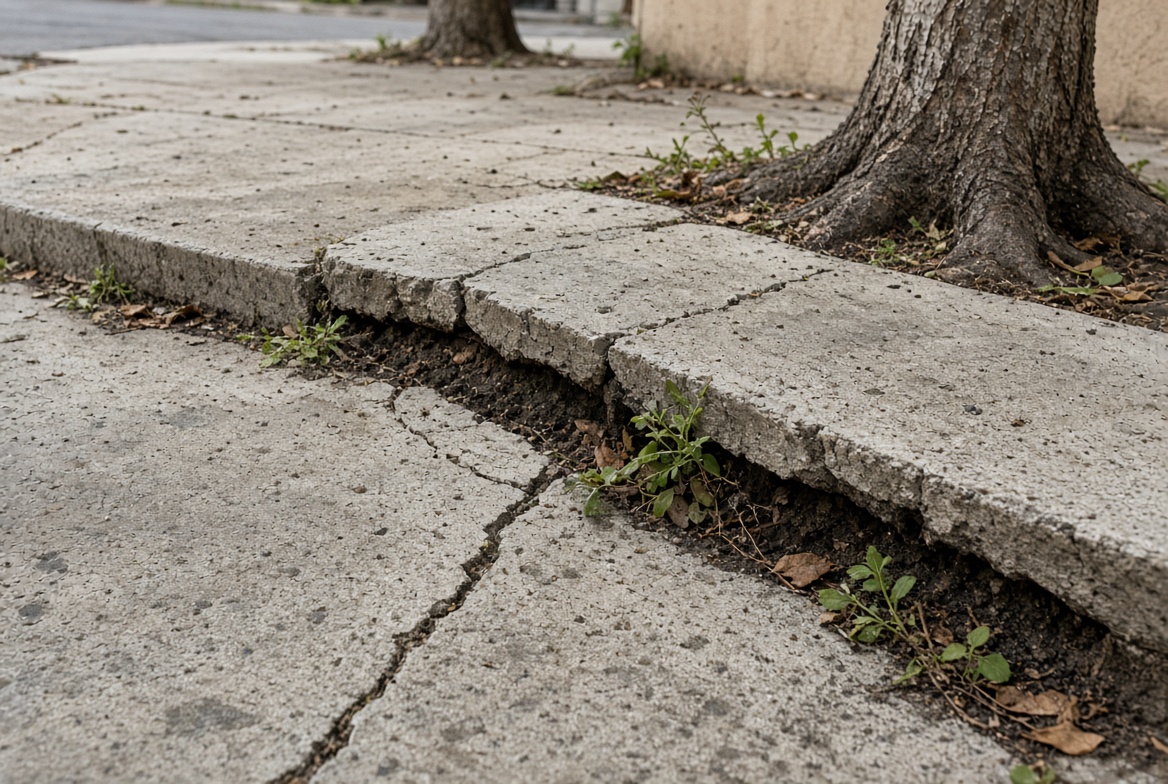 Southern California’s climate creates unique stressors on concrete infrastructure. Unlike regions with freeze-thaw cycles, San Diego’s damage comes primarily from tree root growth and soil movement. The region’s heavy clay soils expand significantly during winter rains and contract during prolonged dry periods. This constant movement shifts panels vertically, creating the quarter-inch or greater displacements that trigger City notices and ADA liability. Research from the University of California Cooperative Extension confirms that mature tree roots can exert over 100 pounds per square inch of pressure on adjacent concrete, easily lifting and cracking panels over time.
Additionally, California’s Division of the State Architect enforces strict accessibility standards under both the federal ADA and California’s Unruh Civil Rights Act. Property owners are liable for injuries caused by non-compliant sidewalks, and California courts have consistently upheld significant judgments against property owners who failed to maintain safe walkways. A proactive maintenance strategy is not just about avoiding City notices — it is about mitigating legal exposure.
Proactive Strategy: Identify Hazards Before the City Does
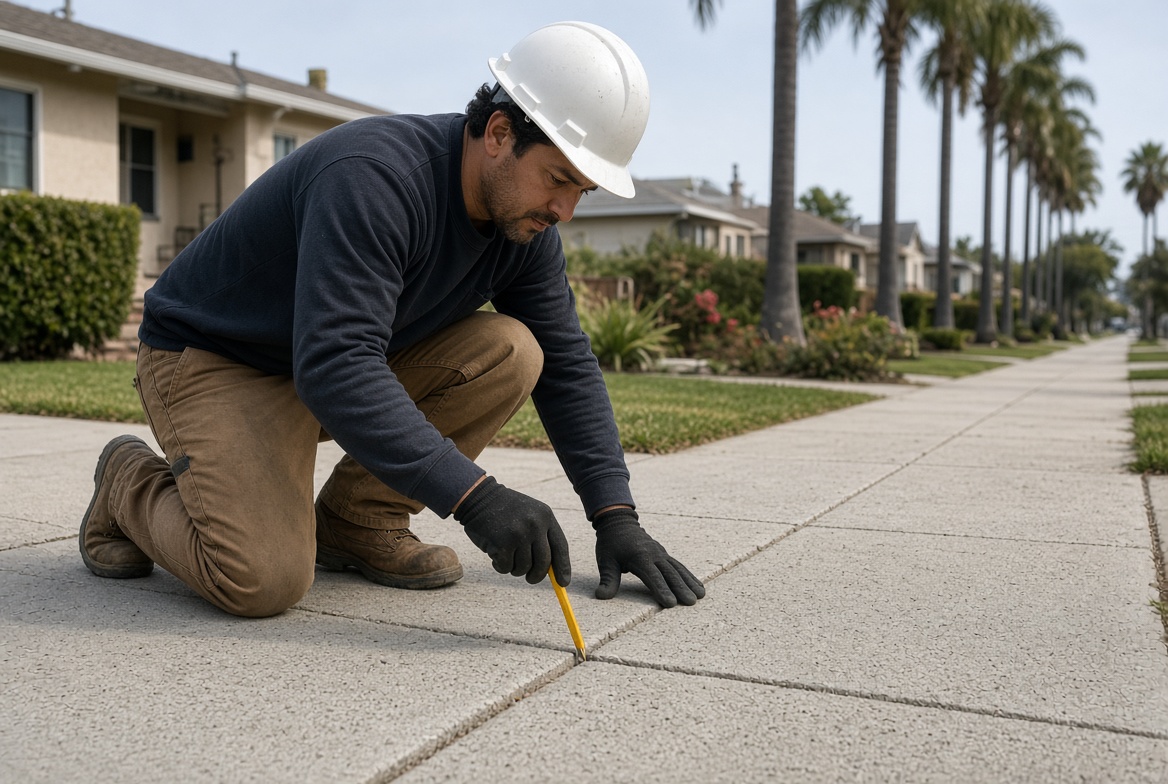
The most effective way to avoid a cascade of replacement mandates is to conduct a comprehensive trip hazard assessment of your entire property now. This involves measuring the vertical displacement of every sidewalk panel joint and identifying any that exceed the ADA quarter-inch threshold. Precision Concrete Cutting offers free site walks for San Diego property owners to document all existing hazards and provide a prioritized remediation plan.
Here is a step-by-step process for property owners:
- Schedule a professional assessment. A trained technician uses calibrated gauges to measure every joint. DIY visual inspections miss hazards that are obvious to inspectors.
- Receive a hazard map and report. You get a documented inventory of all trip hazards on the property, ranked by severity.
- Prioritize hazards for removal. Address the most severe displacements first, especially those in high-traffic paths.
- Complete the slicing work. Our patented horizontal cutting method removes the raised edge in hours, leaving a smooth, ADA-compliant surface.
- Document compliance. Keep records of all work performed. This documentation is valuable if future claims or notices arise.
How Patented Horizontal Slicing Works
The method we use is distinct from grinding, which removes material from the surface and can leave a rough texture, and from mudjacking or slab leveling, which attempts to raise the entire panel. Horizontal slicing uses a specialized saw that cuts horizontally through the raised edge of a displaced panel, removing the trip hazard without disturbing the base or surrounding panels. The result is a clean, flush transition between panels that meets ADA slope requirements for vertical alignment.
This technique is particularly well-suited to San Diego’s common hazard profile: panels lifted by tree roots where the displacement is 0.5 to 2 inches. Because the root system is not disturbed, there is no risk of killing the tree — a major concern for property owners who value mature landscaping. The process is completed in hours, not days, and does not require demolition, concrete pouring, or curing time. For property managers and HOAs, this means minimal disruption to residents and tenants.
Legal Liability and California ADA Compliance
Under California law, property owners have a duty to maintain sidewalks in a safe condition. The Americans with Disabilities Act defines a trip hazard as any vertical change greater than a quarter-inch. California’s SB 1186, passed to reduce frivolous ADA lawsuits, also requires property owners to address identified hazards promptly. Failure to do so can result in lawsuits with damages including medical costs, pain and suffering, and attorney fees. According to the California Courts system, trip-and-fall cases consistently rank among the most common premises liability claims.
Proactive trip hazard removal is a direct risk-management tool. By eliminating hazards before an injury occurs, property owners reduce their exposure to litigation. Documentation of regular inspections and prompt remediation also strengthens a property owner’s defense if a claim is filed.
Common Mistakes Property Owners Make After Receiving a Notice
Understanding what not to do is as important as knowing the right steps. Here are the most frequent errors we see:
- Ignoring the notice. The City will eventually perform the work and bill the owner, often at a higher cost than a private contractor.
- Replacing only the flagged panel. This leaves other hazards in place, virtually guaranteeing future notices and expenses.
- Attempting DIY fixes. Filling gaps with asphalt patch or concrete overlay does not meet ADA standards and can worsen the hazard over time.
- Assuming insurance covers everything. Many property policies have exclusions for gradual deterioration or require specific liability endorsements.
- Hiring unlicensed contractors. The City requires a California-licensed contractor for replacement work. For slicing work, verify that the provider carries proper liability insurance and specializes in trip hazard removal.
Building a Long-Term Sidewalk Maintenance Plan
A strategic maintenance plan transforms sidewalk management from a series of expensive emergencies into a predictable, budgeted expense. Start with a comprehensive assessment to establish a baseline inventory of all hazards. Then, prioritize removal based on severity and foot traffic. Schedule annual re-inspections to catch new displacements early, before they reach the quarter-inch threshold. For properties with aggressive tree roots, consider more frequent assessments.
This approach aligns with the recommendations in our guide to sidewalk inspection and maintenance. Property managers who implement systematic assessments find that their annual sidewalk maintenance costs stabilize and become predictable. Instead of facing a $15,000 replacement bill every few years, they budget $1,500 to $3,000 annually for slicing work and maintain continuous ADA compliance.
For HOAs and commercial properties, this proactive strategy also supports broader goals around creating safe, walkable neighborhoods and protecting property values. Well-maintained sidewalks signal attentive management and reduce resident complaints.
Environmental and Budgetary Advantages of Slicing Over Replacement
Concrete production is a carbon-intensive process, responsible for approximately 8% of global CO2 emissions according to research from the U.S. Environmental Protection Agency. Full panel replacement generates demolition waste, requires new concrete manufacturing, and often involves heavy equipment with associated emissions. Horizontal slicing, by contrast, removes only the raised edge — a fraction of the material — and produces no demolition waste. The existing panel remains in place, preserving the embedded carbon of the original concrete.
For property owners pursuing sustainability certifications or simply looking to reduce their environmental footprint, slicing is a clear winner. It also aligns with San Diego’s Climate Action Plan goals around waste reduction. Our sustainable sidewalk solutions article explores this in greater depth.
How to Choose a Trip Hazard Removal Contractor in San Diego
Not all concrete contractors offer horizontal slicing, and the quality of work varies significantly. When evaluating providers, ask these questions:
- Do you specialize in trip hazard removal, or is this a secondary service?
- What specific method do you use? (Look for “horizontal slicing” or “precision cutting,” not grinding.)
- Can you provide a written assessment with measurements for every hazard?
- Are you fully insured for liability and workers’ compensation in California?
- Do you offer documentation of ADA compliance after the work is complete?
Our guide on choosing trip hazard removal contractors provides a detailed checklist. For San Diego property owners specifically,14local experience matters. Contractors familiar with the City’s inspection patterns and common hazard types can provide more targeted advice.
Case Study: A San Diego HOA Avoids $22,000 in Replacement Costs
In 2026, a 120-unit condominium complex in Clairemont received a City notice for a single uplifted panel near the main entrance. The board initially planned to replace only that panel. During a free site assessment, we identified 11 additional trip hazards across the property’s sidewalk network — all exceeding the ADA threshold and all06caused by root intrusion from mature ficus trees. The estimated cost to replace all 12 panels was $26,400. Instead, the HOA replaced the single flagged panel as required and used horizontal slicing to address the other 11 hazards at a total cost of $3,850. They have since implemented an annual inspection program and have received no further City notices in 18 months.
This outcome reflects the core message we share with every property owner: we cannot remove the hazard the City identified, but we can help you avoid the next one. For more on how HOAs can manage sidewalks strategically, see our article on smart sidewalk maintenance for California HOAs.
Frequently Asked Questions
What should I do immediately after receiving a sidewalk hazard notice from the City of San Diego?
Read the notice carefully to identify the specific panel and compliance deadline. Contact a licensed contractor to schedule the required removal and replacement. Simultaneously, arrange a comprehensive assessment of your entire property to identify other trip hazards that could trigger future notices.
Can horizontal slicing be used to satisfy a City sidewalk hazard notice?
No. The City of San Diego requires full removal and replacement for the flagged panel. Horizontal slicing is not accepted as compliance for a City notice. However, it is an effective method for addressing other trip hazards on your property before they are flagged.
How much does trip hazard removal cost compared to replacement?
Trip hazard removal using horizontal slicing typically provides savings of 70% to 90% per hazard as compared to replacement.
Does horizontal slicing meet ADA requirements?
Yes. When performed correctly, horizontal slicing creates a flush transition between panels with no vertical displacement greater than a quarter-inch, meeting ADA and California accessibility standards.
Will horizontal slicing damage my trees?
No. The slicing technique removes only the raised concrete edge and does not disturb tree roots. This is a significant advantage over replacement, which often requires root cutting and can harm or destabilize mature trees.
How often should I inspect my sidewalks for trip hazards?
We recommend a professional assessment at least annually. Properties with large trees or expansive soils may benefit from semi-annual inspections. Regular monitoring catches displacements before they become ADA violations.
Is trip hazard removal covered by property insurance?
Most property insurance policies do not cover preventive maintenance like trip hazard removal. However, addressing hazards proactively can reduce liability premiums and prevent costly claims. Consult your insurance provider for specifics.
What is the difference between horizontal slicing and grinding?
Grinding uses an abrasive wheel to wear down the concrete surface, often leaving a rough texture and creating dust. Horizontal slicing uses a specialized saw to make a clean, precise cut through the raised edge, leaving a smooth, flush finish without surface abrasion.
Conclusion
A sidewalk hazard notice from the City of San Diego is a mandatory directive — but it is also a signal. It reveals that your property has conditions capable of producing trip hazards, and where there is one, there are almost certainly more. The property owners who manage costs most effectively are those who respond to the notice by addressing the entire property, not just the flagged panel. By combining the required replacement with proactive trip hazard removal using horizontal slicing, you satisfy the City’s mandate while protecting yourself from a cascade of future expenses.
Precision Concrete Cutting provides free site assessments for San Diego property owners. We will measure every sidewalk joint, document every hazard, and deliver a clear plan to bring your property into ADA compliance — without unnecessary replacements. Schedule your free site walk today and take control of your sidewalk maintenance before the next notice arrives.
References
- City of San Diego Safe Sidewalks Program — sandiego.gov
- California Division of the State Architect — dgs.ca.gov
- California Courts — courts.ca.gov
- U.S. Environmental Protection Agency — epa.gov
- University of California Cooperative Extension — ucanr.edu
- National Association of Home Builders — nahb.org

