
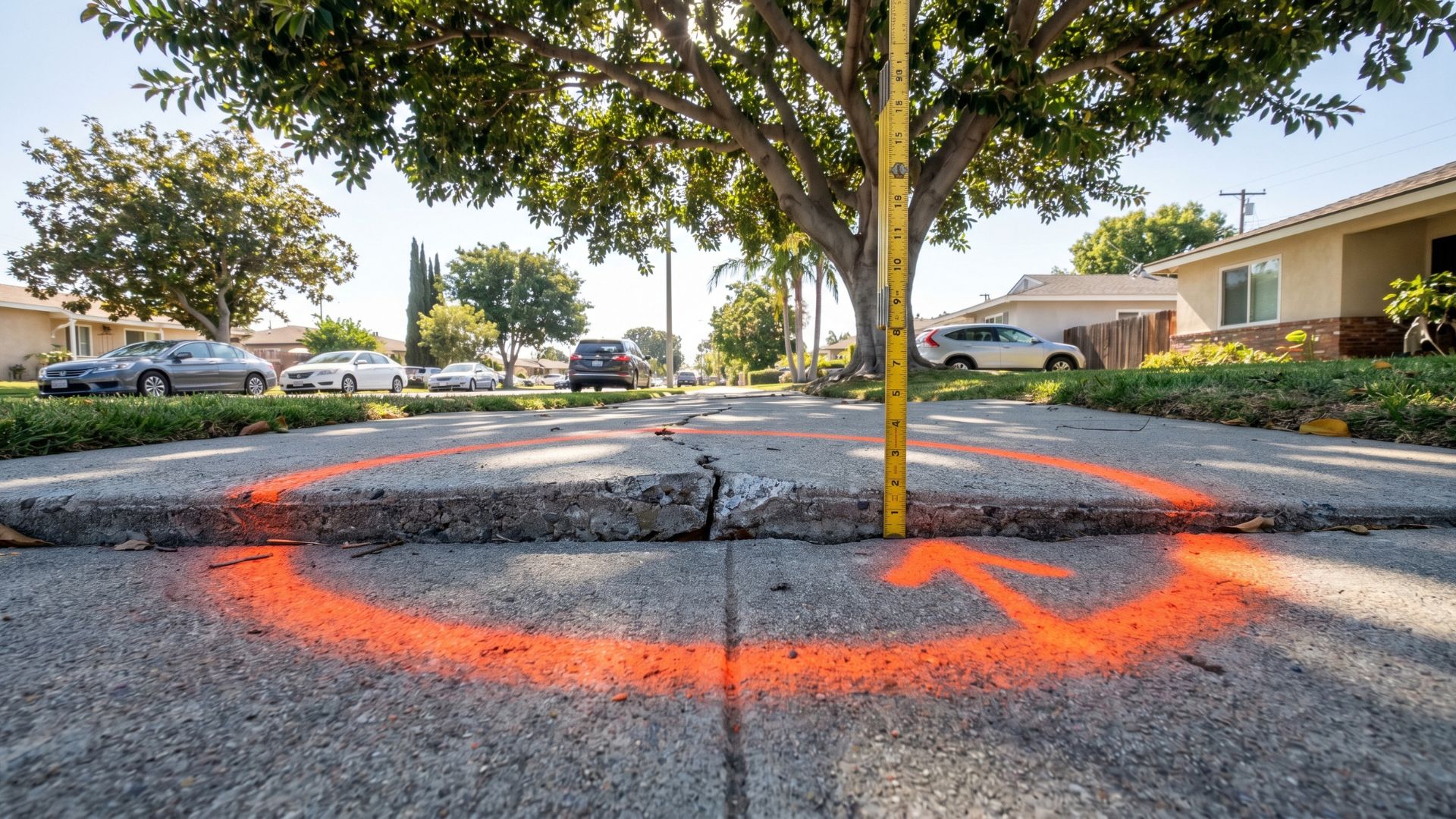
If you own property in San Diego and have received a sidewalk hazard notice from the City, you are now legally required to remove and replace the flagged concrete panel. This notice, issued under the City’s Safe Sidewalks Program, requires full replacement by a licensed contractor—often at significant expense. But the notice you hold is rarely an isolated event. It signals that other trip hazards likely exist on your property, and more notices could follow. While you must comply with the city’s directive for the identified panel, you can take immediate steps to protect the rest of your walkways from the same costly fate.
Key Takeaways
- A San Diego safe sidewalks notice mandates full removal and replacement of the flagged panel by a city-licensed contractor.
- Temporary asphalt patches applied by the city do not satisfy the replacement requirement.
- Replacement costs can be 70–90% higher than precision trip hazard removal methods.
- One notice often predicts future citations; proactive assessment of remaining walkways is essential.
- Horizontal slicing techniques offer ADA-compliant trip hazard removal without full panel replacement.
- California law and ADA standards place liability squarely on property owners for sidewalk injuries.
- Strategic, budget-conscious maintenance plans prevent compounding financial burdens.
Understanding the San Diego Safe Sidewalks Program
The City of San Diego’s Safe Sidewalks Program is an enforcement initiative designed to bring public walkways into compliance with federal Americans with Disabilities Act (ADA) standards and local safety codes. According to the City of San Diego Street Division, property owners are responsible for maintaining sidewalks adjacent to their land. When inspectors identify a vertical displacement of one-quarter inch or more—a trip hazard under ADA guidelines—they issue a notice requiring corrective action.
These notices arrive without a predictable schedule. A property owner might go years without hearing from the city, then receive a citation for a single lifted panel triggered by tree root growth or soil shifting common in Southern California’s dry climate. The city may apply a temporary asphalt patch to mitigate immediate danger, but this does not eliminate the requirement for full panel removal and replacement by a licensed contractor who meets municipal specifications.
What the Notice Actually Requires
When you receive a San Diego safe sidewalks notice, the city mandates a specific workflow. First, you must hire a contractor with the appropriate City of San Diego business license and insurance. That contractor must pull a permit, remove the entire flagged panel, prepare the subgrade, and pour new concrete to match existing grades. The city inspects the completed work to confirm compliance.
This process, known in the industry as remove and replace (R&R), is the only method the city accepts for the cited panel. According to data from the U.S. Department of Justice ADA Information, trip hazards as small as a quarter-inch can cause serious falls, and municipalities nationwide are intensifying enforcement.
Why Costs Escalate Quickly
Full panel replacement is expensive. A single 4-foot by 4-foot sidewalk square can cost between $800 and $1,500 to remove and replace, depending on access, root conditions, and prevailing wage requirements for public works projects. If the city identifies multiple panels over time—or if a property has several existing trip hazards—the financial impact compounds rapidly. A commercial property with 15 lifted panels could face a bill exceeding $20,000.
This pattern is common. Tree roots from species like ficus, liquidambar, and ash—planted extensively throughout San Diego neighborhoods—exert upward pressure on concrete slabs. The city’s dry-wet-dry weather cycles cause expansive clay soils to shrink and swell, further destabilizing panels. These conditions create multiple hazards across a single property, yet the city’s inspection process often flags only one at a time.
The Proactive Approach: Protecting the Rest of Your Property
While you cannot avoid replacing the panel cited in your notice, you can prevent future citations by addressing other trip hazards now. This is where precision trip hazard removal using horizontal slicing becomes a strategic advantage. Unlike full replacement, this patented method cuts the raised edge of a concrete panel at a precise angle, creating a smooth, ADA-compliant transition without removing the entire slab.
This approach aligns with California’s ADA compliance requirements. The California Building Standards Code (Title 24) incorporates federal ADA standards, mandating that walking surfaces have changes in level no greater than one-quarter inch without a beveled transition. Horizontal slicing achieves this tolerance with a clean, flush finish that meets accessibility standards.
Common San Diego Sidewalk Hazards Beyond the Notice
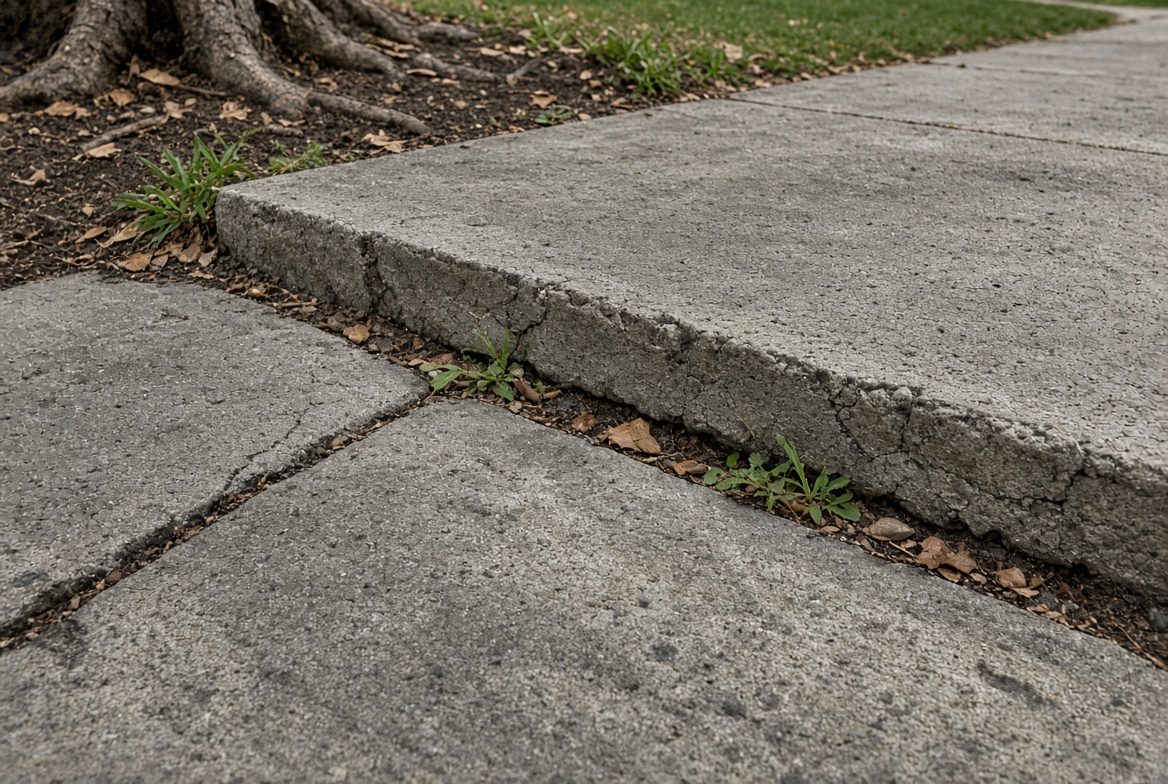 San Diego’s unique environment creates specific sidewalk failure patterns. Understanding these helps property owners identify areas of concern before the city does.
Tree Root Lifting
Mature street trees, particularly ficus and eucalyptus, develop extensive shallow root systems that displace concrete. Root barriers can help, but existing lifted panels require immediate attention.
Soil Settlement and Erosion
Southern California’s decomposed granite soils and periodic heavy rains cause uneven settlement. Panels sink at edges, creating vertical offsets that exceed ADA limits. This is especially prevalent on slopes and in areas with poor drainage.
Thermal Expansion Damage
Concrete expands and contracts with temperature fluctuations. In San Diego’s inland valleys, where summer temperatures reach 100°F and winter nights drop to 40°F, panels can crack and shift. Joints without proper expansion material become pressure points, leading to spalling and uneven surfaces.
Utility Cut Settling
When utility companies excavate for repairs, the backfilled trenches often settle over time, creating linear trip hazards across walkways. These are frequently overlooked until an inspector flags them.
Cost Comparison: Replacement vs. Horizontal Slicing
The financial contrast between full replacement and precision trip hazard removal is stark. The table below illustrates typical costs for a single 4-foot panel in San Diego.
| Method | Average Cost per Panel | Time to Complete | ADA Compliant | City Accepted for Notices |
|---|---|---|---|---|
| Full Remove & Replace | $800 – $1,500 | 3–7 days (with cure time) | Yes | Yes (required for cited panel) |
| Horizontal Slicing | $120 – $300 | 1–2 hours | Yes | No (for cited panel only) |
As the table shows, horizontal slicing costs 70–90% less than replacement. This budget-conscious strategy lets property owners comply with the city’s mandate while protecting their financial position.
Note: While some repairs (like full panel replacement or large-scale concrete pouring) may require general contractors, Precision Concrete Cutting specializes in patented horizontal slicing and also offers patching and expansion joint maintenance. We do not perform grinding or full concrete replacement.
How to Assess Your Property for Additional Hazards
Conducting a thorough sidewalk inspection is the first step toward proactive maintenance. Follow these steps to identify trip hazards before they trigger another notice.
- Measure vertical displacements. Use a quarter-inch gauge or a standard #2 pencil (approximately one-quarter inch in diameter). Any vertical offset that catches the pencil indicates a potential ADA violation.
- Document with photos. Photograph each hazard from multiple angles, including a measuring tool for scale. Date-stamp the images for your records.
- Map hazard locations. Create a simple site diagram marking each trip hazard. This becomes your prioritized action plan.
- Check after rain events. Soil movement accelerates after heavy precipitation. Re-inspect within two weeks of significant rainfall.
- Examine tree zones. Walkways within 10 feet of mature trees deserve extra scrutiny. Look for cracks radiating from trunk bases.
- Engage a professional assessment. A specialized trip hazard removal contractor can perform a comprehensive evaluation and recommend the most cost-effective interventions.
According to the ultimate guide to sidewalk inspection and maintenance, regular assessments catch hazards when they are small and inexpensive to address.
California ADA Compliance and Liability
California law imposes strict liability on property owners for injuries caused by sidewalk defects. Under the California Streets and Highways Code Section 5610, adjacent property owners bear responsibility for sidewalk maintenance. When a trip hazard causes injury, the property owner can face claims for medical expenses, lost wages, and pain and suffering.
The ADA sets the federal standard, but California’s Unruh Civil Rights Act and the California Disabled Persons Act can impose additional penalties for accessibility violations. A 2026 report from the California Department of General Services emphasizes that public accommodations must maintain accessible routes, and sidewalks are explicitly included.
Building a Strategic Maintenance Plan
Smart property owners treat the city’s notice as a wake-up call. The goal shifts from reactive compliance to proactive management. A strategic plan includes:
- Immediate compliance: Hire a licensed contractor to replace the cited panel per city requirements.
- Comprehensive assessment: Identify all other trip hazards across the property.
- Prioritized remediation: Address the most severe hazards first using cost-effective horizontal slicing.
- Scheduled re-inspections: Conduct walkway audits twice yearly, ideally in spring and fall.
- Budget allocation: Set aside annual funds for trip hazard removal to avoid financial surprises.
This approach aligns with recommendations in the guide to preventative sidewalk care, which emphasizes that early intervention saves time and money.
Why Horizontal Slicing Works for San Diego Properties
 Horizontal slicing is not grinding or leveling. It is a patented concrete cutting method that removes the raised edge of a panel without disturbing the surrounding area. A specialized saw blade operates parallel to the walking surface, slicing off the lifted lip at a precise angle. The result is a smooth, flush transition that eliminates the existing trip hazard while preserving the existing concrete.
This technique offers distinct advantages for San Diego property owners:
- Speed: Most hazards are resolved in under two hours, minimizing disruption to tenants, customers, and residents.
- Cost: At 70–90% less than replacement, it stretches maintenance budgets significantly.
- ADA compliance: The finished surface meets federal and state accessibility standards.
- No cure time: Unlike poured concrete, sliced panels are immediately ready for foot traffic.
- Scalability: Multiple hazards can be addressed in a single day.
For property managers overseeing multiple locations, this scalability is critical. A single mobilization can resolve hazards across an entire portfolio, as detailed in the benefits of trip hazard removal for commercial properties.
Common Mistakes Property Owners Make
After receiving a San Diego safe sidewalks notice, property owners often make avoidable errors that increase long-term costs.
Ignoring the Rest of the Property
Focusing solely on the cited panel while ignoring other visible hazards is the most expensive mistake. The city will return, and each subsequent notice triggers another mandatory replacement.
Attempting DIY Repairs
Some owners try to grind down lifted edges themselves, but these approaches rarely meet ADA tolerances and can worsen the hazard. As explained in the guide to DIY sidewalk mistakes, improper techniques often create liability rather than resolve it.
Delaying Action
The city’s notice includes a compliance deadline. Missing it can result in fines, liens, or the city contracting the work and billing the property owner at premium rates. Prompt action on the cited panel—and immediate assessment of remaining walkways—is essential.
Frequently Asked Questions
What exactly is a San Diego safe sidewalks notice?
A San Diego safe sidewalks notice is an official citation from the City of San Diego requiring a property owner to remove and replace a specific sidewalk panel that has been identified as a trip hazard. The notice is issued under the Safe Sidewalks Program and mandates compliance within a specified timeframe using a licensed contractor.
Can I use horizontal slicing to fix the panel cited in the notice?
No. The city requires full removal and replacement for the specific panel identified in the notice. Horizontal slicing is an ADA-compliant trip hazard removal method that can be used for other hazards on your property, but it does not satisfy the city’s mandate for the cited panel.
How much does sidewalk panel replacement cost in San Diego?
Full removal and replacement of a single sidewalk panel in San Diego typically costs between $800 and $1,500, depending on access conditions, root involvement, and contractor rates. Costs escalate quickly when multiple panels require replacement.
What causes sidewalk trip hazards in Southern California?
Common causes include tree root growth from species like ficus and eucalyptus, soil settlement from expansive clay soils, thermal expansion and contraction, and utility cut settling. San Diego’s dry climate and occasional heavy rains accelerate these processes.
Is horizontal slicing compliant with ADA standards?
Yes. When performed correctly, horizontal slicing creates a smooth, flush transition with no vertical displacement greater than one-quarter inch, meeting both federal ADA standards and California Building Standards Code requirements.
How quickly can trip hazards be addressed with horizontal slicing?
Most individual trip hazards are resolved in one to two hours using horizontal slicing. Multiple hazards across a property can often be completed in a single day, with no cure time required before the walkway is ready for use.
What should I do immediately after receiving a sidewalk notice?
First, hire a city-licensed contractor to replace the cited panel. Simultaneously, arrange a comprehensive assessment of all other walkways on your property to identify and address additional trip hazards before they trigger further notices.
Does property insurance cover sidewalk repairs?
Most general property insurance policies do not cover sidewalk maintenance or replacement unless damage results from a covered peril. However, liability coverage may respond to injury claims arising from trip hazards. Check with your insurance provider for specific policy details.
Conclusion
Receiving a San Diego safe sidewalks notice is a serious matter that requires quick compliance. The city’s requirement for full panel replacement is non-negotiable for the cited hazard. However, this notice also serves as a critical warning: other trip hazards likely exist on your property, and each one represents a future citation, a potential lawsuit, and a significant expense. By combining mandatory replacement of the flagged panel with proactive horizontal slicing for all other hazards, property owners can achieve full ADA compliance, protect against liability, and save 70–90% compared to replacing every panel. Take control of your sidewalk maintenance strategy now. Contact us today to schedule a free site walk and comprehensive trip hazard assessment.
References
- City of San Diego Street Division – Safe Sidewalks Program. sandiego.gov
- U.S. Department of Justice – ADA Information. ada.gov
- California Department of General Services – Accessibility Standards. dgs.ca.gov
- California Streets and Highways Code Section 5610.
- San Diego County Urban Forestry Advisory Board – 2026 Sidewalk Hazard Survey.
- California Building Standards Code (Title 24).

