

In Southern California, eliminating uneven walkways requires specialized Sidewalk Slicing Services remove trip hazards and helps improve pedestrian safety. By utilizing patented horizontal concrete slicing, property owners can achieve a perfectly smooth, zero-point differential and the mandated 1:12 slope required for strict federal accessibility compliance. This highly specialized, clean process removes the physical hazard without the exorbitant costs, environmental disruptions, or extensive operational delays associated with full concrete panel replacement.
Key Takeaways
-
Advanced Restoration: Uneven walkways in Southern California are most efficiently restored through specialized horizontal concrete slicing rather than outdated rough-surfacing methods.
-
Accessibility Standards: Federal accessibility guidelines mandate a strict zero-point differential and a maximum 1:12 repair slope for legal compliance.
-
Precision Engineering: Precision concrete cutting guarantees these exact slope requirements while retaining the original, stable concrete infrastructure.
-
Massive Cost Savings: Horizontal slicing offers profound cost savings, frequently reducing walkway repair budgets by up to 70% to 90% compared to complete slab replacement.
-
Liability Mitigation: Proactive trip hazard removal immediately mitigates liability risks for homeowners’ associations (HOAs), municipalities, and commercial property managers.
The Anatomy of a Trip Hazard in Southern California Walkways
Maintaining safe pedestrian infrastructure is a unique challenge in 2026, driven largely by regional environmental factors. Walkways do not become hazardous overnight; rather, subtle environmental forces progressively lift, crack, or sink concrete panels. According to the Federal Highway Administration, proactive infrastructure maintenance is vital for supporting active transportation networks in urban environments.
Common causes include tree root growth, expansive soils, settlement, and weather cycles. During the wet season, the clay soil absorbs moisture and expands, physically pushing the concrete upward. When the dry season arrives, the soil shrinks, causing the panels to settle unevenly. Furthermore, mature urban canopies—while essential for shade—send thick roots just beneath the surface, buckling standard walkways over time.
Understanding these environmental forces is essential. For further insights on how regional climate shifts impact infrastructure, review our detailed guide on managing walkway durability amid weather changes. Recognizing the early warning signs allows property managers to intervene with precision concrete cutting before a minor lift escalates into a severe liability.
Precision Concrete Cutting vs. Outdated Surfacing Techniques
Historically, property managers relied on abrasive scraping tools or crude patch-and-fill applications to address uneven panels. However, these outdated surfacing techniques fundamentally fail to meet modern accessibility criteria. Abrasive treatments leave rough, unsightly textures, inherently lower the concrete’s structural integrity, and cannot guarantee a uniform slope. Conversely, patching materials inevitably chip, weather, and detach, creating secondary hazards within months.
Today, the gold standard for benefits of trip hazard removal for commercial properties is patented horizontal concrete slicing. This advanced methodology precisely maps the hazard and uses highly calibrated equipment to slice the concrete exactly at the required angle. The result is an aesthetically pleasing, mathematically perfect ramp.
| Feature | Horizontal Concrete Slicing | Patching & Filling | Full Slab Replacement |
|---|---|---|---|
| ADA Compliance | Guaranteed 0-point differential & 1:12 slope | Often fails slope testing | Compliant, but highly invasive |
| Cost Efficiency | Saves 70-90% | Low initial cost, high lifetime cost | Most expensive option |
| Durability | Structural solution | Chaps, cracks, and degrades quickly | Excellent, but requires curing time |
| Environmental Impact | Low carbon footprint, minimal waste | Chemical leaching potential | High material waste and carbon emissions |
Achieving Flawless ADA Compliance on Uneven Walkways
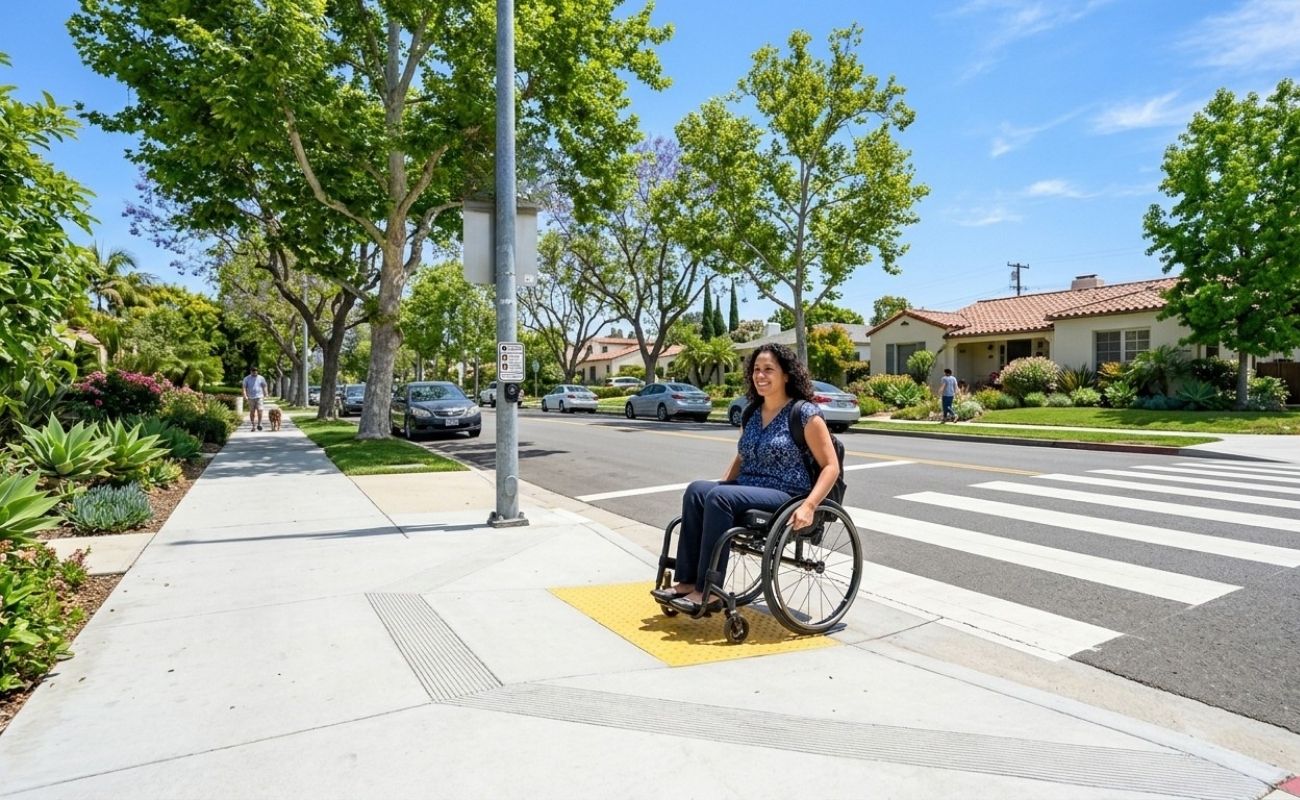
Federal regulations outlined by the Americans with Disabilities Act are unambiguous. Any change in level exceeding 1/4 inch on a pedestrian pathway constitutes a legal trip hazard. Accessible routes must comply with ADA accessibility requirements.
Crucially, merely reducing the height of the lift is legally insufficient. ADA guidelines mandate a maximum running slope of 1:12 (8.33%) for any repair ramp, coupled with a maximum cross slope of 1:48 (2.08%). Furthermore, there must be a literal zero-point differential where the newly cut surface meets the lower panel. Outdated methods struggle profoundly with these precise mathematical parameters.
By employing specialized trip hazard removal techniques, technicians calibrate their equipment to exact measurements. The patented horizontal cutting process physically slices away the hazard, generating a flawlessly smooth, angled plane.
The Financial and Legal Impact of Trip Hazard Removal
Ignoring uneven walkways carries monumental financial risks. Data from the National Safety Council highlights that slips, trips, and falls account for over 8 million hospital emergency room visits annually across the United States.
The average cost of a slip-and-fall liability claim frequently exceeds $30,000, not accounting for elevated insurance premiums or legal defense fees. Property managers, HOAs, and municipalities bear the brunt of this exposure.
For more detailed strategies on protecting your community assets, explore our resource on trip hazards and property value upkeep.
California Slip-and-Fall Legal Realities
Under California premises liability law, property owners have a non-delegable duty to maintain safe common areas. Plaintiffs need only prove that a hazard existed, the property owner knew or should have known about it, and failed to rectify it promptly. By scheduling routine walkway inspections and engaging in effective repair solutions, property stewards establish an affirmative defense, proving they took reasonable, proactive measures to ensure public safety.
How Patented Horizontal Concrete Slicing Works
Understanding the exact mechanics of horizontal concrete slicing demystifies why it remains the most trusted solution in 2026. The procedure is clinical, fast, and remarkably unobtrusive. Here are the crucial steps:
- Comprehensive Site Assessment: Technicians begin by measuring the exact height of the lift, the panel’s width, and the surrounding topography to calculate the necessary slope ratio.
- Hazard Isolation: The immediate area is secured, ensuring pedestrian traffic is safely diverted around the workspace.
- Precision Equipment Alignment: Patented cutting machinery is positioned and locked onto the concrete slab. The guides are set strictly to the 1:12 ADA-compliant slope requirement.
- Horizontal Slicing: The diamond-tipped blade precisely cuts through the concrete parallel to the intended slope. Unlike brute-force methods, this slicing action prevents micro-fractures from forming within the remaining slab.
- Particulate Capture: Advanced vacuum systems operate simultaneously, capturing 99% of concrete dust directly at the source, ensuring air quality and environmental compliance.
- Verification and Cleanup: A digital level confirms the zero-point differential. The area is swept, and the walkway is instantly reopened to foot traffic.

Environmental Benefits of Sidewalk Repair Using Patented Cutting Techniques
In 2026, Southern California municipalities prioritize eco-friendly infrastructure management. Complete panel replacement generates immense landfill waste and demands massive amounts of fresh concrete—a material known for high carbon emissions during production. Conversely, horizontal slicing represents the pinnacle of sustainable infrastructure repair.
By salvaging the original concrete, property owners prevent tons of industrial waste from entering regional landfills. Furthermore, the specialized dust abatement systems deployed during the slicing process prevent silica dust from contaminating local waterways, directly supporting the Access Board recommendations for sustainable urban maintenance.
Comprehensive Walkway Safety for Property Managers and Cities
Different property sectors experience unique pedestrian traffic patterns, but all benefit universally from prompt trip hazard elimination.
Homeowners’ Associations (HOAs): Residential communities feature families, children, and elderly residents who utilize community pathways daily. Recognizing the signs that it is time for horizontal slicing allows HOAs to maintain aesthetic uniformity without passing massive replacement assessments onto homeowners.
Commercial Plazas: High-traffic retail centers cannot afford to shut down primary entrances for days while newly poured concrete cures. Precision cutting takes minutes per hazard, allowing businesses to operate with zero interruption to customer access.
Municipalities: City governments manage over 50 miles of pathways on average. Cities utilize this approach to systematically clear backlogs of citizen complaints efficiently. Find out how expert providers help cities meet accessibility mandates comprehensively.
Conclusion
Restoring safe walkways across Southern California requires a commitment to precision, legal compliance, and environmental stewardship. Outdated abrasive techniques and temporary patching materials consistently fail to meet the rigorous accessibility standards expected in 2026. By prioritizing patented horizontal concrete slicing, property managers permanently eliminate trip hazards, achieve a flawless zero-point differential, and drastically reduce their exposure to liability—all while conserving operational budgets.
Do not wait for a minor walkway lift to become a major financial lawsuit. Protect your pedestrians, your property value, and your community infrastructure today. Get in touch with our team to schedule a comprehensive pathway assessment and discover the unparalleled benefits of precision trip hazard removal.
References
- Americans with Disabilities Act (ADA) Official Guidelines: https://www.ada.gov
- Federal Highway Administration (FHWA): https://www.fhwa.dot.gov
- National Safety Council Injury Statistics: https://www.nsc.org
- United States Access Board: https://www.access-board.gov

