
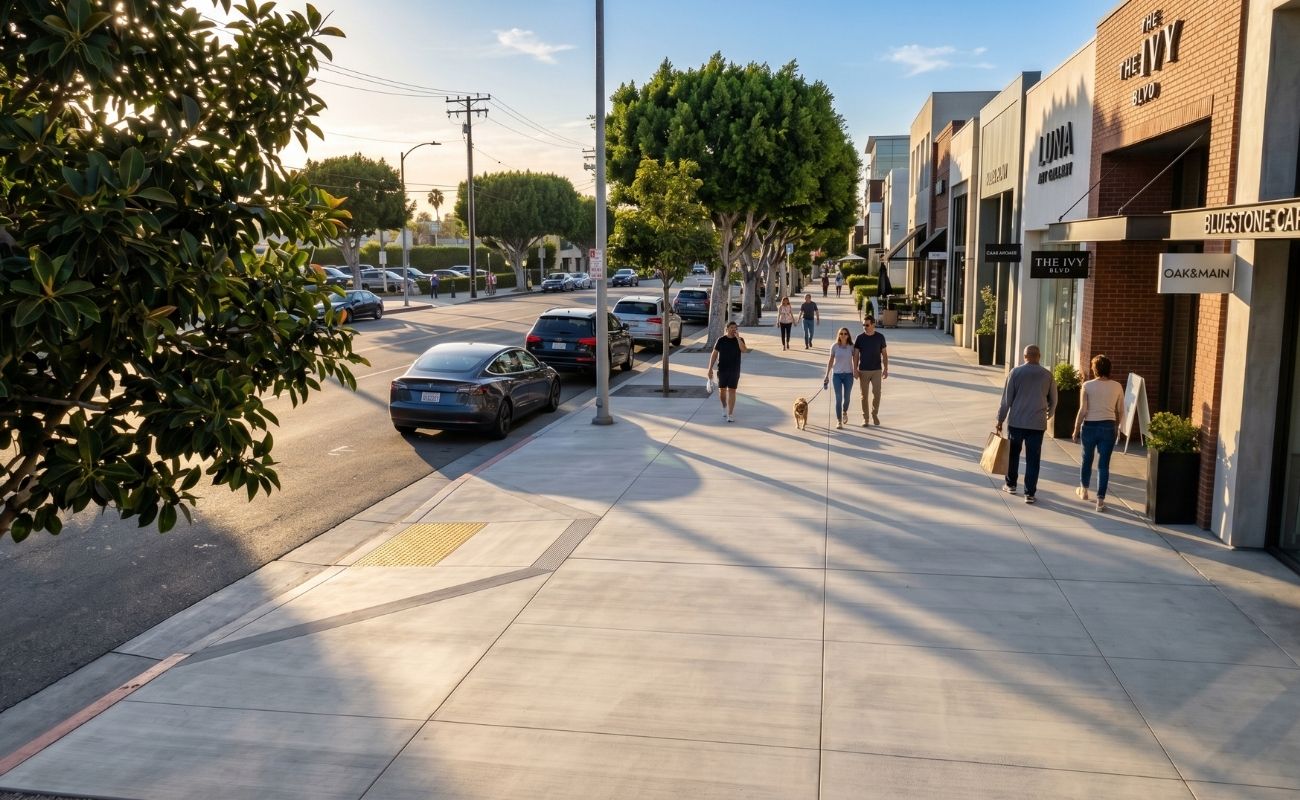
Sidewalk trip hazards in Southern California require immediate attention when you notice vertical displacements exceeding 1/4 inch, severe structural upheaval from mature tree roots, persistent water pooling, deteriorating expansion joints, or municipal liability warnings. Addressing these hazards promptly through patented horizontal concrete slicing and professional Trip Hazard Removal helps restore accessible walking surfaces, offers ADA compliance, mitigates serious legal liability, and restores safe, accessible pathways for all pedestrians.
Key Takeaways
-
Strict ADA Standards: Vertical concrete lifts exceeding 1/4 inch violate the Americans with Disabilities Act and demand immediate trip hazard removal.
-
The Southern California Environment: Aggressive tree root growth and shifting clay soils are the primary drivers of sidewalk upheaval in the region.
-
Precision over Abrasion: Modern ADA compliance requires a 0-point differential and a strict 1:12 slope—metrics achieved through horizontal concrete slicing, not rough surface milling.
-
Financial Liability: Property owners face immense legal risks; in 2026, the average premises liability settlement for sidewalk slip-and-falls exceeded $45,000.
-
Cost-Effective Solutions: Patented concrete cutting saves up to 70% compared to full panel demolition and replacement.
The Evolution of Trip Hazard Removal in Southern California
Maintaining safe pedestrian infrastructure in Southern California presents unique challenges. The region’s distinct climate, characterized by prolonged dry spells followed by sudden, intense rainfall, causes expansive clay soils to contract and swell aggressively. Combined with the extensive urban forestry found in cities from Los Angeles to San Diego, property managers constantly battle structural upheaval in concrete walkways. According to the California Department of Transportation, soil displacement and root intrusion account for over 80% of municipal pavement irregularities.
While legacy methods relied on rough surface abrasion or primitive scarifying techniques, the industry has evolved. Traditional surface milling often leaves a rough, unsightly texture and critically fails to achieve the exacting slopes required by modern accessibility laws.
Today, the gold standard for abatement is precision concrete cutting. By utilizing patented horizontal concrete slicing, technicians can completely eliminate uneven ledges, ensuring an aesthetic and smooth finish.
Top 5 Indicators That Immediate Sidewalk Repair Is Required
Property managers and homeowners must conduct proactive visual inspections to identify developing dangers before they result in injuries. Here are the top five signs that your property requires professional trip hazard removal.
1. Vertical Displacement Exceeding 1/4 Inch
The most critical metric in sidewalk maintenance is the 1/4-inch rule. Under Title III of the Americans with Disabilities Act, any change in level greater than 1/4 inch is legally classified as a trip hazard. If a displacement falls between 1/4 inch and 1/2 inch, it must be beveled with a slope no steeper than 1:2. Anything exceeding 1/2 inch must be ramped at a strict 1:12 slope.
A quick rule of thumb, if you can slide a standard smartphone (which is roughly 1/3 of an inch thick) perfectly flat against the raised ledge of your concrete panel, you have a non-compliant hazard. Meeting these exact specifications highlights the crucial role of ADA compliance in maintaining public and private spaces.
2. Severe Upheaval from Mature Tree Roots
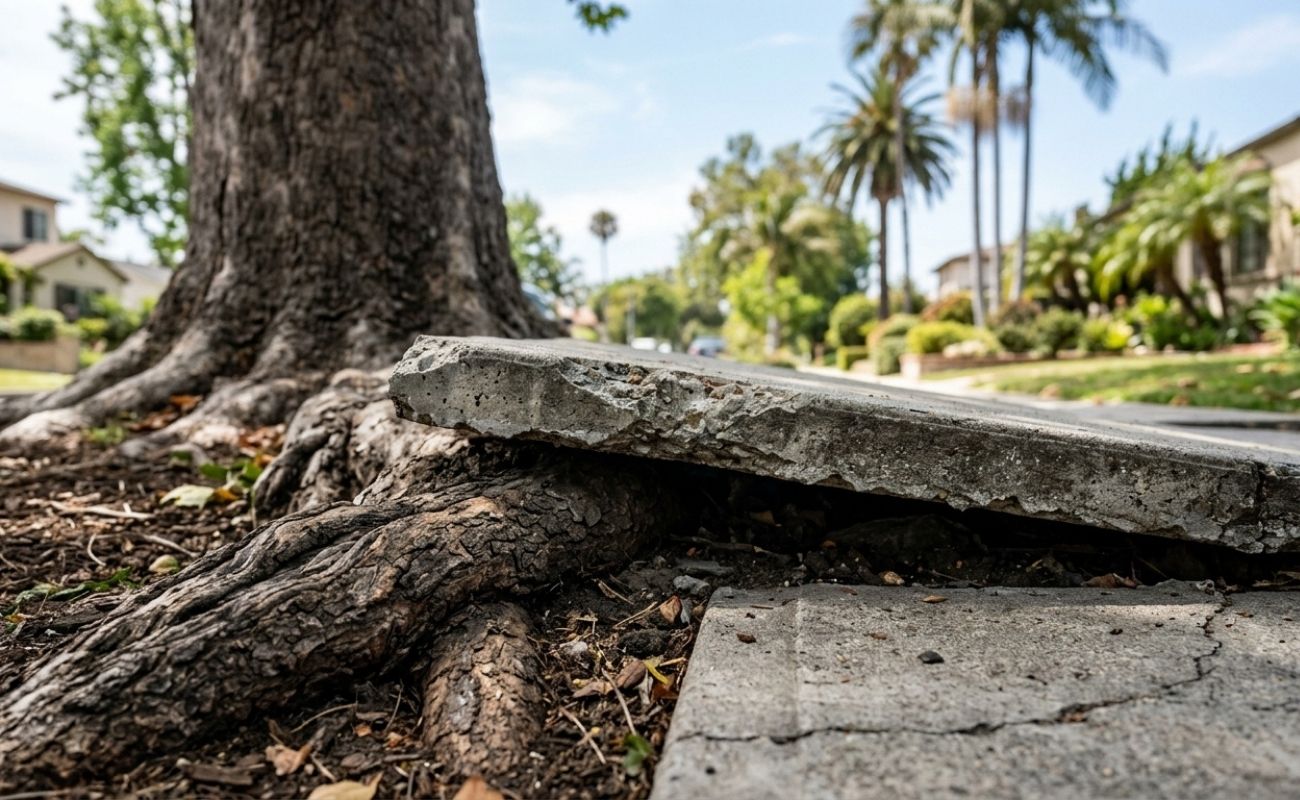
Southern California is famous for its beautiful ficus, jacaranda, and oak trees. Unfortunately, their shallow, aggressive root systems are the natural enemy of concrete. When roots expand beneath a walkway, they exert immense hydrostatic and physical pressure, causing concrete slabs to lift and crack.
If you notice a distinct “tenting” effect—where two adjacent panels lift at the expansion joint to form a peak—you are witnessing root-induced upheaval. Addressing tree roots damaging sidewalks promptly with precision cutting avoids the need for massive excavation and preserves the health of the urban canopy.
3. Municipal Notices and Liability Warnings
In many California jurisdictions, the “Fix-It” notice is a dreaded reality for property owners. Local municipalities actively survey neighborhoods, marking non-compliant walkways with bright neon paint. If you receive a citation or notice of violation from your local public works department, immediate action is legally mandated.
Ignoring these notices transfers the full weight of legal liability onto the property owner. In 2026, civil courts have consistently ruled against property owners who fail to abate documented hazards, emphasizing the importance of avoiding sidewalk liability in California.
4. Unnatural Water Pooling and Poor Drainage
A properly installed sidewalk is engineered to shed water toward the street or nearby landscaping. When panels shift, sink, or lift, they disrupt this precise grading. If you observe stagnant water pooling in the center of your walkways or at the seams after rainfall or heavy irrigation, the structural integrity of your path has been compromised.
Pooling water not only creates slip hazards but also accelerates the degradation of the concrete base. As water seeps into the subgrade, it causes further soil expansion and contraction, amplifying the trip hazard over time.
5. Deterioration of Previous Patch Jobs
Many property managers attempt quick fixes using epoxy or mortar patch kits. These materials are notorious for failing under the stress of pedestrian traffic, thermal expansion, and UV exposure. A crumbling patch creates a hazard that is often worse than the original displacement, as the loose debris acts like ball bearings underfoot.
Research from the Federal Highway Administration indicates that temporary mortar patches have a failure rate of 82% within the first two years of application. This staggering statistic underscores why DIY patch jobs often fail and why professional slicing is the superior permanent solution.
Comparing Horizontal Concrete Slicing with Alternative Methods
Understanding the technological gap between modern abatement techniques and outdated practices is essential for effective facility management. While you may be familiar with older surface-milling techniques, today’s properties require precision.
| Feature | Patented Horizontal Slicing | Traditional Rough Abrasion | Full Panel Replacement |
|---|---|---|---|
| ADA Compliance | Yes (1:12 slope, 0-point diff) | No (Cannot guarantee smooth finish) | Yes |
| Aesthetic Finish | Smooth, flush, clean cuts | Rough, scarred, visually unappealing | New concrete (color mismatch) |
| Cost Efficiency | Highly cost-effective | Moderate | Very Expensive |
| Environmental Impact | Low landfill waste | Moderate (Dust generation) | High (Heavy machinery, carbon footprint) |
As the data illustrates, the benefits of choosing sidewalk slicing over replacement are substantial. Not only does it preserve the existing infrastructure, but it also provides an immaculate, hazard-free finish that passes rigorous ADA inspections.
The Precision Concrete Cutting Process: Step-by-Step
The methodology behind patented horizontal cutting is engineered for maximum precision, cleanliness, and speed. Here is how professional trip hazard removal is executed:
- Comprehensive Site Assessment: Technicians begin by mapping the property. Utilizing advanced GIS planning for ADA compliance, every displacement is measured to the millimeter to determine the exact cutting specifications needed.
- Dust-Free Slicing Execution: Operators utilize patented equipment equipped with specialized dry-cut or wet-cut dust abatement systems. This machinery slices horizontally across the raised concrete, removing the protruding wedge in a single, solid piece rather than pulverizing it into hazardous silica dust.
- Slope and Differential Verification: Once the cut is complete, digital levels are deployed to verify that the repair achieves an absolute 0-point differential at the seams and exactly matches the ADA-mandated 1:12 maximum slope.
- Expansion Joint Maintenance: The final step involves clearing debris from the expansion joints and, if necessary, applying specialized sealants to prevent moisture intrusion, effectively prolonging the life of the walkway.
Ensuring ADA Compliance in High-Traffic Zones
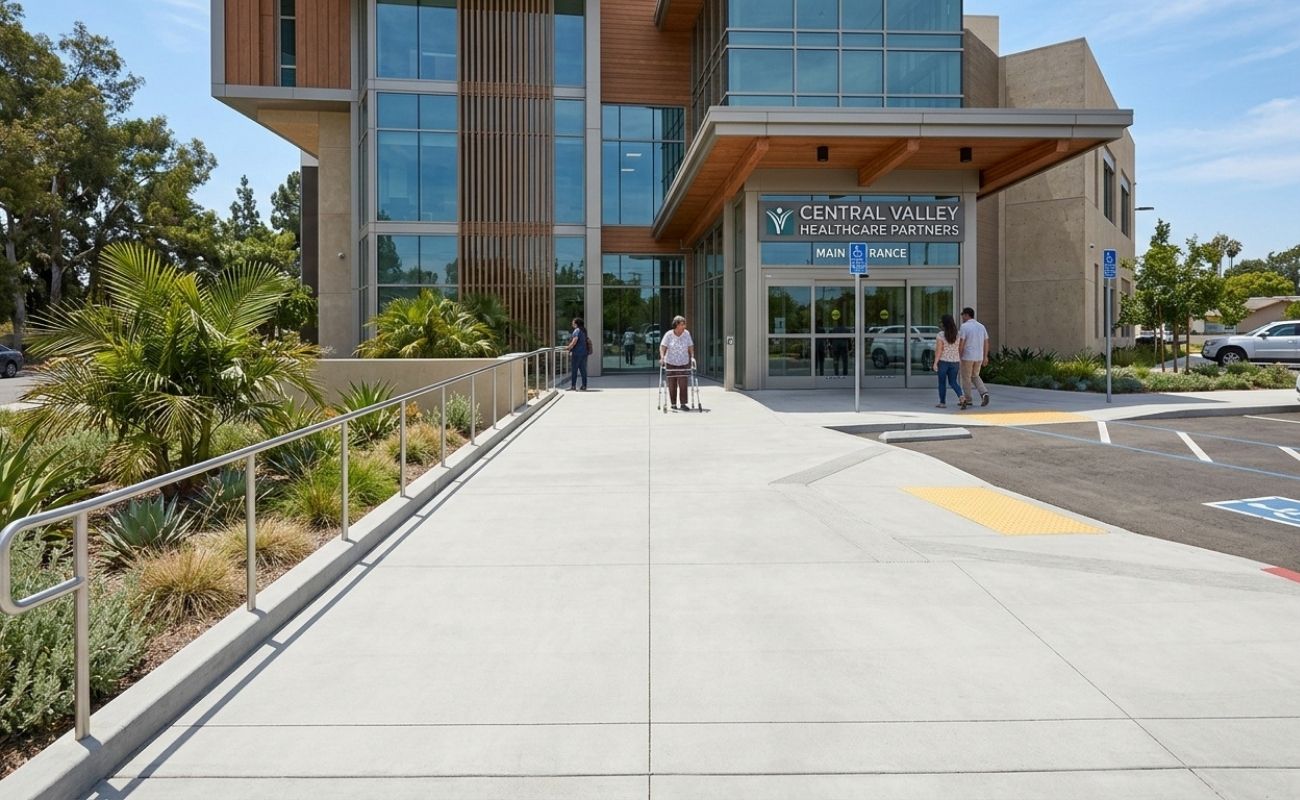
For commercial complexes, retail centers, and medical facilities, pedestrian volume magnifies the risk associated with non-compliant walkways. According to data published by the Americans with Disabilities Act oversight committees, accessibility lawsuits reached unprecedented highs in early 2026. Facilities catering to vulnerable populations face even stricter scrutiny.
This reality makes targeted ADA compliance for healthcare facilities and commercial spaces a non-negotiable budget item. Precision slicing removes the hazard immediately, ensuring doors remain open and the public remains safe.
The Financial Impact of Proactive Trip Hazard Mitigation
Ignoring sidewalk maintenance is a costly gamble. The financial repercussions of a pedestrian injury far exceed the cost of professional trip hazard removal. Statistics released by the California Department of Insurance in 2026 reveal that trip-and-fall claims average $45,000 in settlements, not including defense attorney fees which can quickly double the financial burden.
Conversely, investing in horizontal concrete slicing is remarkably cost-efficient. Because the method does not require heavy demolition, concrete pouring, or curing time, businesses can abate hundreds of hazards in a single day at a fraction of the cost of full concrete replacement. Property managers who implement a routine inspection and cutting schedule drastically reduce their insurance premiums and entirely eliminate the threat of negligence lawsuits.
Frequently Asked Questions (FAQ)
Why is traditional surface abrasion considered outdated for trip hazards?
Traditional methods fail to guarantee the strict 1:12 slope and 0-point differential required by the ADA. They also leave behind a scarred, rough texture that can act as a secondary slipping hazard and degrade the structural integrity of the concrete.
Can horizontal slicing fix severe root upheaval?
Yes. Precision cutting can successfully remove substantial concrete lifts caused by tree roots. By slicing the concrete horizontally, the technique creates an ADA-compliant ramp without disturbing the underlying root system or killing the mature tree.
How long does the precision concrete cutting process take?
The patented slicing process is incredibly fast. Most individual hazards are completely eliminated in less than 20 minutes, allowing pedestrian traffic to resume immediately since there is no curing time required.
Will horizontal concrete cutting create excessive silica dust?
No. Professional cutting equipment utilizes advanced, patented dust-containment technology. The system captures crystalline silica at the source, ensuring full compliance with strict OSHA environmental standards and keeping the surrounding area pristine.
Is precision slicing recognized as an ADA-compliant repair?
Absolutely. When performed by certified professionals, horizontal slicing is engineered specifically to meet all ADA Title III requirements, offering a fully verified 0-point differential and the precise slope parameters mandated by federal law.
Conclusion
Identifying the top indicators of sidewalk deterioration—ranging from minor vertical ledges to severe root upheaval—is the first step in responsible property management. In Southern California, where the climate and urban landscape place immense stress on concrete infrastructure, relying on outdated abatement methods is no longer sufficient. Patented horizontal concrete slicing offers an elegant, highly precise, and ADA-compliant solution to eliminate trip hazards, protect your financial assets, and ensure barrier-free access for everyone.
If you have noticed any of these warning signs on your property, do not wait for a liability claim to force your hand. Contact our expert team today to schedule a comprehensive hazard assessment and discover how our precision cutting technology can instantly restore the safety of your walkways.
References
- Americans with Disabilities Act (ADA) – https://www.ada.gov
- Federal Highway Administration (FHWA) – https://www.fhwa.dot.gov
- California Department of Transportation (Caltrans) – https://www.dot.ca.gov
- California Department of Insurance – https://www.insurance.ca.gov
- National Council on Independent Living – https://www.ncil.org

