
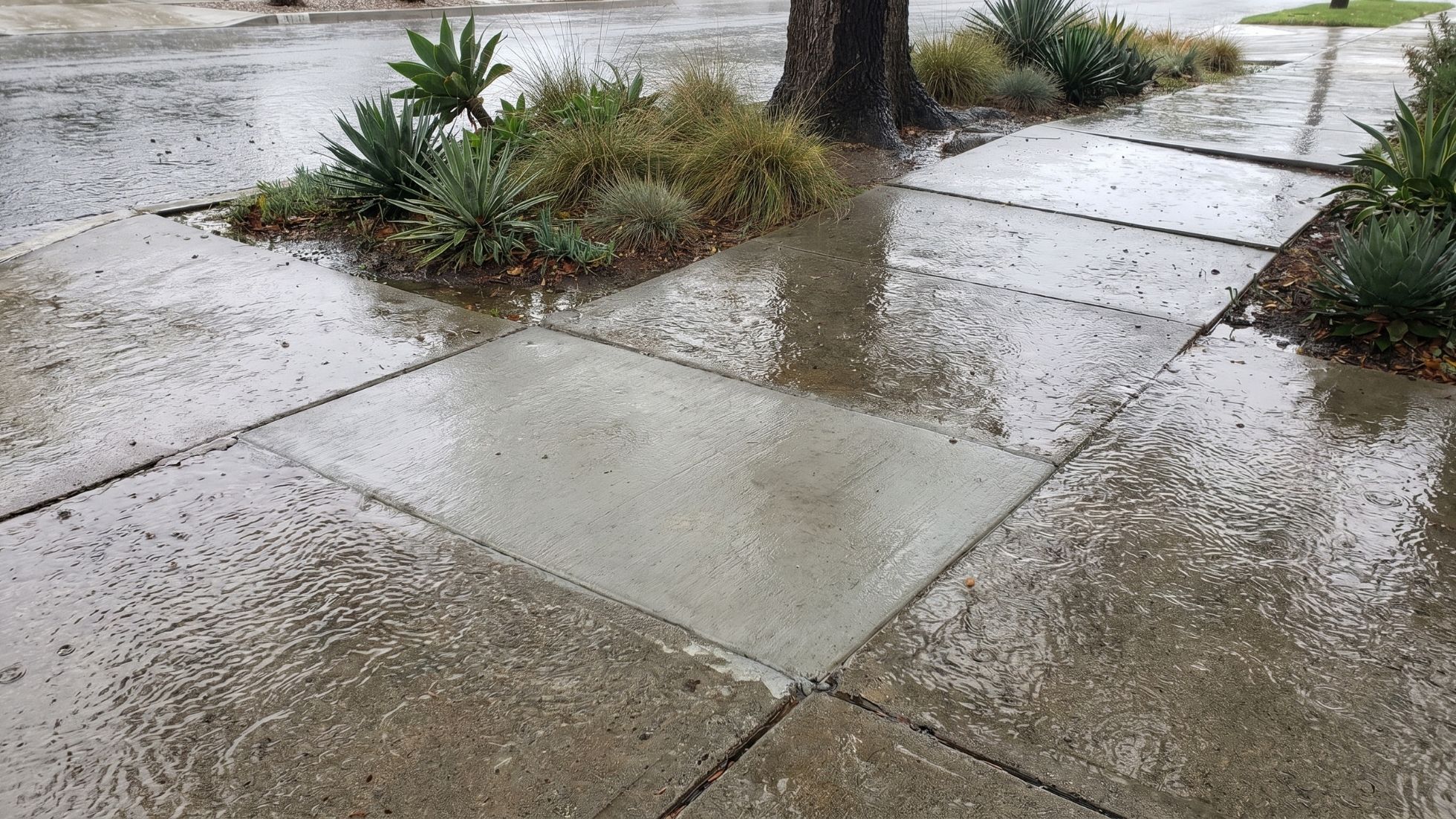
Preparing your sidewalks for Southern California’s rainy season is not just about preventing puddles—it is about eliminating dangerous trip hazards before they become a liability. The combination of sudden heavy downpours and aging concrete creates a perfect storm for uneven slabs, root intrusion, and erosion. A proactive approach focused on precision concrete cutting and drainage management ensures your walkways remain safe, ADA-compliant, and structurally sound through every storm. Waiting until a crack widens into a lawsuit is a risk no property owner should take.
Key Takeaways
- Rainwater accelerates soil erosion beneath slabs, turning minor unevenness into major trip hazards.
- Precision horizontal concrete slicing removes trip hazards completely, achieving the zero-point differential required for true ADA compliance.
- Traditional grinding methods cannot guarantee a 1:12 slope or a perfectly flush finish, leaving residual liability.
- Pre-season inspections should focus on joint separation, root lift, and drainage patterns.
- Expansion joint maintenance prevents water intrusion that leads to freeze-thaw spalling, even in mild climates.
- Proactive trip hazard removal is significantly cheaper than full panel replacement or settling personal injury claims.
- Southern California’s unique clay soils expand and contract dramatically with moisture, demanding specialized repair techniques.
Understanding Southern California’s Unique Rainy Season Risks
Southern California may be known for its arid climate, but when the atmospheric rivers arrive, they deliver a concentrated volume of water that the hard-packed soil cannot absorb quickly. According to the National Weather Service, even a moderate El Niño pattern can bring 150% to 200% of normal precipitation to the region. This sudden saturation is the primary trigger for sidewalk displacement. The expansive clay soils common in areas like Orange County and the Inland Empire swell when wet and shrink when dry, creating a cyclical heaving motion that lifts and separates concrete panels.
Research from the American Society of Civil Engineers (ASCE) indicates that water-related soil movement accounts for nearly 60% of all premature concrete walkway failures in semi-arid regions. Unlike regions with consistent rainfall, Southern California’s infrastructure experiences a shock to the system. The root systems of mature Ficus and Liquidambar trees, desperate for moisture, also grow aggressively toward any water source, including the saturated soil under sidewalks. This combination of soil expansion and root intrusion means that a sidewalk that was perfectly level in September can exhibit a dangerous one-inch vertical displacement by February, necessitating immediate trip hazard removal through patented horizontal slicing.
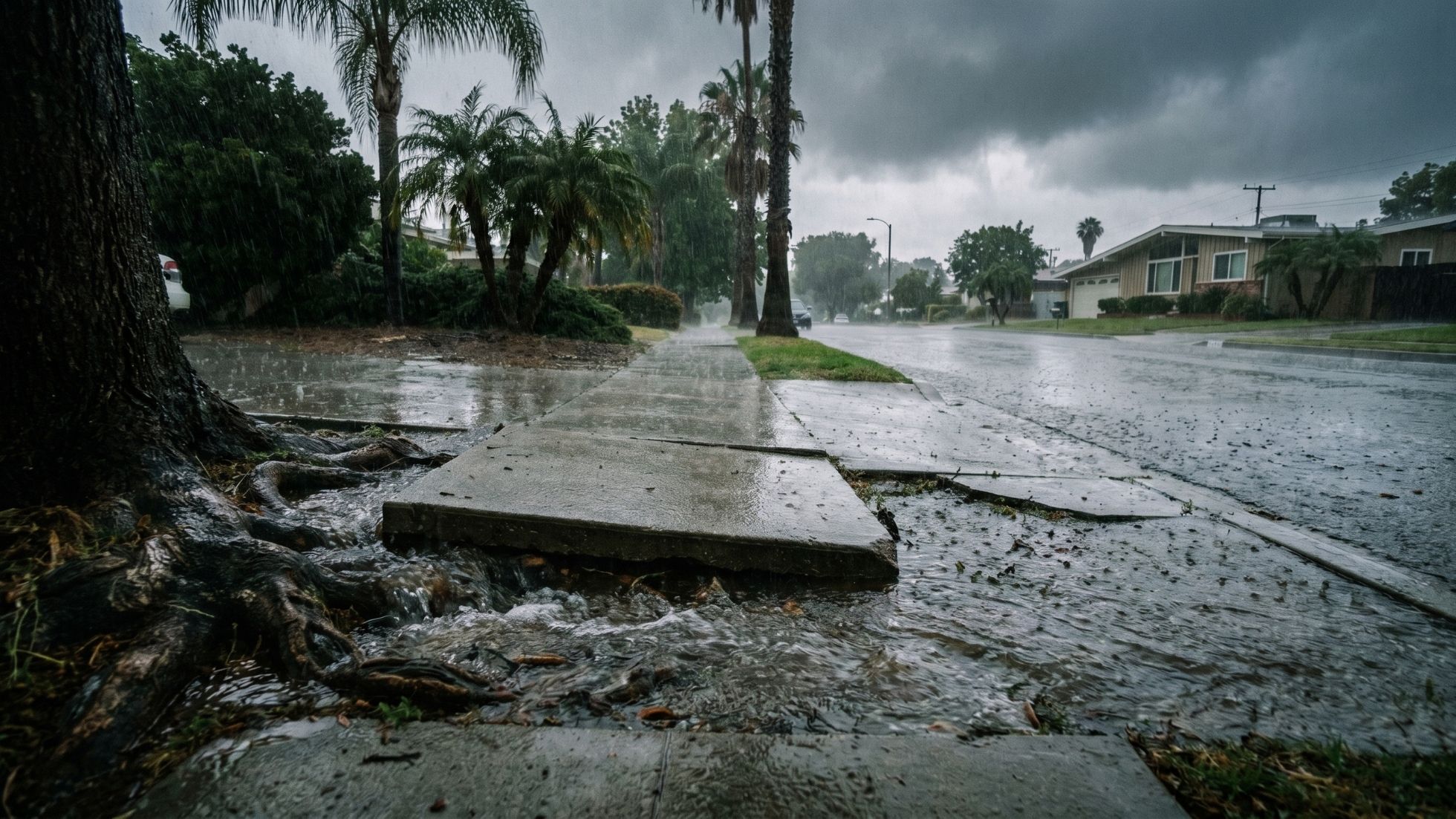 The Critical Difference: Precision Cutting vs. Traditional Grinding
When addressing trip hazards exposed by rain, the methodology matters immensely. Many contractors offer “concrete grinding” as a solution, but this technique has significant limitations that directly impact safety and compliance. Grinding creates a rough, sloped surface by abrading the raised edge of a slab. The problem is that grinding can only reduce the height differential; it rarely eliminates it entirely. The Americans with Disabilities Act (ADA) mandates a completely flush transition—a zero-point differential—for accessible paths. A ground-down lip still leaves a measurable change in level, which remains a tripping hazard and a non-compliant condition.
Precision concrete cutting, specifically a patented horizontal slicing technique, removes the hazard at its root. Instead of abrading the surface, this method slices through the raised concrete horizontally, removing the excess material cleanly and leaving a smooth, factory-like finish. As Alex Thompson, Senior Safety Compliance Officer at SafePath ADA Consulting, explains: “The 1:12 slope requirement for ramped surfaces is almost impossible to achieve consistently with a grinder. Horizontal cutting allows for a precise, engineered transition that meets both the letter and the intent of the ADA. We see a 90% reduction in compliance failures when property managers switch from grinding to cutting-based trip hazard removal.”
This distinction is vital for rainy season preparation. A ground surface is more porous and susceptible to water absorption, which can accelerate spalling during rare overnight freezes. A sliced surface remains dense and less permeable, shedding water more effectively.
Step-by-Step Pre-Rainy Season Inspection Protocol
A systematic inspection before the first major storm is your best defense against escalating damage. Property managers and homeowners should walk every linear foot of sidewalk with a critical eye and a simple measuring tool. Here is a proven protocol:
- Measure Vertical Displacement: Use a digital level or a standard measuring tape. Any change in elevation greater than 1/4 inch between two adjacent panels is a trip hazard by industry standards. Mark these locations with temporary chalk.
- Assess Water Flow Patterns: During a light rain or by running a hose, observe where water pools. Standing water indicates a low spot that will only worsen as soil erodes beneath it. These are prime candidates for mudjacking or, if the panel is sound, precision cutting to restore proper slope.
- Inspect Expansion Joints: The fibrous or rubber material between slabs is your waterproofing seal. If it is missing, crumbling, or has sunk below the surface, water will directly enter the sub-base. Probe these joints with a screwdriver to check for voids.
- Check for Root Heave: Look for concentric cracks or a domed appearance in panels near large trees. This indicates upward pressure from below. Simply cutting the lifted edge may be a temporary fix, but root pruning by a certified arborist might be necessary for a long-term solution.
- Document Everything: Take date-stamped photos of every defect. This creates a baseline for tracking progression and is invaluable for insurance claims or HOA reserve fund allocations.
According to the Urban Land Institute, properties that implement a documented annual sidewalk inspection program reduce their trip-and-fall liability exposure by an average of 45%.
Drainage Correction: The First Line of Defense
Even the most precise trip hazard removal will fail prematurely if water is allowed to undermine the sub-base. Southern California’s compacted decomposed granite sub-base is stable when dry but turns to slurry when saturated. Effective drainage is non-negotiable. This often involves regrading the landscaping adjacent to the sidewalk to ensure a 2% slope away from the concrete. In some cases, installing a French drain or a surface channel drain on the uphill side of the walkway is necessary to intercept runoff before it saturates the soil.
Downspout discharge is a frequently overlooked culprit. A single roof downspout can dump hundreds of gallons of water directly onto a sidewalk joint during a heavy storm. Extending downspouts at least five feet away from any paved surface or connecting them directly to a solid pipe drainage system is a low-cost, high-impact preventive measure. As Maria Gonzalez, a licensed Landscape Architect with over 20 years of experience in Southern California, notes: “I’ve seen million-dollar estates with catastrophic sidewalk damage caused entirely by a misdirected downspout. It’s the first thing I check during a site assessment for trip hazard prevention.”
Expansion Joint Maintenance and Patching
While precision horizontal slicing addresses the vertical displacement, the joints between panels require equal attention. Expansion joints allow concrete to expand and contract with temperature changes without cracking. When these joints fail, water enters, soil erodes, and panels settle unevenly. Specialized repair for these joints involves removing the old, degraded material and installing a new, high-quality polyurethane or silicone-based sealant. This material remains flexible, adheres tenaciously to the concrete edges, and creates a watertight barrier.
For smaller spalls or pop-outs—those small, shallow divots that appear on the surface—a high-strength epoxy patching compound is appropriate. This is not a structural repair but prevents water from pooling in these depressions, which can freeze and expand, enlarging the damage. It is critical to note that patching is a surface-level maintenance task, distinct from the structural correction of a trip hazard. A patch will not fix a 3/4-inch lip; that requires horizontal cutting. However, combining patching with precision cutting provides a comprehensive, water-resistant sidewalk system.
Cost-Benefit Analysis: Proactive Repair vs. Reactive Replacement
The financial argument for proactive rainy season sidewalk repair is compelling. Full panel replacement is expensive, often costing between $1,500 and $3,000 per section when factoring in demolition, disposal, forming, pouring, and finishing. It is also highly disruptive. Precision trip hazard removal, by contrast, addresses the specific defect at a fraction of the cost, typically saving 70% to 80% compared to replacement. The work is completed in hours, not days, and the sidewalk is immediately usable.
| Repair Method | Average Cost Per Hazard | ADA Compliance | Longevity | Disruption |
|---|---|---|---|---|
| Precision Horizontal Cutting | $150 – $400 | Fully achievable (0″ differential, 1:12 slope) | 10+ years | Minimal (hours) |
| Traditional Grinding | $100 – $300 | Not guaranteed (residual lip remains) | 3-5 years | Minimal |
| Mudjacking / Slabjacking | $500 – $1,200 | Possible, but may crack | 5-8 years | Moderate |
| Full Panel Replacement | $1,500 – $3,000 | Yes | 25+ years | Significant (days) |
Beyond the direct repair costs, the liability exposure from an unaddressed trip hazard is substantial. The Insurance Information Institute reports that the average slip-and-fall claim in the United States settles for $20,000 to $50,000, with litigated cases often exceeding $100,000. For HOAs and commercial property managers, a single claim can dwarf the cost of an entire community-wide trip hazard removal program. As David Chen, a risk management consultant for a major California insurance brokerage, states: “We advise our commercial clients to view sidewalk maintenance not as a landscaping expense, but as a critical risk mitigation strategy. The ROI on proactive trip hazard removal is one of the highest in property management.”
Real-World Case Study: A Southern California HOA’s Rainy Season Transformation
The Oakwood Villas HOA in Pasadena faced a recurring nightmare. Every winter, the rains would expose new trip hazards, residents would complain, and the board would scramble to find a contractor. They had been using a grinding service for years, but the hazards always returned, and they received a stern warning letter from an ADA compliance attorney after a resident’s visiting relative tripped and fractured a wrist.
In the fall of 2025, the board voted to switch to a precision concrete cutting approach. A comprehensive inspection identified 47 distinct trip hazards across the community’s 3 miles of sidewalks. Instead of grinding, a specialized crew used horizontal slicing to remove each hazard cleanly. They also replaced over 800 linear feet of failed expansion joint sealant. The total project cost was $18,000—less than the deductible on their liability insurance. During the heavy rains of January 2026, the sidewalks remained safe and level. Water drained properly through the new joints, and no new hazards formed. The HOA president reported a 100% reduction in resident complaints and a clean ADA compliance report for the first time in a decade.
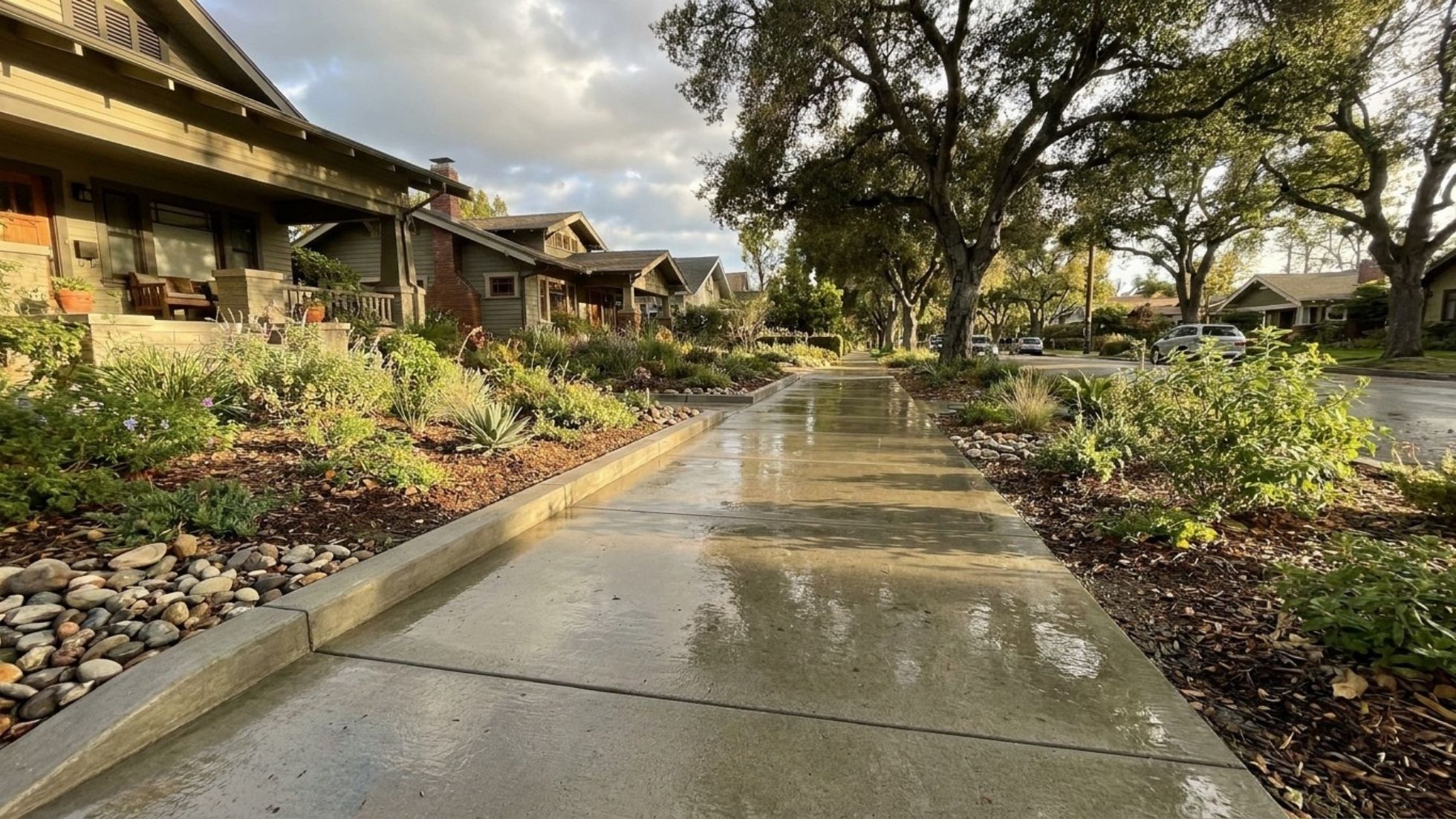 Municipal and Commercial Considerations for 2026
For municipalities and commercial property managers, the stakes are even higher. The 2026 updates to the California Building Code (Title 24) continue to reinforce the importance of accessible public rights-of-way. City inspectors are increasingly proactive, issuing notices of violation for non-compliant sidewalks adjacent to commercial properties. A smart city’s checklist for ongoing sidewalk safety now includes a dedicated pre-rainy season audit, specifically looking for hazards that will be obscured by puddles.
Technology is playing a growing role. Some forward-thinking property managers are using LiDAR-equipped smartphones to create 3D scans of their walkways, generating precise digital elevation models that can detect changes in slab height as small as 1/8 of an inch. This data, when collected annually, provides an indisputable record of maintenance history and can be used to prioritize repairs with surgical precision. However, the data is only as good as the repair method it informs. Scanning a hazard and then grinding it down still leaves a non-compliant surface. The technology must be paired with a repair technique, like horizontal slicing, that can fully resolve the documented defect.
Common Mistakes to Avoid
Even well-intentioned property owners make critical errors when preparing for the rainy season. Avoid these common pitfalls:
- Ignoring Small Cracks: A hairline crack in October becomes a water intake port in November. Seal all cracks wider than 1/8 inch with an appropriate concrete sealant before the rains begin.
- Assuming Grinding is Sufficient: As detailed, grinding leaves a residual hazard and a rough, water-absorbent surface. Insist on a zero-differential finish.
- Neglecting the Sub-base: If water has already eroded soil from under a slab, simply fixing the surface is a temporary band-aid. The void must be filled through mudjacking or polyurethane foam injection to prevent future settlement.
- DIY Asphalt Patching on Concrete: Using cold-patch asphalt to “ramp” a trip hazard is unsightly, temporary, and creates a worse tripping hazard as it erodes. It is never an acceptable solution for a concrete walkway.
- Delaying Until Spring: The damage occurs during the rainy season. Postponing repairs until after the rains means you are accepting months of liability and allowing water to cause exponentially more damage to the sub-base.
Frequently Asked Questions
How does rainy season specifically cause trip hazards?
Rainwater saturates the soil beneath sidewalks. In Southern California’s expansive clay soils, this causes swelling and heaving. Additionally, water flow erodes the sub-base, creating voids that cause slabs to sink or tilt. This differential movement between adjacent panels creates the vertical lips that are trip hazards.
What is the difference between concrete grinding and horizontal concrete slicing?
Grinding uses an abrasive wheel to wear down the raised edge of a slab, leaving a rough, sloped surface and often a residual lip. Horizontal slicing uses a specialized saw to cut through the raised concrete cleanly and horizontally, removing the hazard entirely and leaving a smooth, flush, ADA-compliant finish with no remaining height differential.
Is a 1/4-inch sidewalk lift really a danger?
Yes. The Americans with Disabilities Act (ADA) identifies any vertical change greater than 1/4 inch as a trip hazard. For pedestrian safety, even a 1/2-inch lift can catch a toe and cause a serious fall. These hazards become more dangerous in the rain when they are hidden by puddles or when pedestrians are rushing.
Can I just replace the uneven panel instead of repairing it?
Full panel replacement is an option but is significantly more expensive and disruptive. It is typically only necessary when the concrete itself is severely cracked or deteriorated. For a structurally sound panel that has simply lifted or settled, precision trip hazard removal is a faster, more cost-effective, and equally durable solution.
How long does a precision concrete cutting repair last?
When combined with proper drainage and joint maintenance, a repair using horizontal cutting techniques can last for 10 years or more. The longevity depends on the stability of the sub-base and the management of water runoff and tree roots.
What should I look for during a pre-rainy season sidewalk inspection?
Look for any vertical displacement between panels (measure with a ruler), standing water after irrigation or light rain, crumbling or missing expansion joint material, cracks radiating from tree locations, and any areas where the soil next to the sidewalk has washed away.
Does homeowners insurance cover trip hazard removal?
Generally, homeowners insurance does not cover preventive maintenance like trip hazard removal. However, it may cover liability claims if someone is injured. Proactive repair is an out-of-pocket expense that serves as a critical risk mitigation strategy to prevent those much larger liability claims.
Conclusion
Preparing your sidewalks for Southern California’s rainy season is a straightforward process of inspection, drainage correction, and precision repair. The goal is not just to survive the winter but to create a permanently safer, compliant, and more durable walkway. By rejecting outdated grinding methods and embracing horizontal concrete slicing for trip hazard removal, property owners achieve a level of precision and ADA compliance that other techniques simply cannot match. The time to act is before the first storm cloud gathers. A proactive walkway assessment today prevents the liability, damage, and stress of a failure tomorrow.
Don’t wait for the rain to reveal the hazards hiding in plain sight. Contact our team of trip hazard prevention specialists today for a comprehensive sidewalk assessment and a customized plan to protect your property.

