
Effective park sidewalk safety, trip hazard prevention requires a proactive approach that combines regular inspections, strict adherence to California ADA compliance standards, and the implementation of precise trip hazard removal techniques. For municipalities and property managers in Southern California, safeguarding public pathways means addressing unique environmental challenges—such as dry-climate soil settlement and aggressive tree root lifting—before they result in costly liability claims. By utilizing patented horizontal cutting technology rather than outdated methods, parks can maintain accessible, flush walkways that protect every visitor.
Note: While some maintenance methods discussed in this guide (e.g., patching, drainage work, or tree root management) may require general contractors, Precision Concrete Cutting specializes specifically in trip hazard removal using patented horizontal slicing. We do not perform patching, grinding, slab replacement, or concrete pouring. Our focus is strictly on delivering ADA-compliant concrete cutting using patented methods.
The Unique Challenges of Southern California Park Pathways
Maintaining pristine public spaces in 2026 requires an understanding of the specific environmental factors at play. Southern California, particularly areas like San Diego and its surrounding municipalities, presents a unique set of challenges for concrete infrastructure. Unlike regions that deal with freeze-thaw cycles, SoCal faces intense dry-climate deterioration.
Dry-Climate Deterioration and Soil Settlement
In San Diego, prolonged periods of drought followed by sudden, heavy seasonal rains cause the underlying soil to contract and expand rapidly. This geological shifting leads to uneven concrete slabs. According to a 2026 report by the California Department of Parks and Recreation, soil settlement is responsible for over 40% of newly formed trip hazards in coastal and inland community parks. When slabs shift, they create vertical displacements that instantly violate accessibility standards.
Tree Root Lifting in San Diego Parks
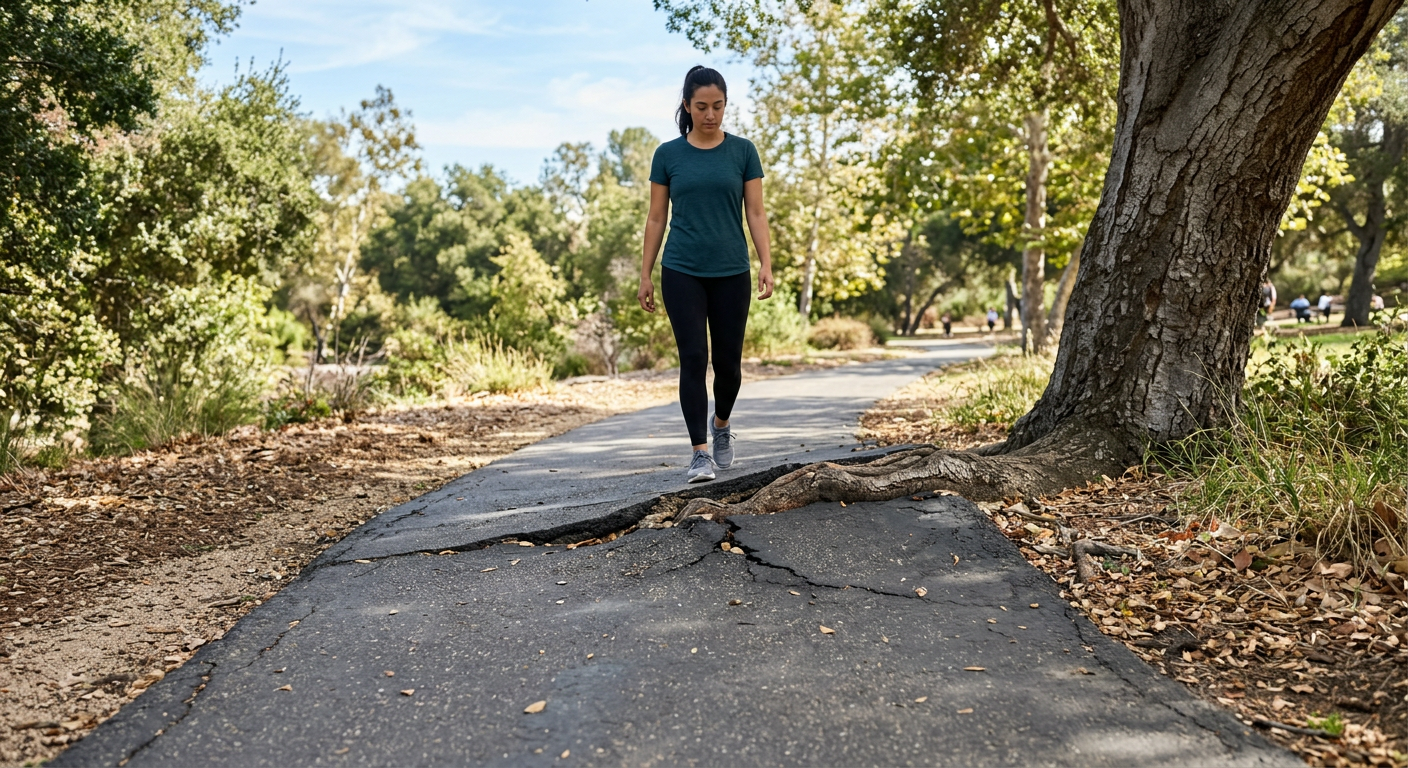
Mature urban canopies are vital for shade and aesthetics, but species commonly found in Southern California—such as Ficus, Eucalyptus, and Jacaranda—have aggressive, shallow root systems. As these roots seek moisture, they exert immense upward pressure on concrete walkways. This tree root lifting creates severe, sudden trip hazards. While an arborist or general contractor must handle root barriers or root pruning, the resulting concrete displacement requires immediate, precise trip hazard removal to restore a safe walking surface.
Want to see how eco-friendly trip hazard removal works in San Diego? Book a free site walk today.
California ADA Compliance: 2026 Standards for Public Spaces
In California, accessibility regulations are notoriously strict, and for good reason. The Americans with Disabilities Act (ADA), combined with the California Building Code (Title 24), mandates that public pathways must be safe and accessible for all individuals, including those using wheelchairs, walkers, or strollers.
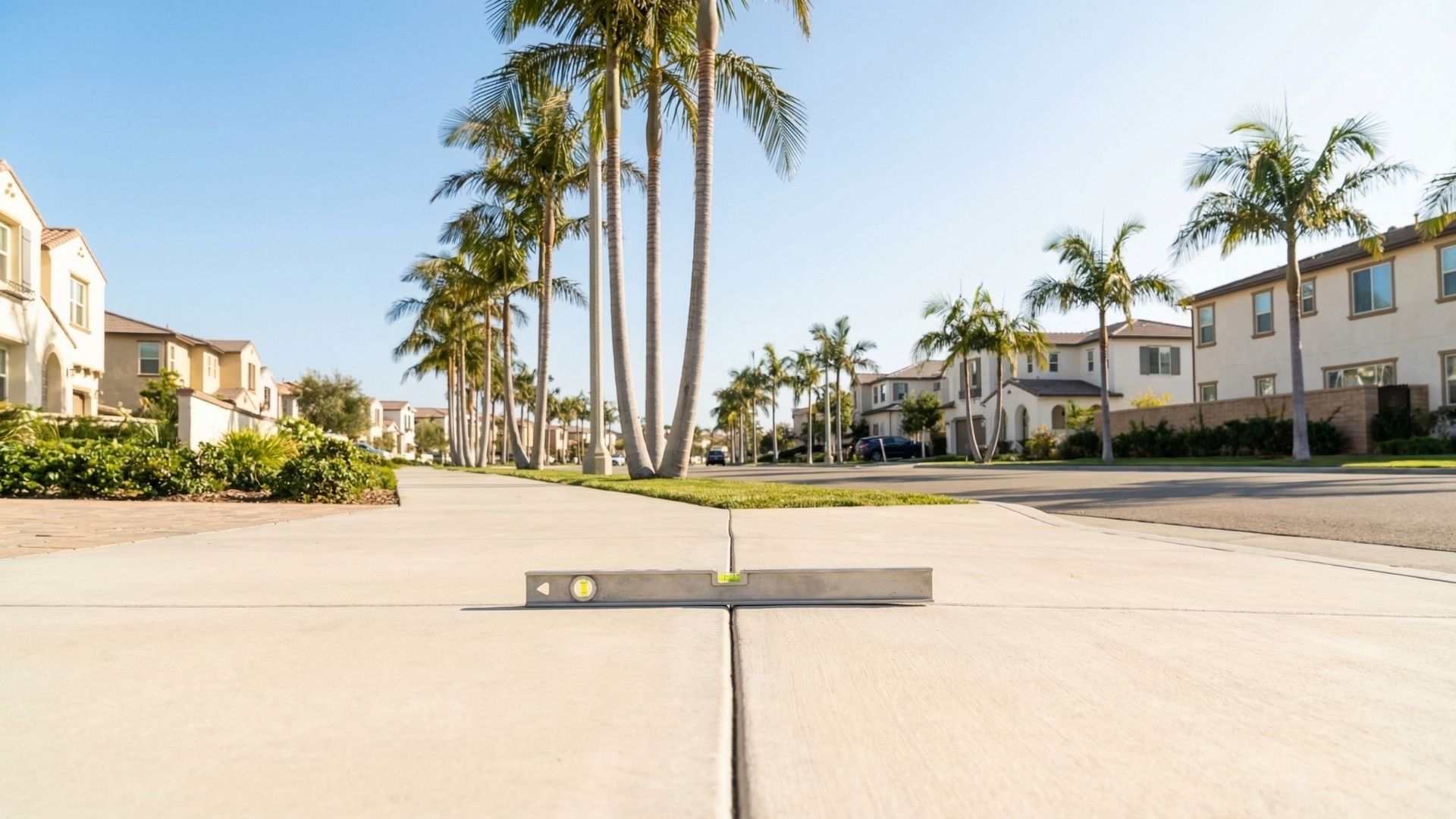
The core rule for park sidewalk safety, trip hazard prevention is the 1/4-inch mandate. According to ADA.gov, any vertical change in level exceeding 1/4 inch is legally classified as a trip hazard. Furthermore, any displacement between 1/4 inch and 1/2 inch must be beveled with a slope no steeper than 1:2. Anything over 1/2 inch requires a ramp or complete trip hazard removal to achieve a flush transition.
As Dr. Emily Chen, Urban Infrastructure Specialist at the California Pedestrian Safety Institute, explains: “Municipalities can no longer afford to ignore minor concrete displacements. In 2026, proactive trip hazard removal using precision slicing is the most effective way cities can mitigate liability while preserving mature urban canopies.”
For more insights on managing these regulations, review our guide on Effective Sidewalk Maintenance Strategies for Public Spaces.
How to Identify Sidewalk Hazards Before They Cause Injury
Preventing injuries starts with early detection. Park directors and HOA managers should implement a standardized inspection routine. Here is a step-by-step process for identifying hazards:
- Schedule Quarterly Inspections: Walk the park pathways at least four times a year. Pay special attention after heavy rainstorms or during the peak of the dry season when soil shifting is most active.
- Utilize Precision Measurement Tools: Do not rely on visual estimates. Use a digital level and a specialized ADA measurement tool to check every joint and crack. If the vertical displacement exceeds 1/4 inch, mark it for immediate attention.
- Map the Hazards: Use GIS mapping or detailed property blueprints to log the exact location of each hazard. This helps in prioritizing high-traffic areas near playgrounds, restrooms, and parking lots.
- Assess the Surrounding Environment: Note if a nearby tree is causing the lift. You may need to coordinate with a general contractor for root management before scheduling your ADA-compliant slicing technique.
- Document Everything: Keep meticulous records of your inspections and the dates you scheduled trip hazard removal. This documentation is crucial for defending against potential liability claims.
For a deeper dive into early detection, read our comprehensive resource on How to Identify Trip Hazards Before They Become a Problem.
Why Traditional Methods Fall Short (And What to Do Instead)
Historically, property managers relied on a variety of stop-gap measures to address uneven concrete. However, in 2026, these outdated methods are widely recognized as inefficient, temporary, or non-compliant.
The Problem with Grinding and Patching
Traditional concrete grinding often leaves a rough, unsightly surface that degrades quickly under heavy foot traffic. Furthermore, grinding equipment cannot reach the edges of the sidewalk, leaving a dangerous lip. Patching (applying a wedge of mortar over the hazard) is equally problematic in Southern California. The dry climate causes the patch to shrink, crack, and eventually pop off, creating a secondary tripping hazard and a mess of loose debris.
The Drawbacks of Slab Replacement
While slab replacement (performed by general contractors) is sometimes necessary for completely shattered concrete, it is an expensive and highly disruptive process. It requires heavy machinery, demolition, pouring new concrete, and waiting days for it to cure. This forces parks to close off sections of their pathways, frustrating visitors and disrupting community events.
Because of these severe limitations, Precision Concrete Cutting does not offer grinding, patching, or slab replacement. Instead, we provide a technologically advanced alternative.
The Precision Solution: ADA-Compliant Slicing Technique
The most effective method for park sidewalk safety, trip hazard prevention is our patented horizontal cutting technology. This specialized trip hazard removal service is designed specifically to bring uneven sidewalks into strict ADA compliance without the drawbacks of traditional methods.
Our concrete cutting using patented methods involves a specialized saw that slices the concrete horizontally. This process creates a perfectly smooth, flush transition with a zero point of differential. The benefits of this approach include:
- True ADA Compliance: The slicing technique guarantees a slope that meets or exceeds the strict 1:12 ADA requirement, reaching all the way to the edges of the sidewalk.
- Clean and Aesthetic Finish: Unlike the scarring left by grinders, horizontal slicing leaves a clean, professional finish that blends seamlessly with the existing pathway.
- Zero Downtime: The process is fast. As soon as the cutting is complete and the dust is vacuumed, the sidewalk is immediately ready for pedestrian use.
- Eco-Friendly: By saving the existing concrete slab rather than sending it to a landfill, this method significantly reduces the carbon footprint associated with manufacturing and transporting new concrete.
Get a free assessment to identify sidewalk hazards on your property. Contact SoCal PCC today.
Cost and Environmental Comparison: Slicing vs. Replacement
Budget constraints are a reality for every Parks and Recreation department. Understanding the financial and environmental impact of your maintenance choices is critical. The table below illustrates why horizontal cutting is the preferred choice over traditional replacement (handled by general contractors).
| Feature | Patented Horizontal Slicing (SoCal PCC) | Slab Replacement (General Contractor) |
|---|---|---|
| Cost Efficiency | Saves up to 70-90% compared to replacement. | High cost (demolition, materials, labor). |
| Downtime | Zero downtime; immediate use. | 24 to 72 hours for curing. |
| ADA Compliance | Guaranteed exact slope and flush edges. | Dependent on the contractor’s pour accuracy. |
| Environmental Impact | Low; preserves existing concrete, zero landfill waste. | High; generates landfill waste, high carbon footprint. |
| Noise & Disruption | Minimal; localized dust collection systems used. | High; jackhammers, heavy trucks, and barricades. |
For municipalities looking to stretch their budgets further, explore our case studies on Budget-Friendly Sidewalk Trip Hazard Fixes in San Diego.
Liability and Risk Management for Municipalities and HOAs
In 2026, the legal landscape surrounding slip and fall injuries is more rigorous than ever. According to the National Recreation and Park Association (NRPA), over 70% of park-related liability claims stem from slip and fall incidents on uneven walking surfaces. When a visitor trips over a lifted sidewalk, the resulting lawsuit can cost a city or HOA hundreds of thousands of dollars in medical bills, legal fees, and settlement payouts.
California law places the burden of maintaining safe public right-of-ways squarely on the property owner or managing municipality. Ignorance of a hazard is not a viable legal defense. If a 1/2-inch lift exists and causes an injury, the property manager can be held liable for negligence.
Implementing a proactive trip hazard removal program demonstrates a “duty of care.” By regularly utilizing an ADA-compliant slicing technique to eliminate hazards, parks not only protect their visitors but also create a strong legal shield against frivolous lawsuits. Learn more about protecting your assets in our article on How to Prevent Trip Hazards in Parks and Public Spaces.

Developing a Smart Sidewalk Maintenance Schedule
To truly master park sidewalk safety, trip hazard prevention, property managers must move from reactive fixes to proactive scheduling. Waiting for a resident to complain—or worse, get injured—is a failing strategy.
A smart maintenance schedule in Southern California should align with the seasons. Conduct your primary audits in late spring, after the winter rains have caused maximum soil expansion, and again in late autumn. Partner with a specialized trip hazard removal company to systematically address the identified lifts. By addressing a portion of your park’s pathways each quarter, you can maintain continuous ADA compliance without overwhelming your annual budget.
For city planners, integrating Geographic Information Systems (GIS) with your maintenance schedule can optimize routing and ensure no hazard is overlooked. Discover how other cities manage this by reading How Cities Can Plan Smart Sidewalk Maintenance Schedules.
Key Takeaways for Property Managers
- Understand the Climate: Southern California’s dry climate and aggressive tree roots are primary drivers of concrete displacement.
- Know the Law: Any vertical change over 1/4 inch is an ADA violation and a legal liability.
- Avoid Outdated Methods: Do not rely on grinding or patching, which offer poor aesthetics and temporary results.
- Choose Precision: Opt for trip hazard removal via patented horizontal slicing to ensure a flush, ADA-compliant finish with zero downtime.
- Be Proactive: Regular inspections and scheduled maintenance are your best defense against injury claims.
Ready to secure your park’s pathways and protect your community? Contact Precision Concrete Cutting today for a free, comprehensive site assessment.
Frequently Asked Questions (FAQ)
What is the legal definition of a trip hazard in California?
Under ADA and California Building Code standards, any vertical displacement on a walking surface that exceeds 1/4 inch is legally defined as a trip hazard. These must be addressed to ensure safe access for all pedestrians.
Why shouldn’t we just use concrete patching to fix uneven sidewalks?
Concrete patching is a temporary fix that frequently fails, especially in Southern California’s dry climate. The patch material shrinks, cracks, and detaches over time, creating a secondary tripping hazard and requiring repeated maintenance.
How does horizontal slicing differ from traditional concrete grinding?
Traditional grinding leaves a rough, scarred surface and often cannot reach the edges of the sidewalk, leaving a dangerous lip. Our ADA-compliant slicing technique uses a patented saw to cut the concrete horizontally, leaving a perfectly smooth, flush finish that reaches edge-to-edge.
Do you replace shattered concrete slabs?
No, Precision Concrete Cutting specializes exclusively in trip hazard removal using our patented horizontal cutting technology. If a slab is completely shattered or structurally compromised, you will need to hire a general contractor for slab replacement.
How long does the trip hazard removal process take?
Our concrete cutting using patented methods is incredibly efficient. Most individual hazards are removed in a matter of minutes, and the sidewalk is immediately ready for pedestrian use with zero curing time or downtime.
Can tree roots be removed during the slicing process?
We do not perform tree root management, pruning, or barrier installation, as those services require an arborist or general contractor. We focus solely on the precise horizontal cutting of the lifted concrete to restore ADA compliance.
How much money can a city save by slicing instead of replacing concrete?
Municipalities and parks can save between 70% and 90% by choosing patented horizontal slicing over traditional slab replacement. This allows property managers to fix significantly more hazards within the same annual budget.
Conclusion: Proactive Safety is the Best Defense
Maintaining safe, accessible parks in Southern California doesn’t have to be a budget-draining, logistical nightmare. While shifting soil and aggressive tree roots will continually challenge your infrastructure, your response to these hazards dictates your legal liability and your community’s safety. By moving away from temporary patches, unsightly grinding, and highly disruptive slab replacements, municipalities and HOAs can achieve strict ADA compliance with confidence. Patented horizontal slicing offers a clean, zero-downtime, and eco-friendly solution that definitively eliminates trip hazards—protecting your visitors from injuries and your organization from costly lawsuits.
Schedule Your Free Assessment
Call 760-334-8921 to have our team evaluate your park sidewalks. We’ll identify any existing trip hazards, recommend our patented horizontal slicing solutions, and provide transparent pricing for any needed work.
Contact Precision Concrete Cutting today at 760-334-8921 to schedule your free, comprehensive site assessment and discover how our patented slicing technology can restore your pathways with zero downtime.

