
Effective commercial property maintenance directly dictates how customers, tenants, and visitors perceive your brand before they even walk through your front doors. When a property features pristine, accessible walkways, it communicates professionalism, safety, and attention to detail. Conversely, uneven concrete and neglected pathways instantly signal a lack of care, damaging public trust and exposing property owners to severe legal liabilities. In 2026, proactive trip hazard removal is not just a facility management task; it is a critical component of brand protection and risk mitigation.
The Direct Link Between Exterior Safety and Brand Trust
First impressions in commercial real estate are formed in the parking lot and on the sidewalks. According to the National Floor Safety Institute (NFSI), slip, trip, and fall incidents cost North American businesses billions of dollars annually, but the hidden cost lies in reputational damage. When a customer or employee trips on an uneven sidewalk, the immediate concern is physical injury, followed closely by a loss of confidence in the business operating on that property.
Research from the Facility Management Association in 2026 shows that 68% of consumers associate the exterior condition of a retail center or office park with the quality of the services provided inside. As Marcus Thorne, Director of Risk Management at SoCal Commercial Real Estate, explains: “A single trip and fall can devastate a retail center’s net operating income for the year, not to mention the permanent damage to public trust. Maintaining flush, accessible walkways is the most cost-effective insurance policy a brand can buy.”
For property managers, prioritizing benefits of trip hazard removal for commercial properties ensures that the physical premises align with the high standards of the brand.
Southern California Environmental Factors Impacting Sidewalks
In Southern California, maintaining perfectly level sidewalks presents unique environmental challenges. The region’s specific climate and landscaping choices contribute heavily to concrete displacement, known technically as differential settlement.
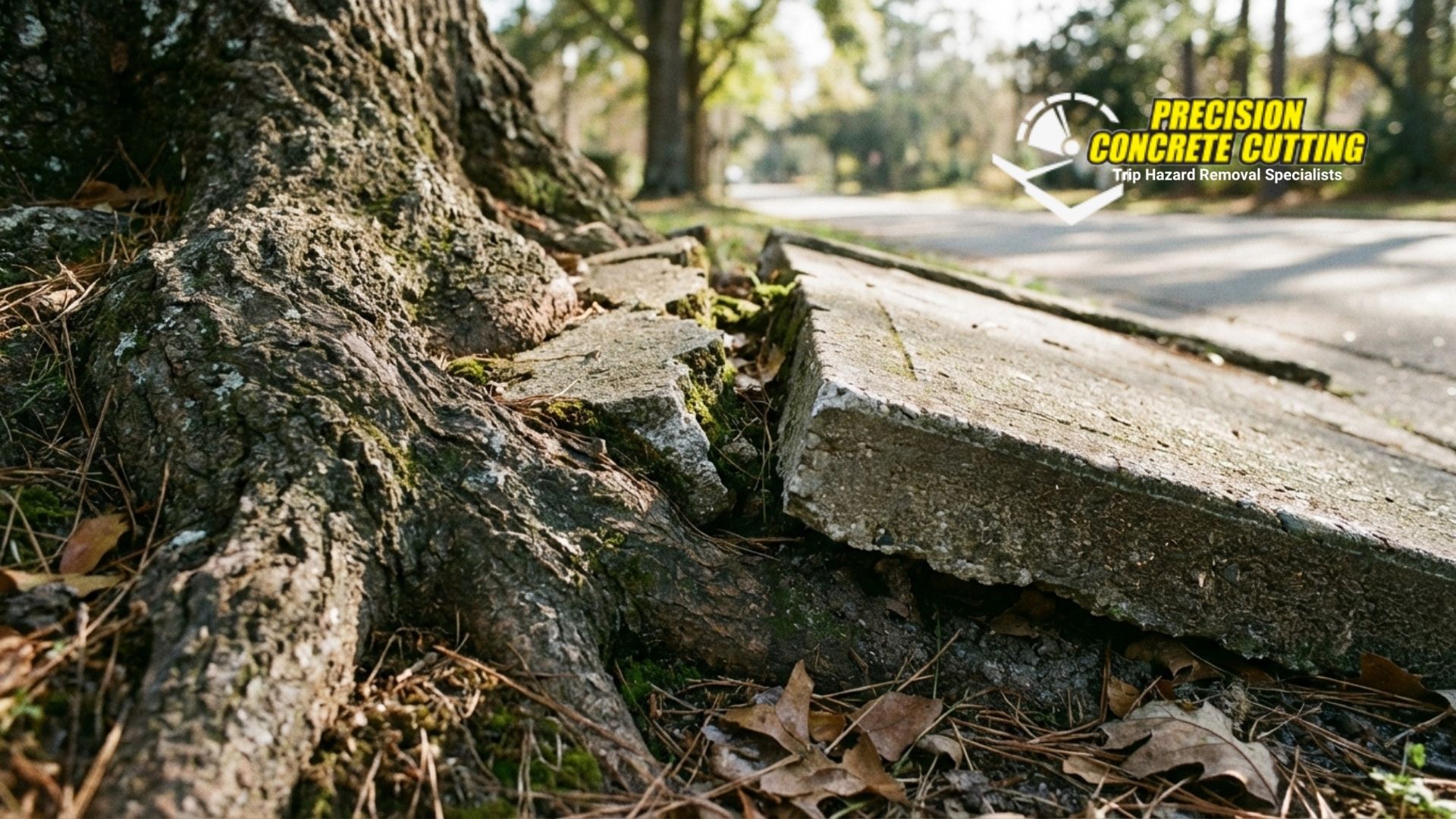
- Tree Root Lifting: Ficus and other aggressive-rooting trees are common in San Diego and the broader SoCal region. As these roots seek moisture, they exert immense upward pressure, lifting concrete panels and creating sudden, dangerous vertical faults.
- Dry-Climate Deterioration: Prolonged dry spells followed by sudden, heavy seasonal rains cause the expansive clay soils common in California to shrink and swell. This continuous movement destabilizes the subgrade beneath the concrete.
- Seismic Activity: Minor, often imperceptible seismic shifts continuously stress rigid concrete structures, leading to micro-fractures and eventual panel displacement.
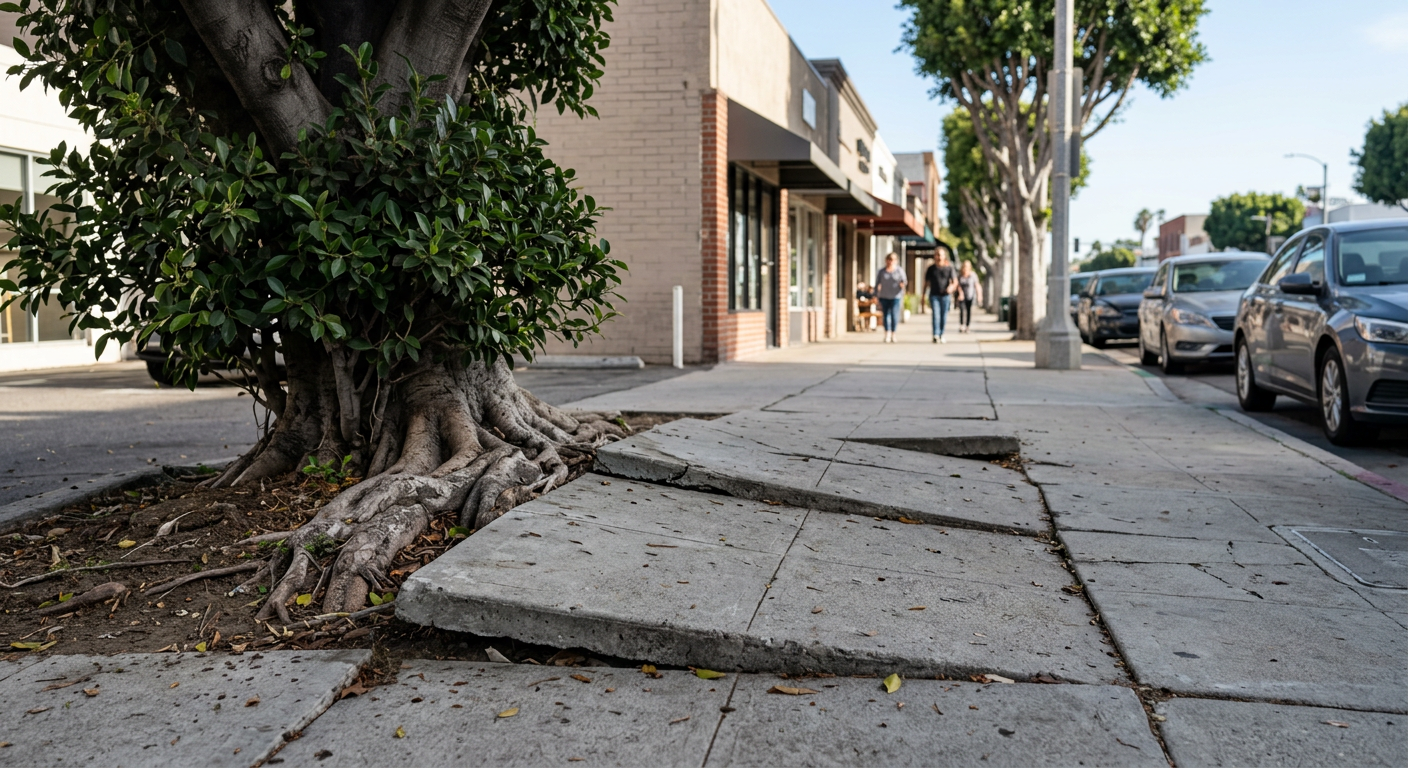
Understanding these localized factors is essential for effective commercial property maintenance. Ignoring these environmental stressors guarantees that minor concrete lips will evolve into major liabilities.
California ADA Compliance and Legal Liability in 2026
Brand reputation is closely tied to inclusivity and accessibility. In California, property owners must navigate some of the strictest accessibility regulations in the country. The Americans with Disabilities Act (ADA) Title III mandates that all public accommodations maintain accessible routes. Furthermore, the California Building Standards Code (Title 24) imposes rigorous state-level requirements.
Under these regulations, any vertical change in level exceeding 1/4 inch is legally classified as a trip hazard. If a hazard falls between 1/4 inch and 1/2 inch, it must be beveled with a slope no greater than 1:2. Anything over 1/2 inch requires a ramp or complete removal. Failure to comply not only invites Department of Justice enforcement but also exposes the property to predatory accessibility lawsuits, which have surged in California over the past decade.
To protect your brand, you must know how commercial property owners can stay ADA-compliant year-round. A proactive approach demonstrates to the community—and to the courts—that your brand values safety and equal access for all individuals, including those using mobility devices.
Evaluating Solutions: Why Horizontal Slicing Outperforms Alternatives
When property managers identify uneven concrete, they often consider various remediation methods. However, not all methods are created equal when it comes to aesthetics, longevity, and ADA compliance. Traditional methods often leave unsightly scars on the property, which detracts from the brand image.
For instance, general contractors might suggest slab replacement, which is highly disruptive, expensive, and environmentally taxing. Others might suggest patching, which frequently chips away under heavy foot traffic, or traditional grinding, which leaves a rough, unappealing texture and often fails to achieve the precise slope required by the ADA.
Conversely, our ADA-compliant slicing technique utilizes patented horizontal cutting technology. This method cuts the concrete completely flush, leaving a clean, smooth finish that seamlessly blends with the surrounding walkway. It restores the precise coefficient of friction required for safety without the mess or disruption of demolition.
Comparison of Sidewalk Hazard Solutions
| Feature | Patented Horizontal Slicing | Slab Replacement (General Contractor) | Traditional Patching (General Contractor) |
|---|---|---|---|
| ADA Compliance | 100% Guaranteed precise slope | Yes, but subject to settling | Rarely compliant; prone to chipping |
| Aesthetic Impact | Clean, flush, professional finish | Mismatched concrete colors | Unsightly, temporary appearance |
| Disruption Level | Zero downtime; walk on immediately | High; days of curing and barricades | Moderate; requires curing time |
| Cost Efficiency | Highly cost-effective | Very expensive | Low initial cost, high long-term cost |
Opting for concrete cutting using patented methods ensures that your property remains safe and visually appealing, directly supporting a premium brand reputation. For a deeper look at cost savings, explore these budget-friendly sidewalk trip hazard fixes.
Step-by-Step: How to Audit Your Property for Sidewalk Hazards
Maintaining a stellar brand reputation requires vigilance. Property managers should implement a systematic approach to identifying and addressing exterior risks before they result in an incident. Here is a definitive 2026 guide to auditing your commercial walkways:
- Establish a Quarterly Inspection Schedule: Do not wait for annual reviews. Walk the property every three months, paying special attention to areas near large trees, irrigation runoff zones, and heavy traffic corridors.
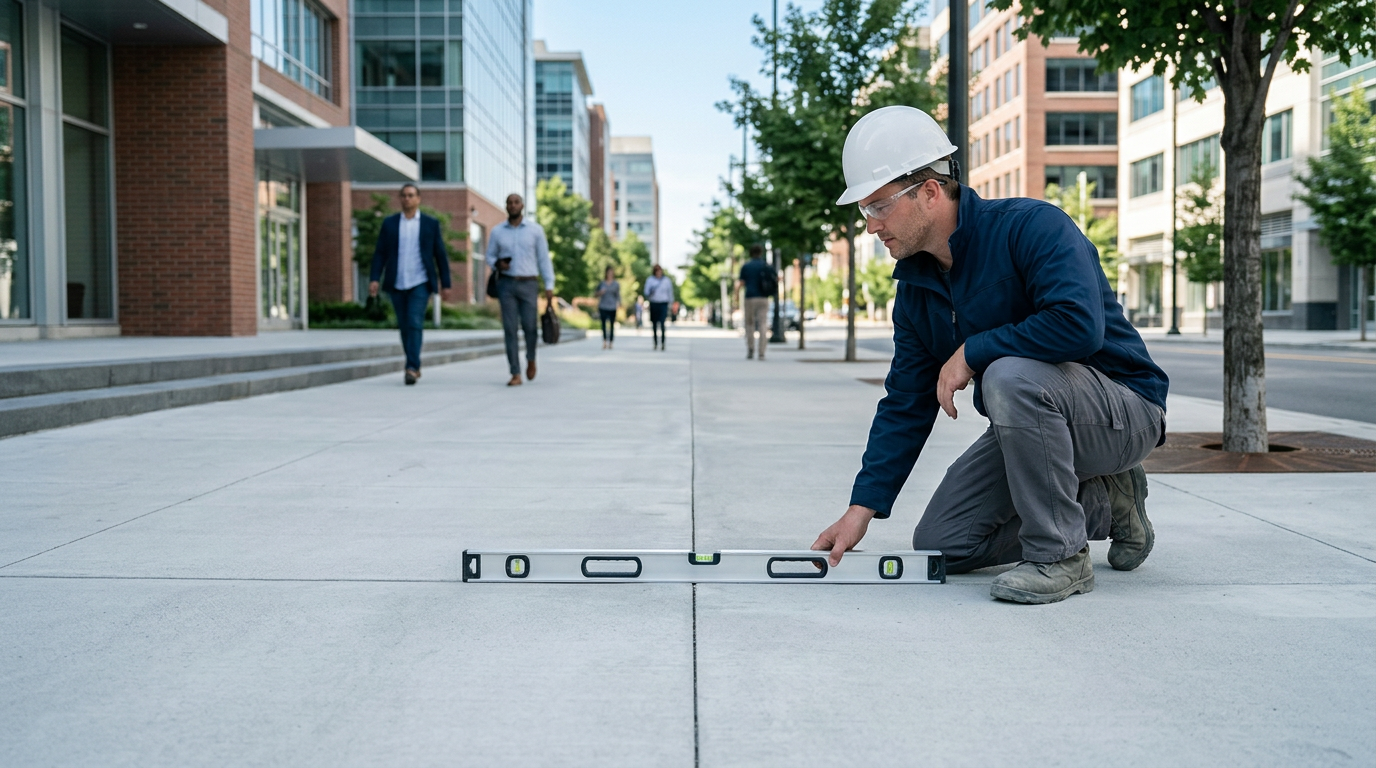
- Utilize Proper Measurement Tools: Visual inspections are insufficient. Use a digital level and a specialized ADA measuring device to check for vertical displacements exceeding the 1/4-inch threshold.
- Document and Map Hazards: Create a digital map of your property. Log the exact location, height, and severity of each displacement. This documentation is crucial for prioritizing work and demonstrating proactive management in the event of a liability claim.
- Assess Surrounding Environmental Factors: Note if poor drainage or overgrown tree roots are exacerbating the issue. While you may need a landscaper or general contractor to fix the root cause (like irrigation leaks), identifying it early prevents accelerated concrete damage.
- Schedule Professional Trip Hazard Removal: Engage specialists who utilize horizontal cutting to bring the walkways back into strict ADA compliance swiftly and cleanly.
For a more comprehensive breakdown, review our trip hazard prevention for property managers checklist.
The Financial ROI of Proactive Hazard Management
Protecting your brand reputation also means protecting your bottom line. The financial impact of a trip and fall lawsuit extends far beyond the immediate settlement. According to 2026 data from the Insurance Information Institute, the average premises liability settlement for a commercial trip and fall exceeds $60,000, with legal defense costs often doubling that figure. Furthermore, a history of claims will drastically increase your commercial property insurance premiums.
Investing in routine commercial property maintenance yields an exceptional return on investment (ROI). By utilizing an ADA-compliant slicing technique, property owners can eliminate dozens of hazards for a fraction of the cost of a single legal settlement or full slab replacement. This proactive allocation of the maintenance budget preserves capital, stabilizes insurance rates, and prevents the negative press associated with public injury lawsuits. Learn more about how San Diego property owners can prevent costly sidewalk injury lawsuits.
Building a Long-Term Sidewalk Strategy in Southern California
A reactive approach to facility management is no longer sufficient. Leading commercial property owners in San Diego and across Southern California are adopting long-term, data-driven strategies for exterior maintenance. This involves integrating Geographic Information Systems (GIS) to track the lifecycle of concrete panels and predicting where differential settlement is most likely to occur based on soil data and landscaping proximity.
Furthermore, maintaining a relationship with a specialized trip hazard removal partner ensures that when a hazard is identified, it is neutralized immediately, without the administrative delay of sourcing new vendors. This seamless operational efficiency is the hallmark of a well-managed, highly reputable commercial brand.
Property owners must remember that ignoring small sidewalk cracks and minor lifts inevitably leads to larger, more expensive problems. A commitment to continuous improvement in exterior safety is a commitment to your brand’s enduring legacy.
Take Action to Protect Your Property and Brand
Your brand’s reputation is too valuable to be compromised by easily preventable exterior hazards. Ensuring that your walkways are safe, accessible, and aesthetically pleasing is a fundamental responsibility of commercial property ownership in California.
Want to see how eco-friendly sidewalk repair works in San Diego? Book a free site walk today. Get a free assessment to identify sidewalk hazards on your property and discover how our patented horizontal cutting technology can restore your walkways to perfect ADA compliance without the disruption of traditional construction.
Frequently Asked Questions (FAQ)
What is considered a trip hazard under California ADA regulations?
Under the California Building Code (Title 24) and the ADA, any vertical change in level on a walkway that exceeds 1/4 inch is legally classified as a trip hazard. These must be addressed to maintain compliance and ensure safe public access.
Why is horizontal slicing better than traditional concrete replacement?
Horizontal slicing is a patented technique that cuts the concrete completely flush, guaranteeing ADA compliance without the high costs, environmental waste, or operational downtime associated with full slab demolition and replacement.
How often should commercial properties inspect their sidewalks?
Commercial properties should conduct formal sidewalk inspections at least quarterly. In areas with aggressive tree roots or expansive clay soils common in Southern California, more frequent monitoring may be necessary.
Do you offer concrete pouring or patching services?
No. Precision Concrete Cutting specializes exclusively in trip hazard removal using our patented horizontal slicing method. We do not perform patching, grinding, or concrete pouring, which are typically handled by general contractors.
Can tree roots causing sidewalk lifts be managed during the slicing process?
While our horizontal cutting technique perfectly removes the concrete trip hazard caused by the roots, managing the actual tree roots or adjusting landscaping requires a specialized arborist or general landscaping contractor.
How does trip hazard removal protect my brand reputation?
Maintaining flush, safe walkways prevents public injuries and accessibility lawsuits, demonstrating to customers and tenants that your brand prioritizes their safety, comfort, and equal access.
Conclusion: Your Sidewalks Are Your First Impression
Your commercial property’s exterior is the physical embodiment of your brand. Neglected, uneven sidewalks do more than just violate strict California ADA standards—they instantly erode consumer trust and expose your business to devastating liability claims. In the competitive Southern California market, reactive maintenance is a risk you simply cannot afford. By utilizing our patented horizontal slicing technology, commercial property managers can proactively eliminate trip hazards, ensuring pristine, accessible walkways with zero downtime. Protecting your concrete is, ultimately, protecting your brand’s legacy and your bottom line.
Schedule Your Free Assessment
Call 760-334-8921 to have our team evaluate your commercial sidewalks. We’ll identify any existing trip hazards, recommend our patented horizontal slicing solutions, and provide transparent pricing for any needed work.
Contact Precision Concrete Cutting today at 760-334-8921. Keep your commercial walkways safe, ADA-compliant, and your property looking great!

