

When evaluating city accessibility, public sidewalk maintenance plays a foundational role in ensuring safe, equitable transit for all pedestrians. In 2026, municipalities across Southern California are shifting away from reactive fixes toward proactive, ADA-compliant infrastructure management. By utilizing advanced GIS tracking, prioritizing high-traffic pedestrian corridors, and employing patented horizontal slicing for trip hazard removal, cities can eliminate barriers that disproportionately affect seniors, children, and individuals with disabilities.
Note: While some repair methods discussed here (e.g., patching, slab replacement, or drainage work) may require general contractors, Precision Concrete Cutting specializes specifically in trip hazard removal using patented horizontal slicing. We do not perform patching, grinding, or concrete pouring.
The 2026 Landscape of Southern California Sidewalks
Southern California presents unique challenges for municipal infrastructure. Cities like San Diego face specific environmental stressors, including dry-climate deterioration, seismic micro-shifts, and aggressive tree root lifting. According to a 2026 report by the California Department of Transportation, over 65% of reported pedestrian trip hazards in coastal and inland urban centers are directly linked to mature urban canopies displacing concrete panels.
As Dr. Elena Rostova, Urban Infrastructure Lead at the California Institute of Municipal Planning, explains: “Modern urban accessibility requires a surgical approach to maintenance. Cities can no longer afford the financial or environmental costs of wholesale concrete replacement when targeted, ADA-compliant modifications can restore safe passage immediately.”
To combat these challenges and prevent costly sidewalk injury lawsuits, public works departments must adopt comprehensive strategies. Here are five ways cities can improve public accessibility through sidewalk maintenance.
1. Implement Precision Trip Hazard Removal
Historically, cities relied on destructive and inefficient methods to handle uneven concrete. Traditional grinding leaves an unsightly, textured surface that can degrade quickly, while patching often spalls or chips away within a few seasons. Furthermore, full slab replacement is expensive, carbon-intensive, and causes significant pedestrian disruption.
Today, the gold standard for restoring accessibility is the ADA-compliant slicing technique. This patented horizontal cutting method completely removes the trip hazard, leaving a clean, flush, and slip-resistant finish that strictly adheres to the Americans with Disabilities Act guidelines. Because this process cuts the concrete rather than pulverizing it, it creates zero micro-fractures in the surrounding slab, preserving the structural integrity of the walkway.
For municipalities looking to stretch their budgets, this method is highly effective. Implementing budget-friendly sidewalk trip hazard fixes allows cities to repair up to ten times as many hazards compared to traditional replacement, drastically accelerating city-wide accessibility goals.
Want to see how eco-friendly sidewalk trip hazard removal works in San Diego? Book a free site walk today to evaluate your municipal or commercial property.
 2. Utilize GIS Tracking for Sidewalk Inventories
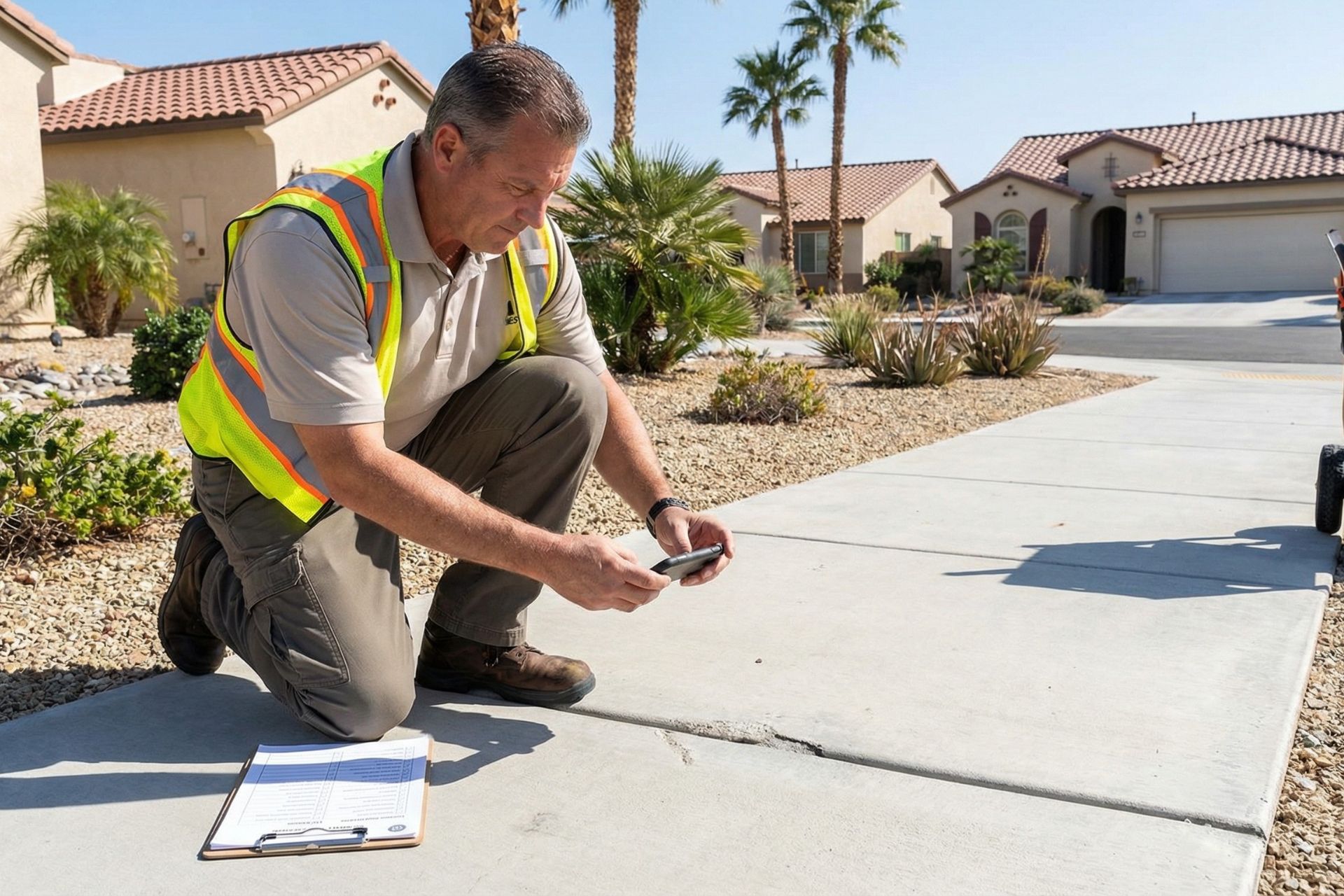
You cannot manage what you do not measure. In 2026, smart city initiatives rely heavily on Geographic Information Systems (GIS) to map and monitor infrastructure. By creating a digital twin of a city’s pedestrian network, public works officials can log the exact GPS coordinates, severity, and cause of every sidewalk defect.
Data from the Federal Highway Administration indicates that municipalities utilizing GIS-based maintenance software reduce their emergency response times to reported hazards by up to 42%. This data-driven approach allows cities to plan smart sidewalk maintenance schedules, grouping trip hazard removal projects by neighborhood to maximize contractor efficiency and minimize travel time.
Furthermore, GIS databases provide a verifiable paper trail of proactive maintenance, which is crucial for defending against liability claims. When a city can prove it systematically identifies and mitigates hazards using patented concrete cutting methods, it demonstrates a clear commitment to public safety.
3. Address Environmental Factors Proactively
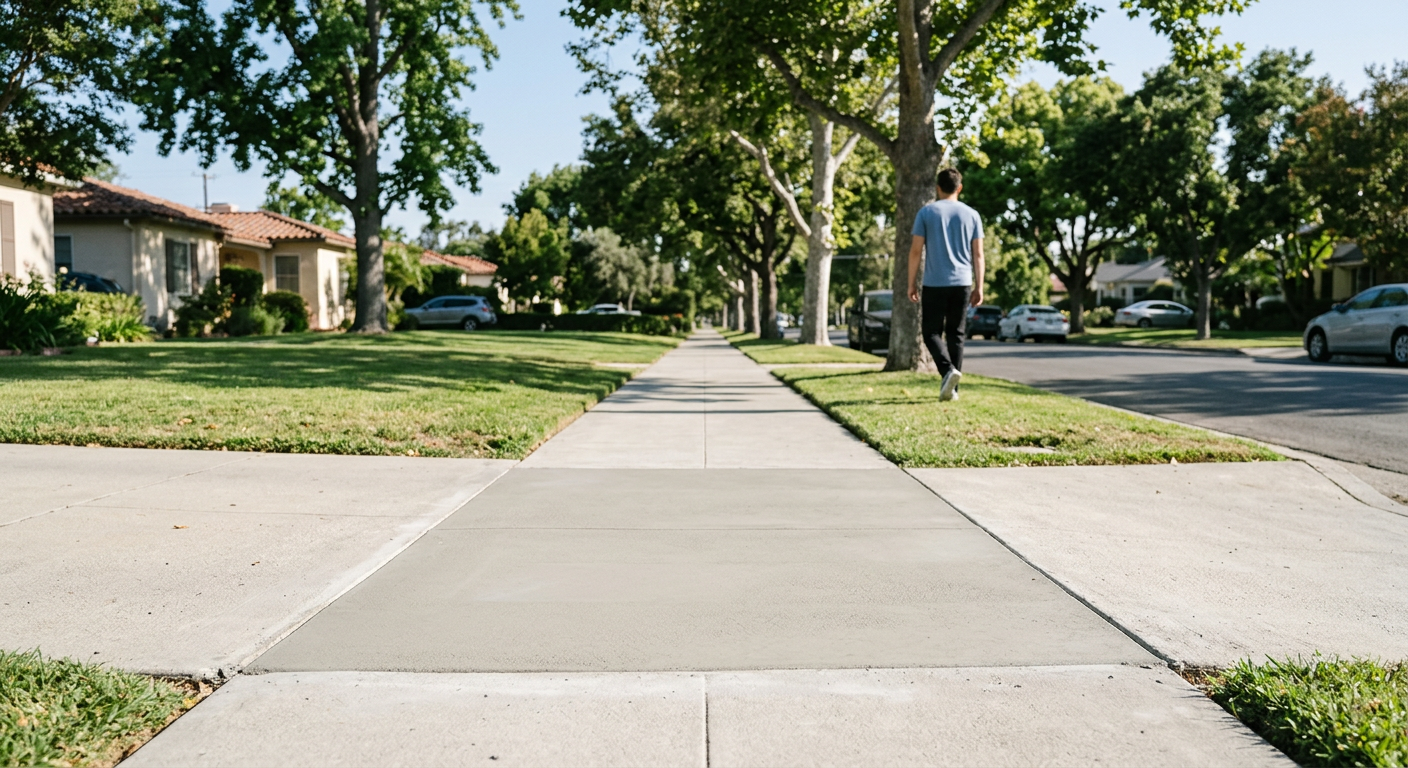
In Southern California, the battle between urban forestry and concrete infrastructure is constant. Ficus, liquidambar, and magnolia trees are notorious for their shallow, aggressive root systems that easily lift heavy concrete slabs. Coupled with the region’s dry climate, which causes soil to contract and expand, sidewalks are under constant geological stress.
While managing tree roots, installing root barriers, or fixing irrigation drainage are tasks suited for general contractors or urban arborists, the resulting concrete displacement must be addressed swiftly to maintain accessibility. Once the underlying environmental issue is stabilized by the appropriate vendor, precision trip hazard removal can be deployed to level the walking surface.
By coordinating these efforts, cities can keep your sidewalks safe year-round in Southern California without sacrificing the vital shade canopy that cools urban neighborhoods.
4. Prioritize High-Traffic and Vulnerable Zones
Not all sidewalks carry the same risk profile. To maximize the impact of maintenance budgets, cities must prioritize zones that serve highly vulnerable populations. According to accessibility advocates, a 1/2-inch vertical displacement might be a minor nuisance to an able-bodied pedestrian, but it acts as an impassable roadblock for a wheelchair user or a severe tripping risk for an elderly resident.
Municipalities should establish a tiered prioritization matrix:
- Tier 1: Hospitals, senior living facilities, and medical centers.
- Tier 2: Schools, universities, and public transit hubs.
- Tier 3: High-density commercial districts and retail plazas.
- Tier 4: Residential neighborhoods and low-traffic industrial parks.
Focusing on Tier 1 and Tier 2 zones helps enhance accessibility for seniors and disabled residents where it matters most. By deploying horizontal cutting crews to these critical areas first, cities ensure that their most vulnerable citizens maintain their independence and mobility.
5. Conduct Regular ADA Compliance Audits
Compliance is not a one-time achievement; it is an ongoing operational standard. California enforces some of the strictest accessibility regulations in the nation through the California Building Code (CBC) Title 24. The Division of the State Architect mandates that any vertical change in level exceeding 1/4 inch must be beveled, and anything over 1/2 inch requires remediation.
Cities must conduct annual or biennial audits to ensure their pathways meet these rigorous standards. Understanding California sidewalk laws is essential for municipal risk managers. An audit should identify not just vertical trip hazards, but also cross-slope violations and non-compliant curb ramps.
Get a free assessment to identify sidewalk hazards on your municipal or commercial property. Contact our San Diego team today to schedule your ADA compliance audit.

Comparing Sidewalk Hazard Mitigation Methods
To fully grasp how cities can optimize their budgets while improving accessibility, it is vital to compare the available mitigation methods. As noted, Precision Concrete Cutting specializes exclusively in horizontal slicing, leaving other methods to general contractors.
| Mitigation Method | ADA Compliant? | Environmental Impact | Longevity & Aesthetics |
|---|---|---|---|
| Horizontal Slicing (Our Specialty) | Yes (Zero point of differential) | Low (No heavy machinery, dust capture) | Permanent removal of the hazard; clean, flush finish. |
| Concrete Patching (General Contractor) | Rarely (Often fails slope requirements) | Low | Temporary; prone to cracking, spalling, and discoloration. |
| Slab Replacement (General Contractor) | Yes (If poured correctly) | High (Carbon intensive, debris removal) | Long-term, but highly disruptive and expensive. |
| Traditional Grinding (Not Recommended) | Inconsistent | Moderate (Dust generation) | Leaves scarred, textured concrete that degrades quickly. |
Step-by-Step Guide: Rolling Out a City-Wide Maintenance Plan
For municipal leaders ready to take action in 2026, implementing a comprehensive accessibility plan requires structured execution. Here is a proven step-by-step framework:
- Establish a Baseline Inventory: Deploy inspection teams or utilize mobile LiDAR scanning to map all existing sidewalk defects across the city.
- Categorize by Severity and Location: Filter the data to highlight hazards over 1/2 inch located in Tier 1 and Tier 2 priority zones (e.g., near hospitals and schools).
- Coordinate with General Contractors (If Needed): For areas requiring extensive root barrier installation or drainage correction, schedule general contractors to stabilize the site first.
- Deploy Precision Trip Hazard Removal: Contract specialists to perform ADA-compliant horizontal slicing on all identified vertical displacements, ensuring a zero point of differential.
- Update the GIS Database: Log the completed removals into the city’s tracking software to maintain an accurate digital twin and document compliance efforts.
By following these steps, public works departments can execute smart sidewalk maintenance for California HOAs and municipal districts alike, maximizing budget efficiency while drastically reducing liability.
Conclusion
Improving city accessibility, public sidewalk maintenance must evolve past the outdated, reactive methods of the past. By leveraging modern GIS technology, prioritizing vulnerable pedestrian zones, and utilizing patented horizontal slicing for trip hazard removal, Southern California cities can create safer, more inclusive environments for all residents. Proactive maintenance not only protects municipalities from costly litigation but also fulfills the fundamental promise of equal access under the ADA.
Ready to eliminate trip hazards and achieve full ADA compliance on your property? Contact Precision Concrete Cutting today to schedule a free, no-obligation site assessment in Southern California.
Frequently Asked Questions (FAQs)
What is the ADA standard for a sidewalk trip hazard in California?
Under the Americans with Disabilities Act and California Building Code Title 24, any vertical change in level exceeding 1/4 inch must be beveled. Any displacement over 1/2 inch is considered a strict trip hazard and requires immediate remediation to restore accessibility.
Why is horizontal slicing better than traditional concrete grinding?
Horizontal slicing is a patented technique that cuts the concrete to completely remove the hazard, leaving a smooth, flush, and slip-resistant surface. Traditional grinding pulverizes the concrete, leaving an ugly, scarred texture that is prone to rapid degradation and micro-fracturing.
Does Precision Concrete Cutting handle tree root removal or drainage issues?
No. While we specialize exclusively in trip hazard removal using our patented slicing method, issues like tree root pruning, root barrier installation, or irrigation repairs must be handled by general contractors or certified arborists.
How does proactive sidewalk maintenance save cities money?
Proactive maintenance saves money by preventing multi-million dollar slip-and-fall lawsuits. Additionally, utilizing trip hazard removal via horizontal slicing costs a fraction of full slab replacement, allowing cities to fix up to ten times as many hazards with the same budget.
Can horizontal slicing be used on all types of sidewalk damage?
Horizontal slicing is specifically designed for vertical displacements and trip hazards at the joints or cracks of concrete panels. It is not a solution for completely shattered slabs, deep potholes, or structural sinkholes, which require a general contractor for full replacement.
How often should a California city audit its sidewalks for accessibility?
Best practices in 2026 dictate that high-traffic zones (like schools and hospitals) should be audited annually. Residential and lower-traffic areas should be inspected on a rolling biennial or triennial basis to ensure ongoing ADA compliance.
Conclusion: Building Inclusive, Safe, and Budget-Smart Cities
True accessibility in public spaces requires more than just good intentions—it demands a proactive, data-driven approach to infrastructure maintenance. By moving away from inefficient, reactive repairs and embracing modern GIS tracking, strategic prioritization, and precise hazard removal, Southern California municipalities can transform their pedestrian networks. Utilizing patented horizontal slicing allows cities to stretch their public works budgets further, eliminating dangerous trip hazards swiftly and sustainably. Ultimately, investing in ADA-compliant sidewalks protects vulnerable residents, shields the city from costly litigation, and ensures equal access for every member of the community.
Schedule Your Free Assessment
Call 760-334-8921 to have our team evaluate your city’s sidewalks. We’ll identify any existing trip hazards, recommend our patented horizontal slicing solutions, and provide transparent pricing for any needed work.
Contact Precision Concrete Cutting today at 760-334-8921. Keep your public walkways safe, ADA-compliant, and your community moving forward!

