

To effectively extend sidewalk life and implement actionable sidewalk maintenance tips, property owners must proactively manage landscape drainage, monitor aggressive tree roots, maintain surface cleanliness, seal expansion joints, and utilize ADA-compliant horizontal slicing to remove trip hazards. By addressing these five core areas, Southern California property managers can prevent severe concrete deterioration, maintain safe walkways, and avoid the exorbitant costs of full slab replacement.
Note: While some repair methods discussed here (e.g., patching, sealing, or drainage work) may require general contractors or landscapers, Precision Concrete Cutting specializes specifically in trip hazard removal using patented horizontal slicing. We do not perform patching, grinding, or concrete pouring.
Why Southern California Sidewalks Deteriorate Faster
Managing concrete infrastructure in Southern California presents unique environmental challenges. Unlike regions that battle freeze-thaw cycles, San Diego and the surrounding areas face a different set of adversaries: extreme dry-climate deterioration, expansive clay soils, and aggressive urban forestry.
Dry-Climate Soil Shifting in San Diego
Southern California’s arid climate leads to significant soil moisture fluctuations. During extended dry periods, the expansive clay soils beneath the concrete shrink, creating voids. When the rare but heavy winter rains arrive, these soils rapidly expand. This continuous shrinking and swelling exerts immense hydrostatic pressure on concrete slabs, leading to cracking, shifting, and the creation of dangerous trip hazards. According to the Federal Highway Administration (FHWA), sub-base instability is responsible for over 40% of premature concrete pavement failures in arid urban environments.
The Impact of Aggressive Tree Roots
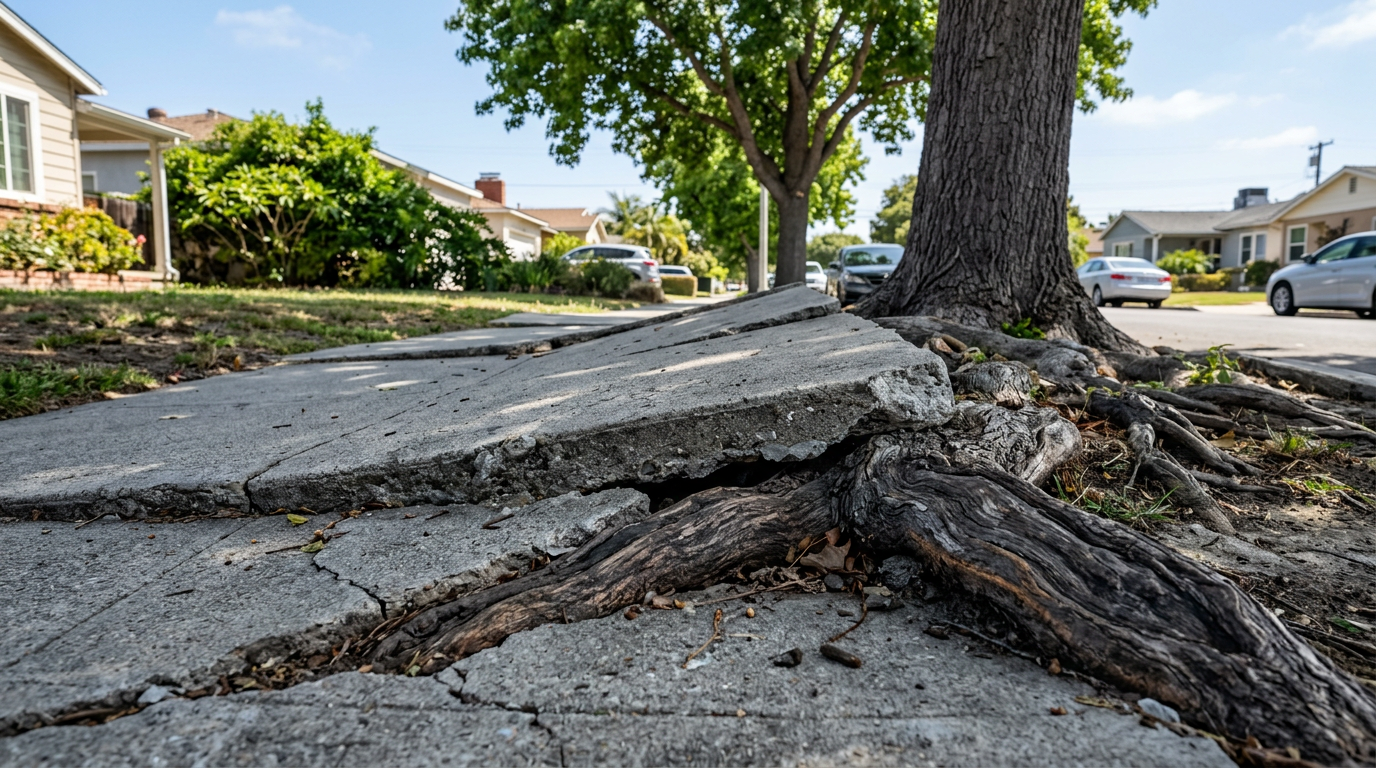
San Diego’s beautiful urban canopy comes with a hidden cost. Species like Ficus, Jacaranda, and Magnolia have shallow, aggressive root systems that seek out the condensation trapped beneath concrete sidewalks. As these roots grow in diameter, they generate enough upward force to lift heavy concrete slabs, creating severe vertical displacements. Data from San Diego’s urban forestry initiatives indicates that over 65% of sidewalk uplifts in the metropolitan area are directly caused by invasive tree roots.
5 Simple Ways to Extend Sidewalk Life
Proactive property management is the key to maximizing the lifespan of your pedestrian infrastructure. Implementing these five strategic sidewalk maintenance tips will help you preserve your concrete assets well into 2026 and beyond.
1. Manage Landscape Drainage and Irrigation
Water is the primary catalyst for sub-base erosion. Poorly directed irrigation systems or inadequate landscape drainage can wash away the compacted soil supporting your sidewalks. When the sub-base erodes, the concrete loses its structural integrity and begins to sink or crack under the weight of foot traffic.
To mitigate this, property owners should work with licensed landscapers or general contractors to ensure that all sprinkler heads are directed away from walkways. Additionally, installing French drains or adjusting the grading of adjacent flower beds can prevent water from pooling against the concrete edges. Proper water management is a foundational step to keep your sidewalks safe year-round in Southern California.
2. Monitor and Mitigate Tree Root Growth
Because tree roots are a leading cause of sidewalk uplift in California, early intervention is critical. Property managers should partner with certified arborists to manage urban canopies responsibly. Arborists can install root barriers—physical guides placed in the soil that force roots to grow downward rather than horizontally beneath the pavement.
If roots have already begun to lift the slab, an arborist can safely perform root pruning without compromising the tree’s health. Addressing the biological cause of the uplift prevents the problem from worsening, allowing you to address the resulting concrete displacement effectively.
3. Keep Surfaces Clean and Clear of Debris
While it may seem overly simple, regular cleaning is one of the most effective sidewalk maintenance tips available. Organic debris, such as fallen leaves, pine needles, and dirt, can trap moisture against the concrete surface. Over time, this trapped moisture can degrade the concrete’s top layer and encourage the growth of moss or algae, which creates a dangerous slip hazard.
Routine sweeping and periodic pressure washing (performed by your property maintenance team) remove these corrosive elements. Keeping the surface clean also makes it much easier to identify trip hazards before they become a problem.
4. Seal Concrete Joints to Prevent Water Intrusion
Concrete sidewalks are poured in distinct slabs separated by expansion joints. These joints allow the concrete to expand and contract with temperature fluctuations without cracking. However, if these joints are left unsealed, they become direct pathways for water to infiltrate the sub-base.
Property owners should hire qualified general contractors to clean out debris from these joints and apply a high-quality, flexible polyurethane sealant. Sealing the joints prevents water intrusion, stops weed growth, and significantly extends the structural viability of the walkway. Note: Precision Concrete Cutting does not provide joint sealing services; this should be handled by a general concrete contractor.
5. Eliminate Trip Hazards with ADA-Compliant Slicing
When soil shifting or tree roots inevitably cause a slab to lift, the resulting vertical displacement is a severe liability. In the past, property owners relied on ineffective methods or costly full-slab replacements. Today, the industry standard for addressing these displacements is patented horizontal cutting.
Precision Concrete Cutting utilizes an ADA-compliant slicing technique to completely remove the trip hazard. Unlike traditional methods that leave a rough, visually unappealing surface, our concrete cutting using patented methods leaves a clean, flush, and slip-resistant finish. This process restores the walkway to full compliance with the California Building Code without the need for heavy demolition. By removing the hazard rather than replacing the entire slab, you effectively extend sidewalk life while saving significant capital.
Comparing Sidewalk Hazard Solutions: Slicing vs. Replacement
When a trip hazard forms, property managers must choose how to address it. Understanding the differences between our specialized trip hazard removal service and traditional replacement is vital for budget optimization.
| Feature | Patented Horizontal Slicing (SoCal PCC) | Traditional Slab Replacement |
|---|---|---|
| Cost Efficiency | Saves up to 70-90% compared to replacement. | High costs for demolition, materials, and labor. |
| ADA Compliance | Guaranteed zero point of trip; precise slope ratios. | Dependent on the contractor’s pouring accuracy. |
| Environmental Impact | Zero landfill waste; minimal carbon footprint. | Generates heavy concrete waste; high emissions. |
| Downtime | Walkway remains open; immediate use. | Requires days of curing and pathway closures. |
| Aesthetic Finish | Clean, flush cut with optimal coefficient of friction. | New concrete often mismatches existing weathered slabs. |
As Dr. Emily Chen, Urban Infrastructure Specialist at the California Institute of Civil Engineering, explains: “Proactive concrete management in arid climates like Southern California requires precision intervention. Horizontal slicing technology has revolutionized municipal maintenance by allowing cities to preserve existing infrastructure while achieving strict ADA compliance.”
Want to see how eco-friendly sidewalk repair works in San Diego? Book a free site walk today.
California ADA Compliance: What Property Owners Must Know in 2026
In California, sidewalk accessibility is governed by both the federal Americans with Disabilities Act (ADA) and the stringent California Building Code (CBC). In 2026, the legal threshold for a trip hazard remains incredibly strict: any vertical displacement of 1/4 inch or greater is considered a hazard and an ADA violation.
According to the ADA National Network, failing to address these hazards exposes property owners to significant legal liability, including personal injury lawsuits and ADA accessibility claims. This is why property owners shouldn’t ignore small sidewalk cracks or minor uplifts.
Our ADA-compliant slicing technique ensures that the repaired area has a slope no greater than 1:12, providing a smooth transition for wheelchairs, walkers, and pedestrians. By utilizing professional trip hazard removal, you safeguard your property against costly litigation while ensuring equal access for all residents.
Implementing Smart Sidewalk Maintenance Tips Year-Round
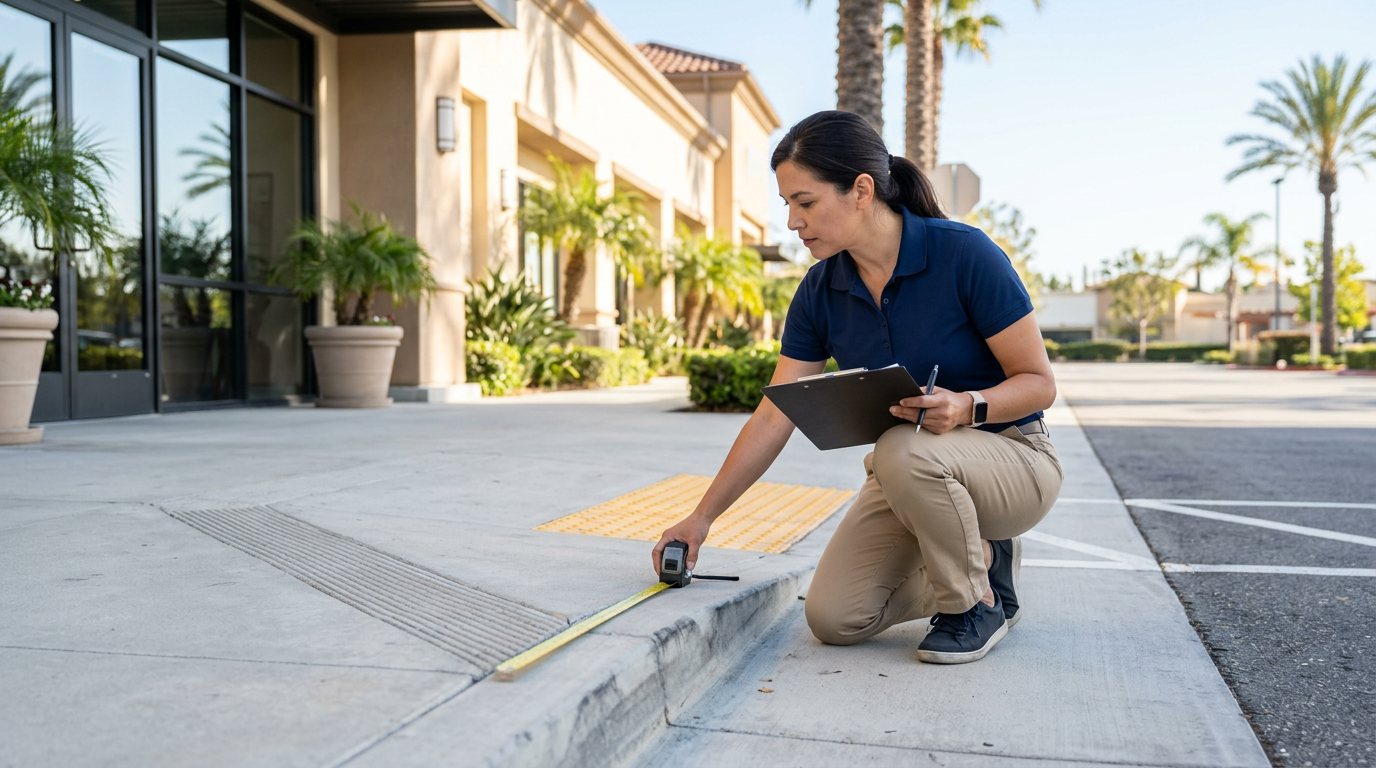
To truly extend sidewalk life, maintenance cannot be a reactive endeavor. Property managers must establish a routine inspection schedule. We recommend conducting a comprehensive visual audit of all walkways at least twice a year—once before the winter rains and once during the peak heat of summer.
During these audits, document any new vertical displacements, note areas where water is pooling, and check the status of nearby tree roots. By maintaining a detailed log, you can prioritize interventions and allocate your maintenance budget efficiently. For those managing large communities, exploring budget-friendly sidewalk trip hazard fixes can drastically reduce annual expenditures while maximizing safety.
Key Takeaways for San Diego Property Managers
- Water is the Enemy: Work with landscapers to ensure proper drainage and prevent sub-base erosion.
- Manage the Canopy: Consult arborists to install root barriers and safely prune aggressive tree roots before they destroy concrete.
- Seal the Gaps: Hire general contractors to maintain expansion joints, keeping water out of the vulnerable soil beneath the slab.
- Demand Precision: Never settle for outdated methods. Utilize patented horizontal slicing for precise, ADA-compliant trip hazard removal.
- Stay Proactive: Regular inspections are the most effective way to prevent costly sidewalk injury lawsuits.
Get a free assessment to identify sidewalk hazards on your property. Contact Precision Concrete Cutting today.
Frequently Asked Questions (FAQ)
What is the most effective way to extend sidewalk life in Southern California?
The most effective approach is a combination of proactive moisture management, tree root mitigation, and addressing vertical displacements immediately. Utilizing patented horizontal slicing to remove trip hazards preserves the existing concrete, preventing the need for premature slab replacement.
Does Precision Concrete Cutting offer concrete pouring or patching?
No. Precision Concrete Cutting specializes exclusively in trip hazard removal using an ADA-compliant slicing technique. We do not perform traditional grinding, patching, concrete pouring, or general landscaping services.
How do tree roots cause sidewalk damage in San Diego?
In dry climates, shallow tree roots seek out the moisture trapped beneath concrete sidewalks. As these roots grow in diameter, they exert immense upward hydrostatic pressure, eventually lifting the heavy concrete slabs and creating dangerous trip hazards.
What is the ADA threshold for a trip hazard in California?
Under both the ADA and the California Building Code, any vertical change in level of 1/4 inch or greater is legally classified as a trip hazard. These displacements must be remediated to ensure safe, accessible pathways for all pedestrians.
Why is horizontal slicing better than replacing the concrete slab?
Horizontal slicing is significantly faster, more environmentally friendly, and saves property owners up to 90% compared to the cost of full replacement. It guarantees a zero point of trip and leaves a clean, ADA-compliant finish without the disruption of heavy demolition.
How often should commercial properties inspect their sidewalks?
Commercial property managers should conduct thorough visual inspections at least twice a year. Documenting changes in concrete elevation allows for timely trip hazard removal, drastically reducing liability and maintaining compliance with state regulations.
Conclusion: Maximize Your Concrete Investment
Extending the lifespan of your sidewalks doesn’t have to mean scheduling constant, expensive concrete replacements. By taking a proactive approach to property management—controlling landscape drainage, monitoring aggressive tree roots, keeping surfaces clean, and maintaining sealed joints—you can protect the structural integrity of your walkways against Southern California’s harsh environmental factors. When the inevitable soil shifting or root growth does cause a lifted slab, skip the costly demolition. Utilizing our patented horizontal slicing technology allows you to completely eliminate the trip hazard, restore strict ADA compliance, and preserve your existing concrete. A smart, year-round maintenance strategy is the ultimate way to protect your pedestrians and your maintenance budget.
Schedule Your Free Assessment
Call 760-334-8921 to have our team evaluate your property’s sidewalks. We’ll identify any existing trip hazards, recommend our patented horizontal slicing solutions, and provide transparent pricing for any needed work.
Contact Precision Concrete Cutting today at 760-334-8921. Keep your walkways safe, extend the life of your concrete, and your property looking great!

