
When examining pedestrian infrastructure, sidewalk trip hazards in the Southern California region primarily develop in areas experiencing high foot traffic, fluctuating soil moisture levels, and dense, mature tree root systems. Differential settlement and subterranean expansion cause concrete panels to lift or sink, creating dangerous uneven walkways. Identifying these high-risk zones is the first step for property managers and municipalities aiming to implement effective Trip Hazard Removal, eliminate liabilities, and maintain strict compliance with federal accessibility standards.
Key Takeaways
-
Root Infiltration: Mature tree roots in residential parkways are the leading cause of concrete panel displacement.
-
High-Traffic Stress: Commercial plazas and healthcare facilities experience accelerated wear due to heavy pedestrian and equipment loads.
-
Strict ADA Standards: Modern 2026 ADA compliance mandates a 0 point differential and a precise 1:12 slope for repaired walkways.
-
Superior Repair Methods: Traditional patch-and-fill or surface-leveling methods fail to guarantee compliance; patented horizontal concrete slicing removes the hazard.
-
Cost Efficiency: Precision concrete cutting is drastically more affordable and faster than full concrete panel replacement, which requires general contractors.
The Mechanics of Walkway Deformation in Southern California
To understand why pedestrian hazards form, one must first look beneath the surface. The geological and climatic realities of the region heavily influence infrastructure durability. Southern California is characterized by variable soil compositions, including Smectite clay, which expands significantly when saturated and contracts during extreme drought. According to the American Society of Civil Engineers (ASCE), expansive soils are responsible for billions of dollars in infrastructure damage annually across the United States.
During the intense drought-and-deluge weather cycles, soil expansion exerts tremendous upward mechanical pressure on concrete slabs. Conversely, during extended dry periods, the soil shrinks, causing unsupported concrete panels to sink. This uneven movement results in hazardous lifts at the expansion joints. When property managers ignore these shifts, minor cracks quickly escalate into major liabilities.
Top 5 Locations Where Sidewalk Trip Hazards Commonly Develop
While an uneven walkway can manifest anywhere, specific environmental and usage factors make certain locations far more susceptible. Routine inspections are critical in these five high-risk areas.
1. Residential Neighborhoods with Mature Trees (Parkways)
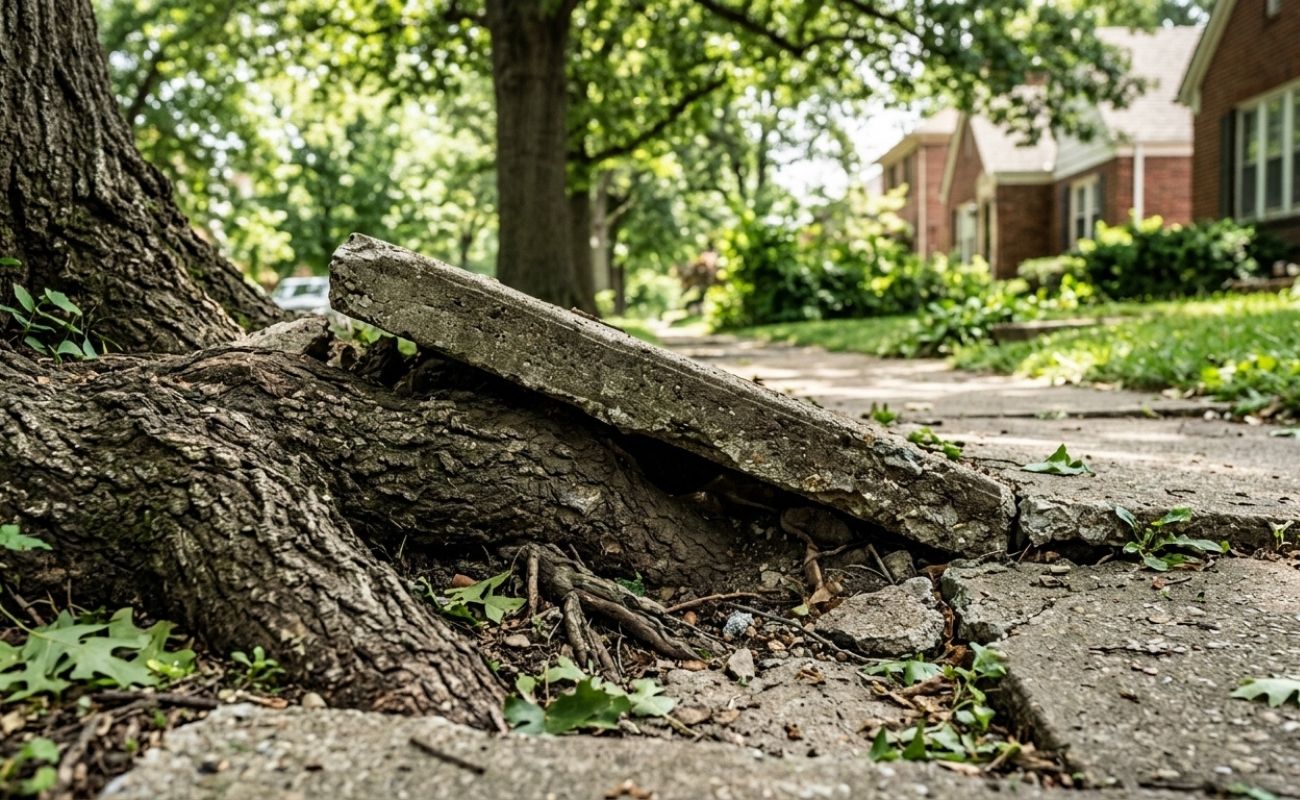
The narrow strip of land between the street curb and the sidewalk, often called the parkway, is a prime location for hazard development. Decades ago, urban planners planted aggressive tree species like Ficus, Liquidambar, and Magnolia. As these trees mature, their shallow root systems aggressively seek out moisture, often growing directly beneath concrete panels.
The sheer mechanical force of expanding tree roots easily lifts concrete slabs by several inches. Because homeowners and homeowners associations (HOAs) are often legally responsible for adjacent walkways, addressing tree root damage promptly is vital to avoiding neighborhood injury lawsuits.
2. Commercial Plazas and High-Traffic Retail Zones
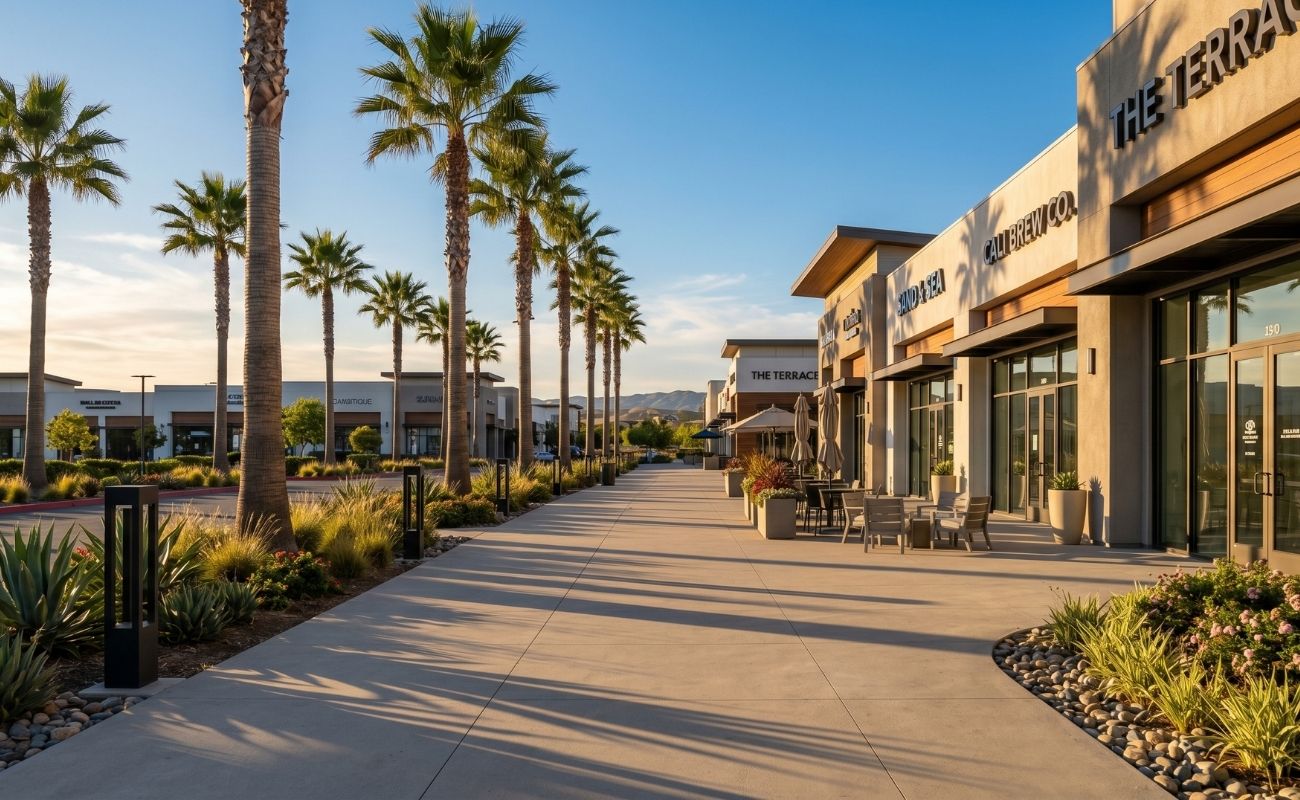
Commercial shopping centers endure a vastly different type of stress. These areas see thousands of pedestrians daily, alongside heavy rolling loads from delivery dollies, maintenance carts, and waste management equipment. The constant vibration and weight compression degrade the subgrade base material beneath the expansion joints.
As the base material compacts unevenly, the concrete panels settle at different rates. Utilizing professional trip hazard removal ensures that commercial properties maintain a safe, welcoming environment without disrupting business operations.
3. Public Parks and Municipal Greenways
Municipal parks feature expansive networks of walking paths surrounded by large green spaces. These locations are particularly vulnerable due to frequent irrigation. Overwatering or poor drainage systems lead to continuous water pooling near the edges of concrete walkways. Over time, this water erodes the foundational soil, creating voids beneath the slabs.
Additionally, municipal landscaping vehicles driving over pathways designed only for pedestrian weight can cause immediate panel cracking and sinking. Cities face enormous municipal liability if these hazards are not mitigated promptly using precision concrete cutting techniques.
4. Hospital and Healthcare Facility Entrances
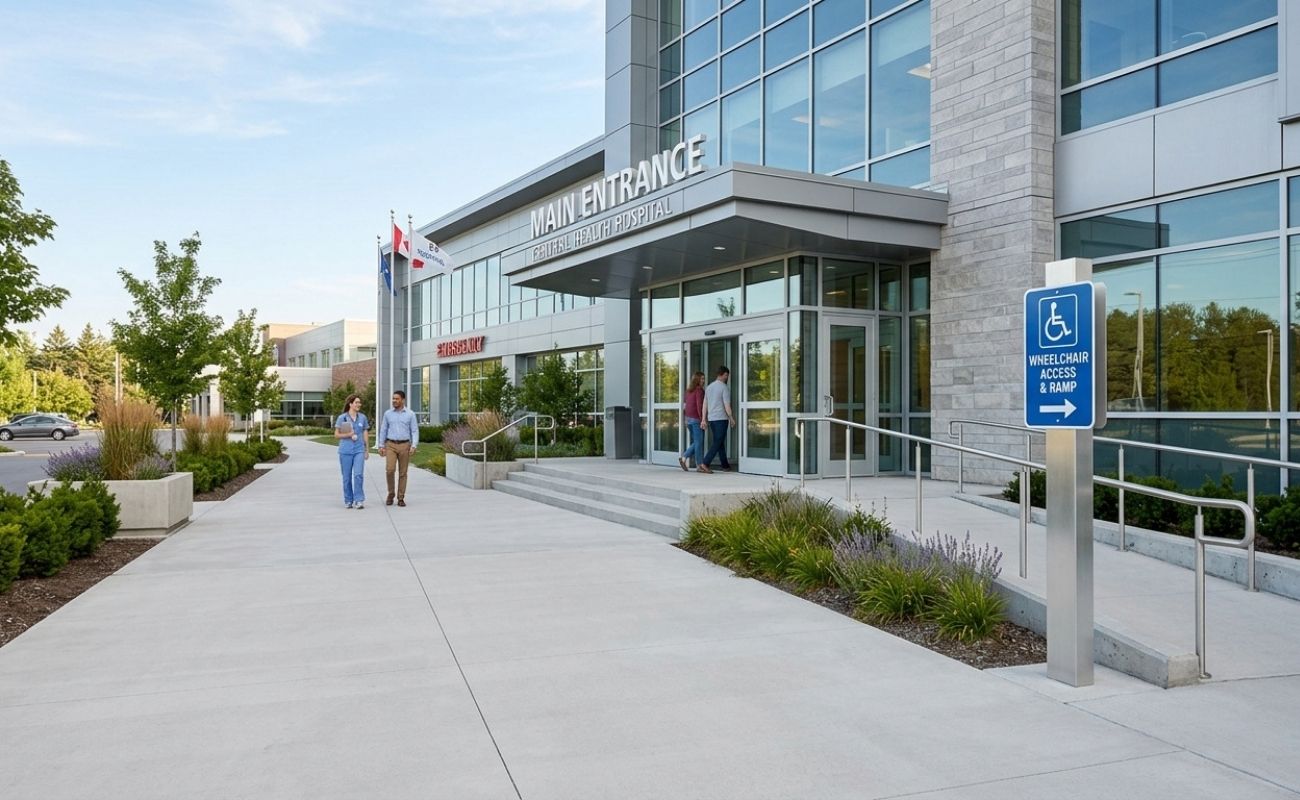
Nowhere is a smooth, perfectly level surface more critical than at a healthcare facility. Patients using wheelchairs, walkers, crutches, or gurneys traverse these walkways continuously. Even a lift of a quarter-inch can abruptly halt a wheelchair’s front caster wheel, potentially causing a severe secondary injury to a vulnerable patient.
Hospitals are heavily scrutinized by federal regulators for accessibility. Ensuring ADA compliance at healthcare facilities is a non-negotiable legal and ethical mandate. The required precision in these environments means that temporary patches or inferior abrasive techniques are entirely unacceptable.
5. School Grounds and Educational Campuses
University campuses and K-12 school grounds form the fifth major hotspot. These areas are unique because they often feature extensive underground utility lines (water, gas, electricity, and telecommunications). The trenches dug for these utilities often experience soil subsidence over time, taking the concrete walkways down with them.
Furthermore, the erratic movement of running children amplifies the danger of even minor surface irregularities. Navigating liability on school grounds requires facility managers to execute regular audits and immediate structural remediation before the academic year begins.
The 2026 Legal Landscape: ADA Compliance Standards
The Americans with Disabilities Act (ADA) outlines stringent, non-negotiable standards for pedestrian pathways, overseen by the Department of Justice. According to the ADA guidelines, any vertical change in level exceeding 1/4 inch is legally classified as a trip hazard and must be treated or leveled.
However, simply reducing the height of the lift is insufficient to meet federal accessibility requirements. True ADA compliance demands two critical metrics after making a repair:
- Zero Point Differential: The transition between the repaired concrete and the adjacent slab must be entirely flush, leaving absolutely no raised lip.
- 1:12 Slope Ratio: For every inch of vertical lift being repaired, there must be 12 inches of horizontal run to create a gentle, wheelchair-accessible ramp.
Meeting precise ADA standards is the only way property owners can shield themselves from costly litigation while genuinely serving their communities.
Why Precision Concrete Cutting Surpasses Traditional Methods
Historically, property owners attempted to fix uneven concrete using rough surface-leveling techniques, adding temporary patch-and-fill mixtures, or undertaking highly expensive full concrete replacements. Today, these older methods are largely obsolete due to their inability to guarantee precision.
Traditional abrasive techniques and patch-and-fill methods can NOT guarantee ADA compliance. They often manage to lower the highest points of a lift, but they are physically unable to remove the irregularity completely to a 0 point differential. Furthermore, achieving an exact 1:12 slope is practically impossible with heavy, unguided surface-leveling machinery.
This is where patented horizontal concrete slicing excels. By utilizing specialized, highly calibrated precision concrete cutting tools, the concrete is sliced completely flush. This horizontal slicing method guarantees the 1:12 slope and removes the trip hazard cleanly, leaving a smooth, slip-resistant finish. Note that while major structural failure requiring full panel replacement necessitates hiring general contractors to pour new concrete, horizontal concrete slicing is the ultimate solution for existing uneven joints, alongside expert patching and expansion joint maintenance.
Process: How Horizontal Concrete Slicing Eliminates Trip Hazards
The trip hazard removal process utilizing patented cutting techniques is highly systematic, entirely dust-controlled, and environmentally safe. The typical operational workflow involves:
- Digital Assessment: Technicians inspect the walkway, utilizing digital inclinometers to measure the exact height of the displacement and calculate the required 1:12 slope.
- Environmental Containment: State-of-the-art vacuum systems are attached directly to the precision cutting equipment, captures dust at the source before it enters the air, ensuring compliance with OSHA and EPA regulations.
- Horizontal Slicing: The specialized saw slices horizontally through the concrete. Because it cuts structurally rather than tearing at the surface, the integrity of the concrete slab is fully preserved.
- Verification: The site is cleaned, and the repaired joint is remeasured to verify a true zero point differential.
- Joint Maintenance: If necessary, the expansion joint is cleaned and resealed to prevent future water intrusion and subgrade erosion.
Cost-Benefit Comparison of Sidewalk Repair Methods
When evaluating how to manage your pedestrian infrastructure, analyzing the lifecycle costs and compliance rates of different remediation tactics is critical. According to recent municipal data, choosing slicing over replacement can save property managers upwards of 70% in maintenance budgets.
| Feature | Horizontal Slicing | Patch & Fill | Full Replacement |
|---|---|---|---|
| ADA Compliance | Yes (0 Point Differential, 1:12 Slope) | No | Yes (but requires settling time) |
| Cost Efficiency | Highly Cost-Effective (Saves 70-90%) | Cheap but Temporary | Extremely Expensive |
| Disruption to Pedestrians | Minimal (Minutes per repair) | Moderate (Curing time) | Severe (Days/Weeks) |
| Environmental Impact | Low waste to landfills | Moderate | High (Requires heavy machinery & demolition) |
Conclusion
Whether you manage a sprawling residential HOA with aggressive tree roots, a high-volume retail plaza, or a strictly regulated healthcare facility, proactive pedestrian safety must be a priority. Allowing uneven concrete to persist not only limits accessibility for disabled individuals but drastically increases your exposure to multi-million dollar liability claims. By understanding the mechanics of soil expansion and utilizing advanced, patented horizontal concrete slicing technology, you can achieve guaranteed ADA compliance without the massive capital expenditure of full concrete replacements.
Don’t wait for an injury to prompt an infrastructure audit. Protect your property, your visitors, and your bottom line by addressing concrete displacements today. Contact our team of experts to schedule a comprehensive hazard assessment and discover the precision of our trip hazard removal services.
References
- U.S. Department of Justice: Americans with Disabilities Act (ADA) Official Guidelines
- Centers for Disease Control and Prevention (CDC): Older Adult Fall Prevention and Statistics
- Federal Highway Administration (FHWA): Pedestrian Safety Guide and Transit Infrastructure
- American Society of Civil Engineers (ASCE): Reports on Expansive Soil and Infrastructure Damage
Frequently Asked Questions (FAQ)
What is the most common cause of uneven sidewalks in residential areas?
The most common cause in residential areas is the expansion of mature tree roots. As roots seek moisture, they grow beneath the concrete panels, exerting massive upward mechanical pressure that lifts the heavy slabs out of alignment.
How does horizontal concrete slicing differ from traditional repair methods?
Horizontal concrete slicing structurally cuts away the trip hazard to achieve a perfect 1:12 slope and a zero point differential. Unlike traditional patch-and-fill or older rough-surfacing methods, slicing guarantees exact ADA compliance and leaves a smooth, aesthetically pleasing finish.
Do I need a general contractor to fix uneven concrete joints?
If the concrete panel is entirely destroyed and requires full demolition and pouring of new concrete, a general contractor is required. However, for existing lifted joints, our specialized precision concrete cutting safely and permanently removes the hazard without needing a full replacement.
Why are hospitals so heavily scrutinized for sidewalk hazards?
Hospitals serve vulnerable populations relying on mobility aids like wheelchairs, walkers, and gurneys. Even a minor quarter-inch lift can abruptly stop a wheelchair caster, causing severe secondary injuries, which is why federal accessibility laws enforce a strict zero point differential.
How does extreme weather affect concrete pathways?
Regions experiencing drought-to-deluge cycles have expansive soils, such as Smectite clay. These soils swell significantly when wet and shrink when dry, causing the concrete above to heave upward or sink, constantly changing the alignment of expansion joints.
Can precision cutting remove a 2-inch lift in a walkway?
Yes, patented horizontal cutting techniques are specifically designed to tackle severe lifts up to 2 inches or more, slicing away the hazard seamlessly to restore a safe, 1:12 sloped ramp that connects the uneven panels perfectly.

