
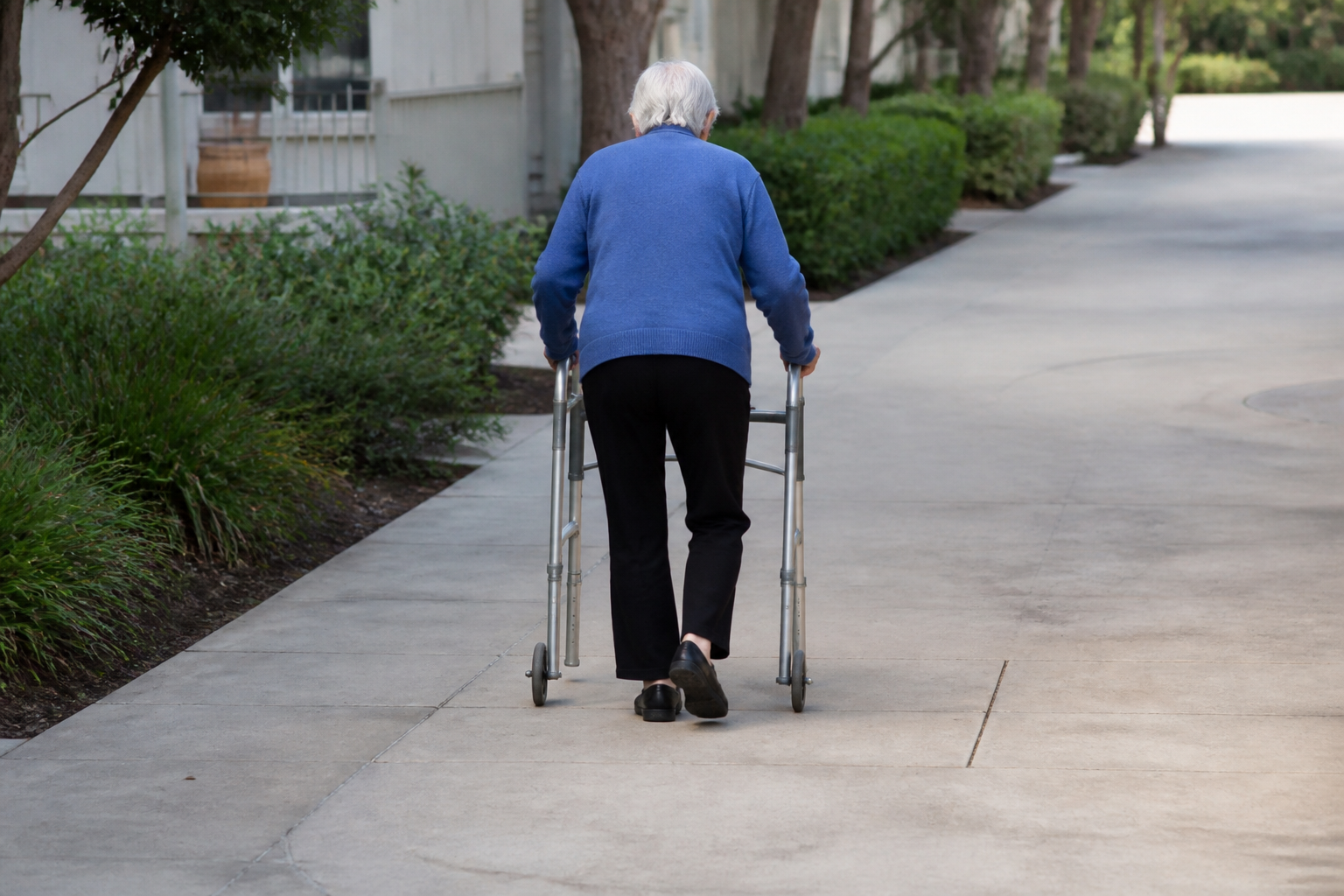
Uneven sidewalks accessibility Southern California property owners must manage is a measurement issue, not a cosmetic one. A lip between two panels can stop a wheelchair caster, catch a cane tip, or force a walker off the intended path. The same offset that looks small in noon sun is a change in level under published federal standards.
This article explains how elevation changes affect people who use mobility devices, which figures in the 2010 ADA Standards apply, and when to follow up with a formal review. Start with what to expect during a sidewalk ADA compliance assessment. Commercial sites can also review how commercial property owners can stay ADA-compliant year-round.
Key Takeaways
- The 2010 ADA Standards (section 303) allow a vertical change up to 1/4 inch. Changes between 1/4 inch and 1/2 inch must be beveled (slope not steeper than 1:2). Changes greater than 1/2 inch must meet ramp rules, including a maximum running slope of 1:12.
- On an accessible route, the same standards limit cross slope to 1:48. A walk that rolls toward the street can be as difficult as a vertical lip.
- Uneven sidewalks affect more than wheelchairs. Canes, walkers, strollers, and people with limited vision or balance use the same joints.
- California Streets and Highways Code section 5610 requires adjoining owners to maintain sidewalks so they do not endanger persons or property and do not interfere with public convenience.
Why a Small Lip Is an Accessibility Barrier
A wheelchair front caster is small. A cane tip is smaller. Both can catch on a vertical face that a walking person might step over. The 1/4-inch change-in-level threshold exists because that height is already a recognized barrier on an accessible route. See how to identify vertical sidewalk displacement for how to measure the same edge.
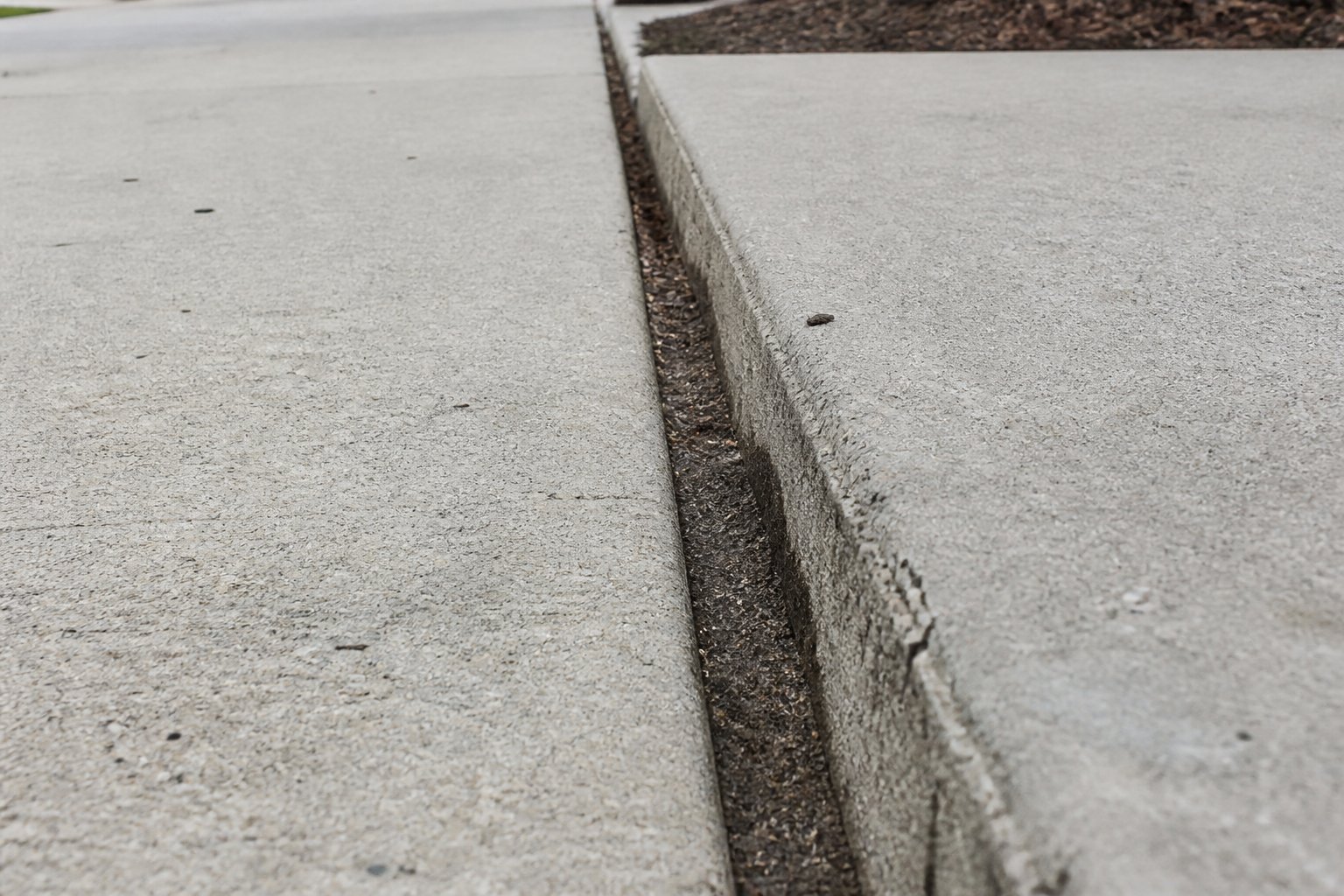
Southern California slabs move. Wet winters and dry summers, expansive clay soils, and tree roots lift or drop panels at joints. The offset is often abrupt, not a designed ramp. An abrupt face is harder to roll over than a controlled 1:12 transition of the same height.
Accessibility is about the route people must use: parking to the entrance, the path to a mailbox cluster, a school gate, a clinic door. If a person with a mobility device has to leave the sidewalk to go around a lip, that location belongs on the work list even when the next panel looks fine.
The Published Figures That Matter
Do not invent a local “rule of thumb.” Use the published numbers.
- Up to 1/4 inch: a vertical change may remain vertical under section 303.
- 1/4 inch to 1/2 inch: a bevel is required, slope not steeper than 1:2.
- Greater than 1/2 inch: treat the change as a ramp. Maximum running slope is 1:12 (one unit of rise for each 12 units of run).
- Cross slope on an accessible route: 1:48. A sidewalk that tilts sideways can dump a wheelchair toward the gutter or a planter.
The U.S. Access Board publishes related guidance for public rights-of-way. Those documents sit alongside the 2010 ADA Standards. They do not replace a site measurement.
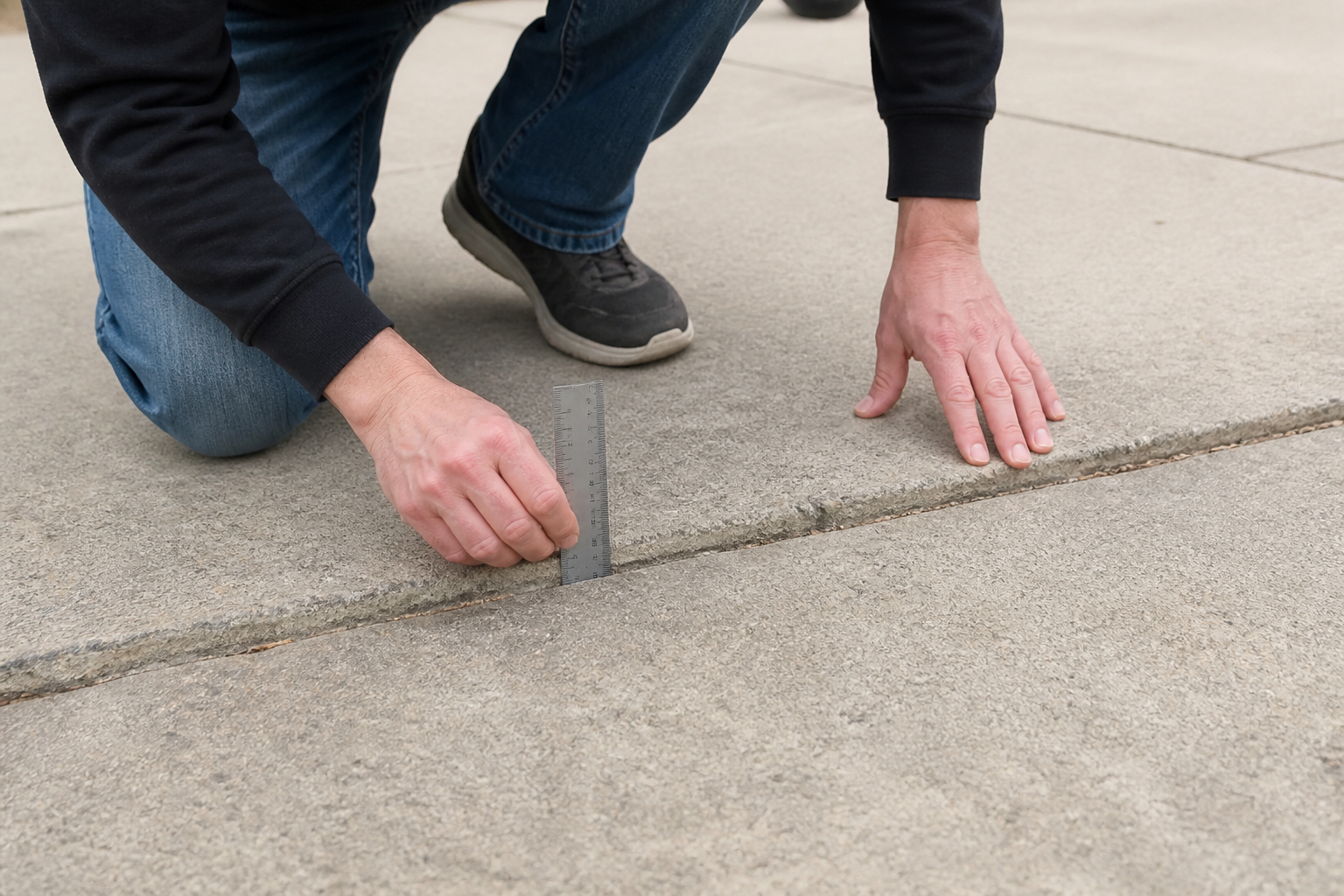
A glance is not a measurement. Midday sun can hide a lip. A ruler against the raised edge, photographed in place, is the start of an accessibility record. Sidewalk Inspection Services use consistent tools when the findings will drive a work order or a formal file.
How Different Users Meet the Same Joint
Uneven sidewalks accessibility Southern California managers should picture more than one user.
- Wheelchairs and scooters: a vertical face can stop a caster or twist a frame. A steep cross slope can pull the chair off the path.
- Walkers and rollators: small wheels drop into a gap or catch on a lip. The user may have less ability to lift the device over the edge.
- Canes and crutches: a tip that lands on the high side and slips off is a fall risk. A gap can swallow a tip.
- Strollers and delivery carts: not ADA devices, but they use the same route and show where the path is already failing everyday users.
- People with low vision: a lip without a shadow or color change is easy to miss. After rain, glare on ponding hides the step.
The finding is the change in level and the slope, not whether a particular person has complained yet. Section 5610 frames the duty as maintaining a sidewalk that does not endanger persons or interfere with public convenience. Cities may add programs. The statute still puts the adjoining owner on the maintenance list.
Correction Methods That Match Accessibility Targets
Raised lips on sound panels are often candidates for trip hazard removal with patented horizontal slicing — precision concrete cutting designed to meet a 0-point differential at the joint and a 1:12 running slope across the repair. Those two targets are why SoCal PCC uses horizontal slicing rather than older abrasive surface methods, which typically do not achieve both.
Patching can help a broken surface that is still aligned. It does not remove a vertical lip. Expansion joint maintenance keeps debris from packing the gap. SoCal PCC does not replace full panels. A sunken slab that ponds, rocks, or has lost support generally needs a general contractor.
For the company’s sidewalk methods, see sidewalk repair. Field conditions that usually fit slicing are listed in top 5 signs your sidewalk needs professional slicing.
Document the Route, Then Prioritize
Large properties rarely correct every joint in one visit. Rank by who uses the path and how high the lip is.
- First: marked accessible routes, main entries, and poorly lit paths.
- Next: changes greater than 1/2 inch on secondary walks that still see pedestrian use.
- Then: smaller lips on low-traffic edges, kept on a written list for the next cycle.
A dated map with heights is the start of an accessibility file. It is not a claim about legal outcomes. Outcomes depend on each site and local rules. Commercial managers who need a year-round habit can use the inspection and repair cycle described in the company’s commercial ADA article linked above.
Carry the same tools on every walk: a ruler or trip-hazard gauge, a way to photograph the ruler against the joint, and a notebook or phone for the location string. A 24-inch digital level helps when you need running slope or cross slope, not only height. Place the level along the path for running slope and across the width for cross slope. Write the reading next to the height. That pair of numbers is what a later crew or inspector can check.
Light still matters. Morning or late-afternoon sun throws a shadow across a joint that noon light flattens. After rain, ponding marks a dropped panel and glare can hide the step. Walk twice when you can: once to find obvious barriers, once to slow at every joint on the accessible route. Do not treat a painted curb or a temporary mat as a correction. Those items can hide a lip without meeting section 303.
Southern California sites add two field conditions worth recording even when they are not the lip itself. First, parkway trees and irrigated planters next to the walk — roots and moisture change the joint over a season. Second, the path from an accessible parking stall to the door. That route is the one a mobility-device user cannot skip. If it has a 1/4-inch or larger face, it belongs on the first list even when a side walk is worse.
Frequently Asked Questions
How do uneven sidewalks affect accessibility in Southern California?
Uneven sidewalks accessibility Southern California sites most often fail at joints. A lip at or above 1/4 inch is a published change in level. Cross slope steeper than 1:48 on an accessible route is another barrier. Both can keep a mobility device from staying on the intended path.
Is every crack an accessibility problem?
No. A tight, flush crack may only need monitoring. The finding is the change in level or the slope, not the line in the concrete.
Do I need a professional assessment?
A ruler and photos can flag obvious lips. Use a professional assessment when the findings will drive a work order, a formal accessibility file, or a multi-building list.
Can slicing make a route accessible?
Slicing is designed to remove a raised edge and meet a 0-point differential and a 1:12 slope on that repair. It cannot lift a sunken slab or replace a failed panel. Match the method to the defect.
What law applies to adjoining owners in California?
Streets and Highways Code section 5610 assigns a maintenance duty so the sidewalk does not endanger persons or property and does not interfere with public convenience. ADA design standards apply to accessible routes as published in the 2010 Standards.
Conclusion
Uneven sidewalks accessibility Southern California property managers can improve starts with a measured list: lips, settlement, and cross slope on the routes people actually use. Compare each finding to the 1/4-inch, 1/2-inch, 1:12, and 1:48 figures. When you want a documented review, contact Precision Concrete Cutting at (760) 334-8921.
References
- U.S. Department of Justice, 2010 ADA Standards for Accessible Design, section 303 and accessible-route cross-slope provisions (1:48).
- U.S. Access Board, accessibility guidance for public rights-of-way.
- California Streets and Highways Code section 5610.

