
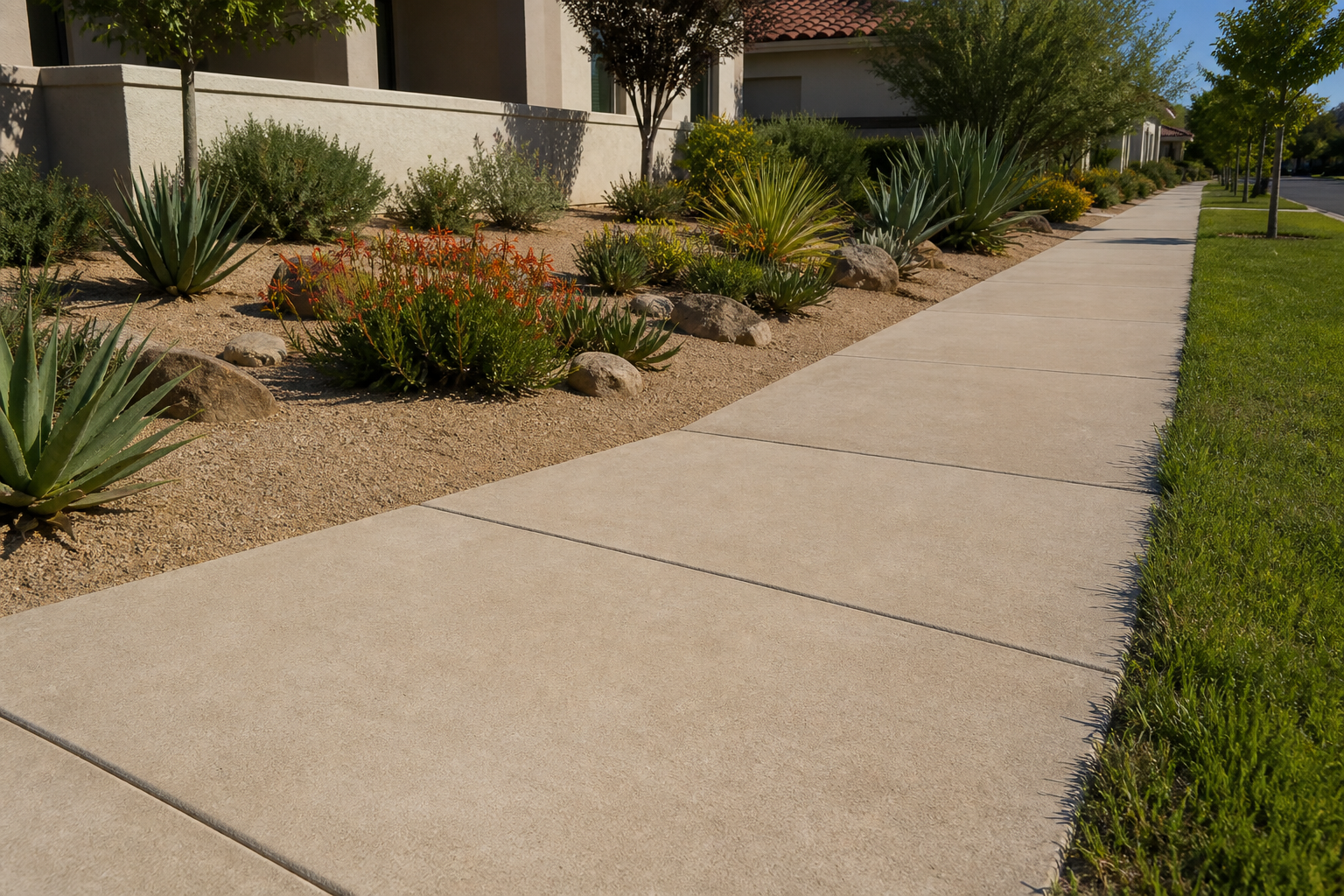
Sidewalk slicing benefits Southern California property owners most when a raised panel is still sound and the problem is a lip at the joint, not a failed slab. Full replacement removes and pours new concrete. That work has a place. It is not the first method for every offset walkway around homes, HOAs, schools, and commercial sites in San Diego County, Orange County, and Imperial County.
This article compares patented horizontal slicing with full panel replacement using published accessibility measurements and SoCal PCC’s actual scope. For the company’s sidewalk methods, see sidewalk repair. Raised lips that need work are often candidates for how sidewalk slicing restores safe walkways.
Key Takeaways
- The 2010 ADA Standards (section 303) treat a vertical change up to 1/4 inch as allowed. Changes between 1/4 inch and 1/2 inch must be beveled (slope not steeper than 1:2). Changes greater than 1/2 inch must meet ramp rules, including a maximum running slope of 1:12.
- Slicing keeps the existing panel. Replacement removes it. That difference drives time, disruption, and cost.
- Slicing is not a fit for every defect. Sunken or failed slabs that cannot be corrected by cutting generally need a general contractor. SoCal PCC does not replace full panels.
- California Streets and Highways Code section 5610 assigns adjoining owners a duty to maintain sidewalks so they do not endanger persons or property.
What Sidewalk Slicing Is — and What It Is Not
Patented horizontal slicing is precision concrete cutting. The raised portion of a slab is sliced so the walking surface can meet the lower panel at the joint. The cut is designed so the transition follows the 1:12 running-slope rule when the change is large enough to be treated as a ramp under section 303.
It is not full demolition. It is not a new pour. It is not an abrasive surface method that only knocks down the top of a lip. SoCal PCC positions horizontal slicing against those older surface methods because those methods typically do not leave a true 0-point differential and a consistent 1:12 slope.
The company also offers patching and expansion joint maintenance. Patching can help when the surface is broken but panels are still aligned. Joint work keeps debris from packing the gap. Mortar on a vertical lip often chips and can recreate a step. It is not a substitute for removing a raised edge that exceeds published thresholds.
Benefit 1: You Keep the Panel That Is Still Sound
Replacement assumes the slab has to leave the site. Many Southern California offsets are a height difference at a joint. The concrete on either side can still be serviceable. Tree roots, expansive clay, and seasonal moisture move slabs at different rates. The result is often a lip, not a shattered panel.
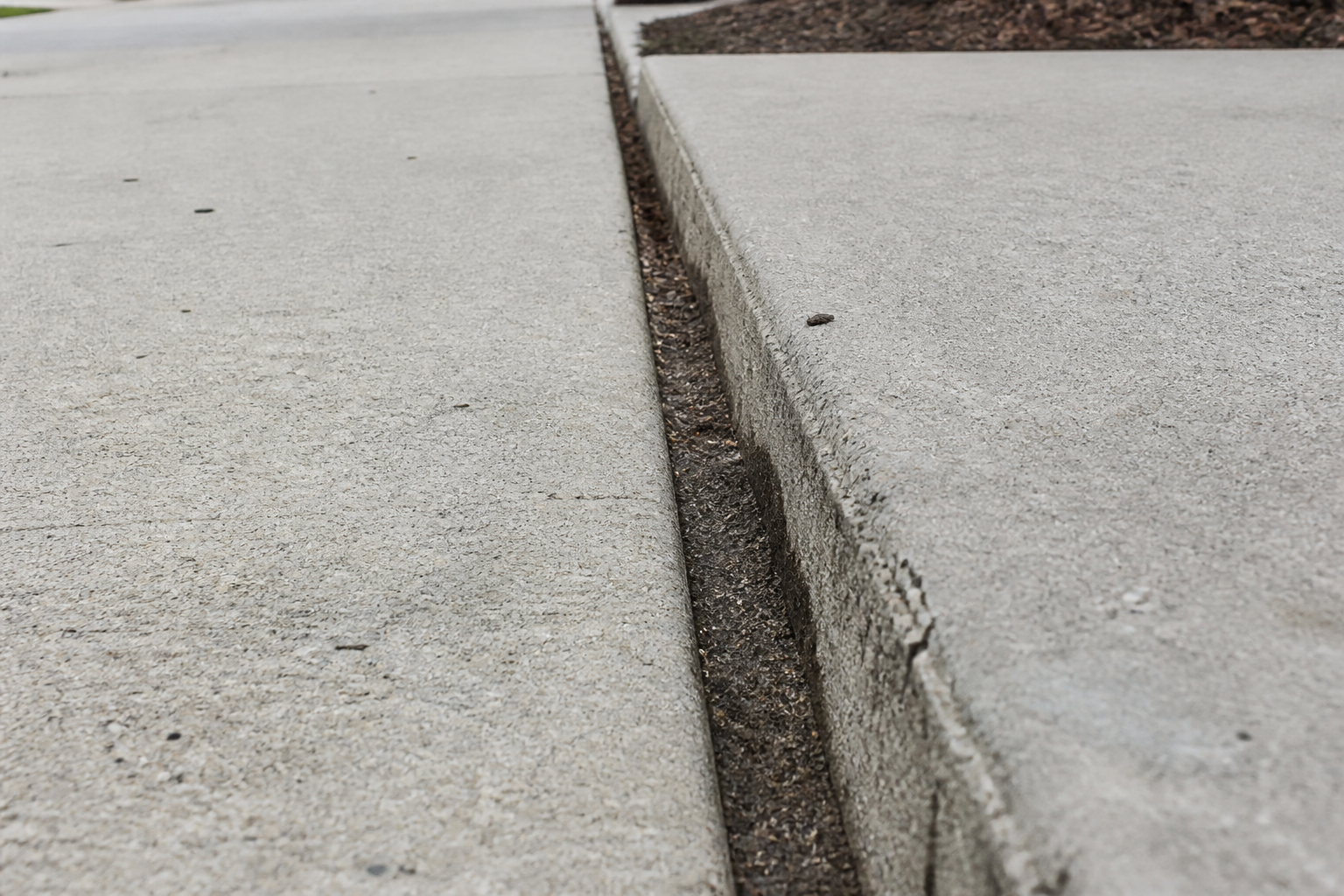
If the high side is intact, slicing removes the trip edge and leaves the rest of the walk in place. That avoids saw-cutting a full panel, hauling debris, forming, pouring, and waiting for new concrete to cure before the route can return to normal use.
Replacement still belongs on the list when a slab has dropped, broken into pieces, or lost support. Those conditions are outside SoCal PCC’s scope. Inspection should identify the defect. It should not assume every defect is a slicing candidate. See top 5 signs your sidewalk needs professional slicing for field conditions that usually fit this method.
Benefit 2: Less Disruption on Routes People Still Need to Use
A sidewalk on a school, HOA, or commercial site is a path of travel, not a vacant lot. Replacement closes a section while the old slab comes out and the new one cures. Slicing works on the existing surface. Pedestrian routes can often stay closer to normal use because there is no new pour waiting to set.
That matters at building entries, accessible routes from parking, mailbox clusters, and school drop-off walks. Sidewalk Inspection Services can mark which lips sit on those primary paths so the first work list is the routes people cannot avoid.
Disruption is still a planning item. Crews need space. Pedestrians need a clear path around the work. The difference is the length of the closure. Replacement adds demolition and cure time. Slicing does not.
Benefit 3: The Repair Can Be Aimed at Published ADA Figures
Accessibility is a measurement problem. The 2010 ADA Standards (section 303, Changes in Level) set the thresholds. A vertical change up to 1/4 inch may remain vertical. Between 1/4 inch and 1/2 inch, a bevel not steeper than 1:2 is required. Greater than 1/2 inch, the change must meet ramp provisions, including a 1:12 maximum running slope. On an accessible route, cross slope is limited to 1:48. The U.S. Access Board publishes related public right-of-way accessibility guidance.
SoCal PCC uses horizontal slicing because the method is designed to meet a 0-point differential at the joint and a 1:12 running slope across the repair. Those two targets are why the company does not use older abrasive surface methods as its trip-hazard method. Reducing a lip without meeting both figures can leave a barrier on the route.
Replacement can also meet those figures if the new slab is formed and finished to them. The extra work is removing a panel that may not need to leave. When the defect is a raised edge on a sound slab, slicing is the method that aims at the same published numbers without a new pour.
Benefit 4: Cleaner Work and Less Material Off the Site
Replacement generates a full panel of broken concrete plus forming waste. Slicing removes the raised portion of the existing slab. The volume leaving the site is smaller because the rest of the panel stays.
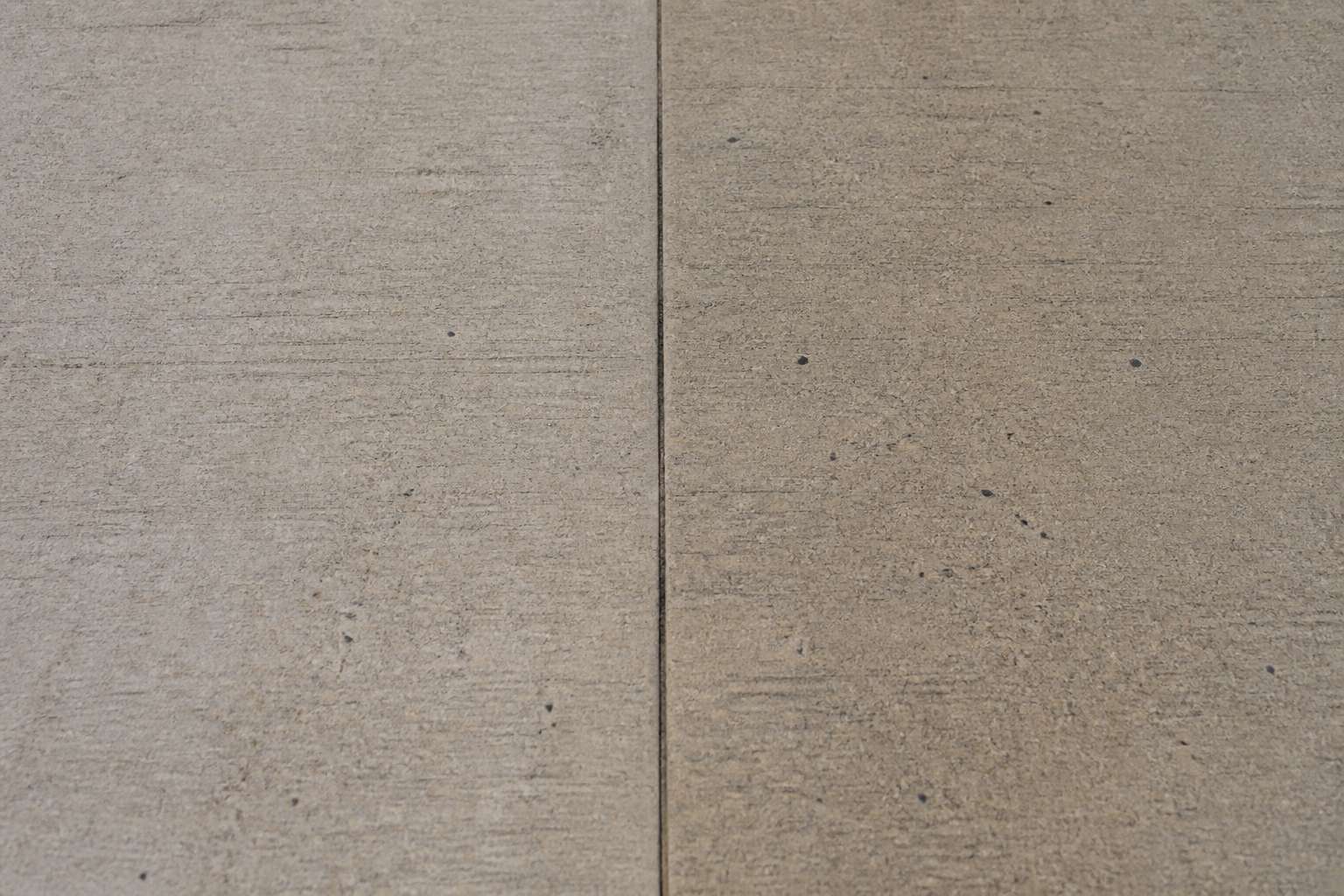
Southern California sites often sit next to landscaping, storefronts, and occupied buildings. Less demolition means less dust, less truck traffic, and fewer days with an open hole in the walk. That is a site-management benefit as well as a materials benefit.
Clean does not mean invisible. There will be a cut surface. The goal is a walkable transition that matches the published change-in-level rules, not a claim that the sidewalk looks new.
Benefit 5: A Cost-Effective Alternative When Replacement Is Not Required
Full panel replacement includes demolition, haul-off, base repair if needed, forming, concrete, finish, and cure time. Slicing uses the slab that is already there. When the high side is sound, that shorter scope is usually the lower-cost path. This article does not invent savings percentages. The comparison is the work itself: keep and cut versus remove and pour.
Cost should follow the defect. A cheap method on the wrong defect wastes money. A sunken slab that ponds after rain may need other trades. A raised lip on a busy entry is often a slicing candidate. Measure first. See how to identify vertical sidewalk displacement for the measurement problem behind that choice.
Streets and Highways Code section 5610 still applies either way. Adjoining owners must maintain sidewalks so they do not endanger persons or property and do not interfere with public convenience. The statute does not require replacement. It requires a sidewalk that is not a hazard. Slicing is one method that can support that duty when the defect is a raised edge.
When Replacement or Another Trade Is the Better Fit
Slicing is not the method for every sidewalk problem. Stay inside SoCal PCC’s scope:
- Raised lips on sound panels: often a candidate for patented horizontal slicing and trip hazard removal.
- Broken surface, panels still aligned: patching may help. It does not remove a vertical lip.
- Packed or failed joints: expansion joint maintenance can keep debris from locking the gap.
- Sunken, rocking, or failed slabs: generally need a general contractor. SoCal PCC does not replace full panels.
A professional inspection matches the defect to a method. It should not sell cutting for a slab that has lost support. For a formal accessibility file, see what to expect during a sidewalk ADA compliance assessment.
Frequently Asked Questions
What are the main sidewalk slicing benefits in Southern California?
The main sidewalk slicing benefits Southern California managers weigh are keeping a sound panel, shorter disruption than a new pour, a repair aimed at a 0-point differential and a 1:12 slope, less material leaving the site, and a lower-scope alternative when replacement is not required.
Does slicing replace the need for a new sidewalk?
No. It addresses a raised edge on an existing slab. If the panel has failed or dropped beyond what cutting can correct, another trade is the fit.
Is slicing the same as an abrasive surface method?
No. SoCal PCC uses patented horizontal slicing — precision concrete cutting — and does not use those older surface methods as its trip-hazard method. The company states that those methods typically do not achieve both a true 0-point differential and a consistent 1:12 slope.
Will the sidewalk look brand new?
No, and that is not the claim. The aim is a walkable transition that meets published change-in-level rules. Appearance is secondary to the measured edge.
Who should evaluate the sidewalk first?
A property walk with a ruler can flag lips. A professional inspection records heights and separates slicing candidates from defects that need other trades.
Conclusion
Sidewalk slicing benefits Southern California sites when the problem is a raised, measurable lip on a panel that can stay in place. Replacement is a different project. Compare the defect to the 1/4-inch, 1/2-inch, and 1:12 figures, then pick the method that fits. For a documented review, contact Precision Concrete Cutting at (760) 334-8921.
References
- U.S. Department of Justice, 2010 ADA Standards for Accessible Design, section 303 (Changes in Level) and accessible-route cross-slope provisions (1:48).
- U.S. Access Board, accessibility guidance for public rights-of-way.
- California Streets and Highways Code section 5610.

