
Uneven concrete sidewalks Southern California owners live with are usually a joint problem. Two panels that were poured level can offset when the soil under them swells, shrinks, washes out, or is lifted by roots. The walking surface then has a lip, a step-down, or a tilt. Those shapes are measurable. The 2010 ADA Standards (section 303) treat them as changes in level.
This article names five common causes and the responses that fit SoCal PCC’s scope. Raised lips on sound panels are often candidates for how sidewalk slicing restores safe walkways. Sunken or failed slabs generally need a general contractor. The company does not replace full panels. For typical locations, see top 5 locations where sidewalk trip hazards commonly develop.
Key Takeaways
- Moisture cycles in expansive clay, tree roots, water washout, locked or failed joints, and original grade problems are the usual reasons slabs offset.
- A vertical change up to 1/4 inch may remain vertical. Between 1/4 inch and 1/2 inch, a bevel not steeper than 1:2 is required. Greater than 1/2 inch must meet ramp rules, including a 1:12 running slope. Accessible-route cross slope is limited to 1:48.
- California Streets and Highways Code section 5610 requires adjoining owners to maintain sidewalks so they do not endanger persons or property.
- SoCal PCC specializes in patented horizontal slicing for trip hazard removal, plus patching and expansion joint maintenance.
- Cause informs the method. Cutting a raised edge does not refill a void or stop a root. Record both the height and what you see under or beside the slab.
Cause 1: Expansive Clay and Seasonal Moisture
Much of Southern California has wet winters and dry summers. Many communities also have expansive clay soils, which swell when wet and shrink when dry. Slabs on that soil can rise or drop at different rates, leaving a step at a joint. The offset often appears after the first heavy rains or late in a dry summer, not overnight.
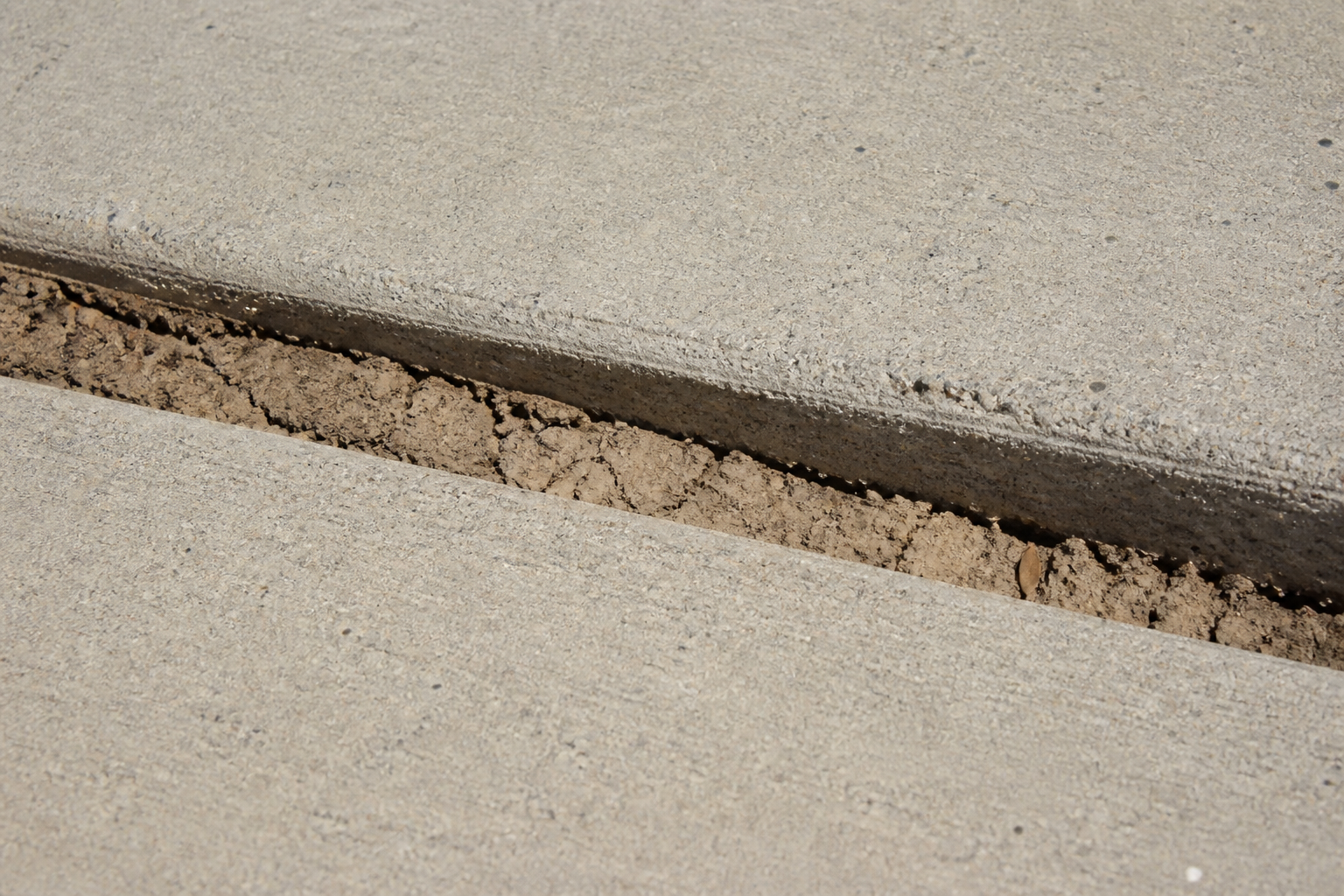
Walk primary routes after winter storms and again in late summer. How to prepare your sidewalks for rainy season in Southern California is the winter half of that habit. Photograph the same joints with a date so you can see change.
If the high side is sound, the lip may fit patented horizontal slicing — precision concrete cutting designed to meet a 0-point differential and a 1:12 slope. If a panel has dropped and ponds, slicing the neighbor does not raise the low slab. See sidewalk repair for the methods the company offers.
Cause 2: Tree Roots
Roots seeking moisture under walkways can lift a panel on one side of a joint while the next panel stays at the original grade. The result is a raised lip, often next to a parkway tree or a large planter. Re-check those panels each year. Root growth is gradual. A joint that was flush last year can offset this year.
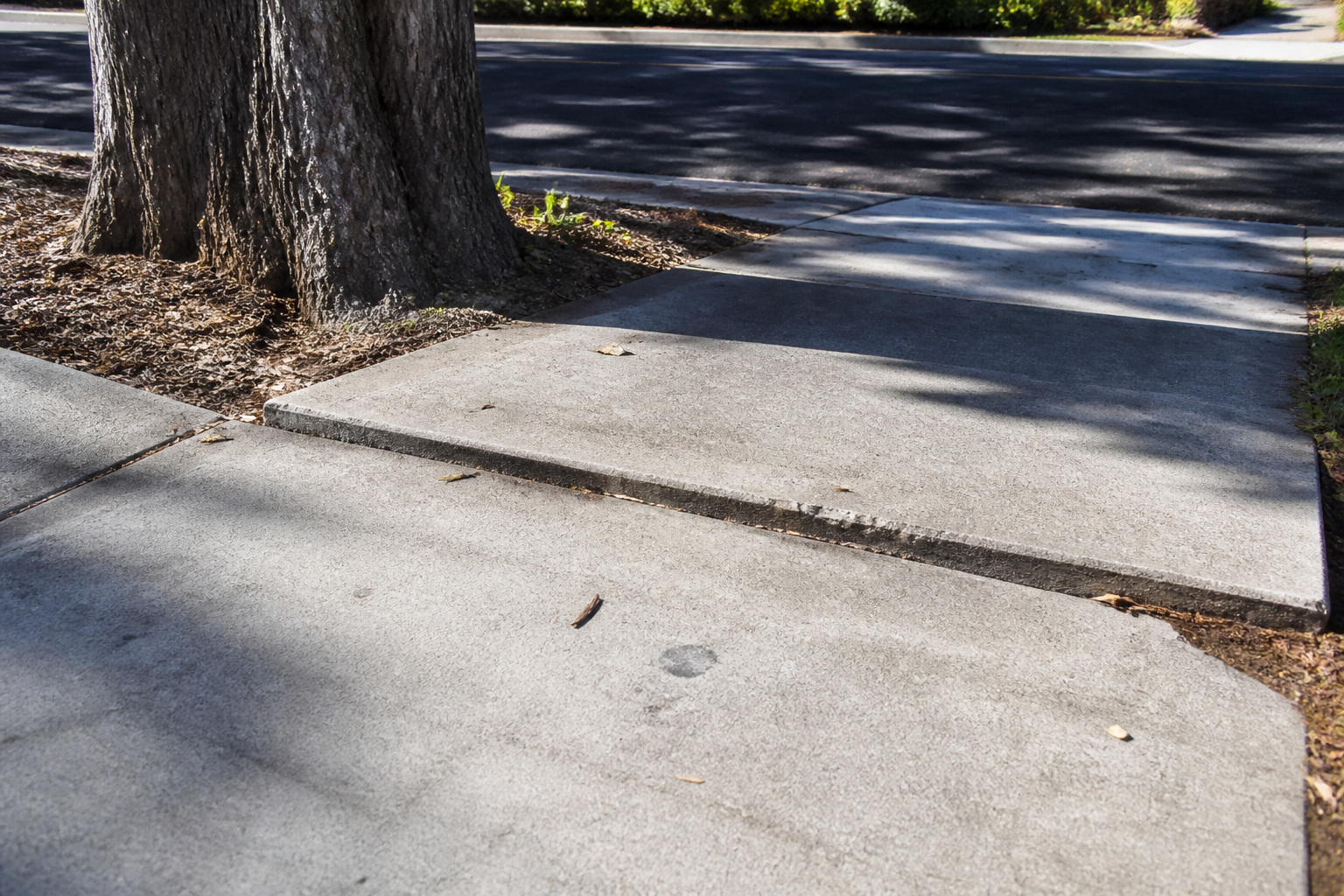
Slicing can remove the raised walking surface when the slab is still sound. It does not remove the root. If the root keeps lifting, the lip can return. Property managers should treat tree care and sidewalk height as related items, not as one cut that closes the file. Measure the lip. See how to identify vertical sidewalk displacement.
Cause 3: Water Washout at the Edges
Irrigation overspray, roof drains, and winter runoff can wash fines from under the slab edge. The panel then loses support and may drop, rock, or break at the corner. Ponding after rain is a clue. A visible void at the edge is a stronger clue.
This cause often produces settlement, not a raised lip. Trip hazard removal by slicing addresses a high edge. A void under a low panel is a base problem and generally sits outside SoCal PCC’s scope. Record it and refer it. How to spot early signs of sidewalk damage lists related surface clues.
Cause 4: Locked or Failed Joints
Control joints and expansion joints are supposed to give slabs room to move. When soil, roots, or debris pack the gap, seasonal expansion has nowhere to go. The panel can lift, chip, or open a vertical face. Keep joints free of packed soil and debris as a basic habit.
Expansion joint maintenance is part of SoCal PCC’s scope. It helps when the joint is the problem and the panels are still candidates for staying in place. It does not replace a failed slab. Patching can help a broken surface that is still aligned. Mortar on a vertical lip often chips and can recreate a step.
Cause 5: Grade, Drainage, and Construction Limits
Not every offset started last winter. A walk poured to a steep cross slope, a path that already rolls toward a driveway, or a transition that was never a controlled 1:12 ramp will measure poorly even before new movement. On an accessible route, published ADA guidance limits cross slope to 1:48. The U.S. Access Board publishes related right-of-way guidance.
You cannot always tell original grade from later movement without a history. Measure what is there now. If the walking surface tilts sideways, record it as a cross-slope finding. If the change is a vertical lip on a sound panel, it may fit professional slicing. If the slab has failed or lost support, another trade is the fit.
How to Address Uneven Concrete Efficiently
Efficiency is matching the cause and the height to a method, not picking the fastest-sounding label.
- Walk and measure. Use a ruler and photos. Sidewalk Inspection Services when you need a mapped report.
- Apply section 303 and, on accessible routes, the 1:48 cross-slope limit.
- Note the cause you can see: clay movement, roots, washout, packed joints, or grade.
- Assign slicing, patching, joint work, or a general-contractor referral.
- Re-walk after rains and in late summer, especially next to large trees.
Section 5610 still applies regardless of cause. The duty is a sidewalk that does not endanger persons or property and does not interfere with public convenience. For a formal accessibility file, see what to expect during a sidewalk ADA compliance assessment.
Two causes can sit on one joint. A parkway tree can lift a panel while winter runoff washes soil from the same edge. Write both observations. If you only record “roots,” you may slice a sound high side and miss a void under the low side. If you only record “washout,” you may refer the slab and miss a raised neighbor that still needs trip hazard removal. The ruler gives one height. The notes give the rest.
Irrigation is a cause you can change without waiting for a contractor. Move spray off the slab edge. Shorten run times that soak the parkway. Roof downspouts that dump on the walk should be redirected. Those steps do not level a lip that is already there. They reduce the next season’s washout. Keep joints clear of packed soil so summer expansion has space. That habit is maintenance, not a repair method.
When you brief a crew, lead with the measurement and the cause you saw, then the method. Example: “Third panel south of the lobby, 5/8-inch high side, sound concrete, roots at the parkway — slicing candidate.” Or: “Same run, two panels down, ponds after rain, void at the curb — refer.” That language keeps SoCal PCC on patented horizontal slicing, patching, and joints, and keeps full replacement with a general contractor.
Frequently Asked Questions
What causes uneven concrete sidewalks in Southern California?
Uneven concrete sidewalks Southern California sites most often come from expansive clay moisture cycles, tree roots, water washout at the edges, locked joints, and original grade or drainage limits. More than one cause can sit on the same block.
Is a raised lip the same as settlement?
No. A raised lip is the high side. Settlement is the low side. Both create a change in level. The repair path differs.
Will slicing stop the cause?
Slicing removes a raised walking surface on a sound slab. It does not remove a root, refill a void, or change the clay. Plan follow-up walks where the cause is still active.
When is replacement the fit?
When a panel has failed, dropped beyond what cutting can correct, or lost support. SoCal PCC does not replace full panels. Those jobs go to a general contractor.
Which published measurements should I use?
Section 303 of the 2010 ADA Standards for changes in level, and 1:48 for accessible-route cross slope. Compare your ruler reading to those figures.
Conclusion
Uneven concrete sidewalks Southern California property owners can address efficiently start with cause and height, not with a single repair slogan. Measure the joint. Match raised, sound panels to patented horizontal slicing and dropped or failed slabs to the right trade. For a documented inspection, contact Precision Concrete Cutting at (760) 334-8921.
References
- 2010 ADA Standards, section 303 and accessible-route cross slope (1:48).
- U.S. Access Board, public right-of-way accessibility guidance.
- California Streets and Highways Code section 5610.

