
Sidewalk settlement Southern California property owners notice first after rain, when water sits on one panel and the next panel stays dry. Settlement is a drop. The slab has lost support or the soil under it has moved. That is a different problem from a raised lip caused by roots or heave, though both can create a step at the joint.
This article covers five warning signs you can record on a walk. It also explains which defects may fit trip hazard removal and which generally need other trades. SoCal PCC specializes in patented horizontal slicing for trip hazard removal on raised, sound panels. It does not replace full panels. For early surface clues, see how to spot early signs of sidewalk damage.
Key Takeaways
- Settlement shows up as a step-down, ponding, a rocking panel, soil loss at the edge, or a gap that opened as one slab dropped.
- The 2010 ADA Standards (section 303) still apply to the resulting change in level: 1/4 inch, 1/2 inch, and 1:12.
- Wet winters, dry summers, and expansive clay soils are common reasons Southern California slabs move. Water that washes material from the edges leaves a void.
- A dropped slab is often not a slicing candidate. Slicing removes a raised edge. It does not lift a sunken panel.
- California Streets and Highways Code section 5610 requires adjoining owners to maintain sidewalks so they do not endanger persons or property.
Settlement Versus a Raised Lip
Measure both sides of the joint. If one panel is high and solid, the defect may be heave or root lift. If one panel is low, soft at the edge, or ponds, the defect is more likely settlement. See how to identify vertical sidewalk displacement for the ruler-and-photo method. The height number is the same either way. The repair path is not.
SoCal PCC can address a raised lip on a sound slab with patented horizontal slicing. A sunken or failed slab that cannot be corrected by cutting generally needs a general contractor. Inspection should name the defect before anyone picks a method.
Warning Sign 1: Ponding After Rain
Water finds the low point. After a Southern California storm, a panel that holds a puddle while the next panel sheds water has dropped or lost grade. Ponding also marks poor drainage at the edge. Walk primary routes after the first heavy winter rains. How to prepare your sidewalks for rainy season in Southern California covers the same seasonal window.
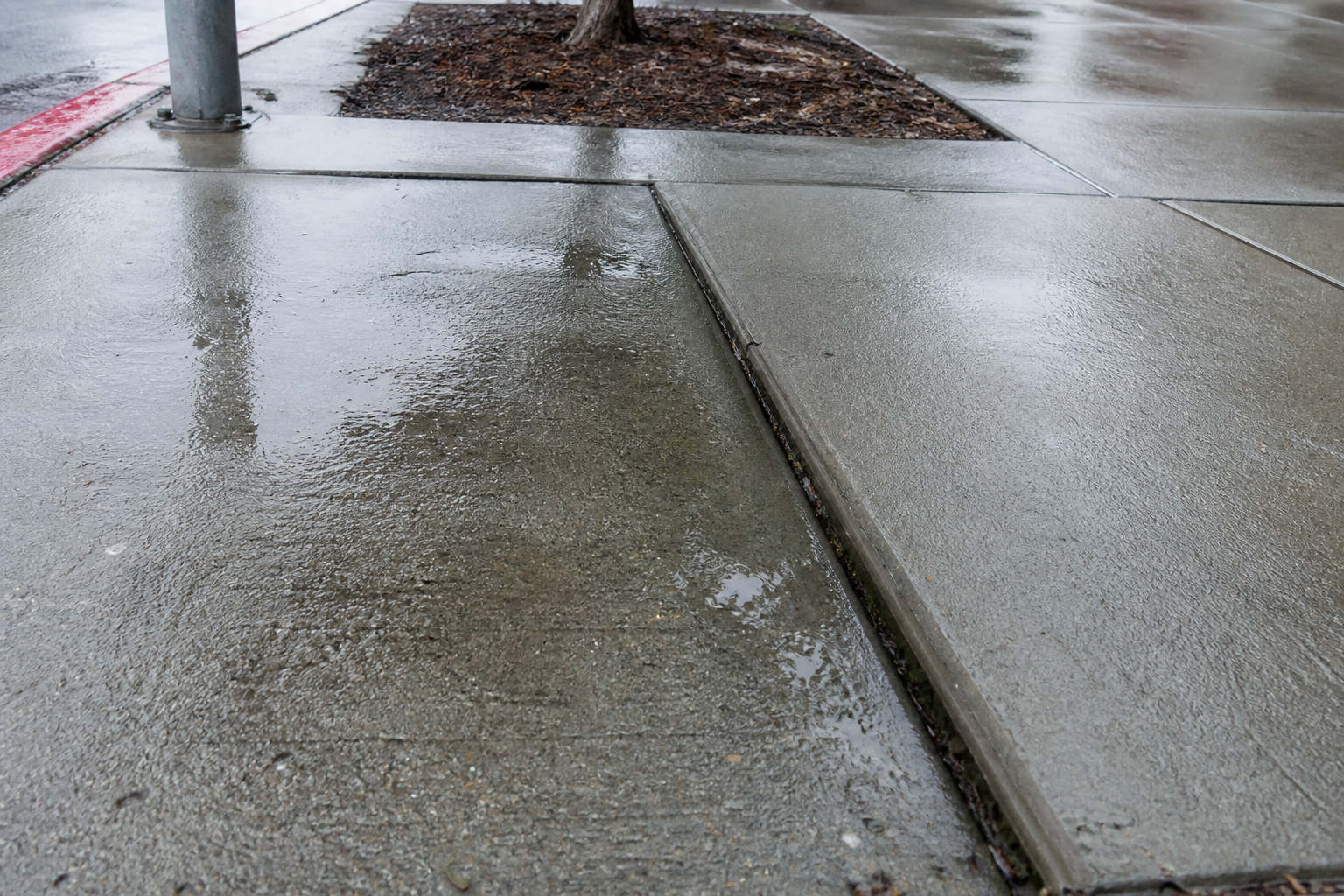
Photograph the puddle with a date. Note whether pedestrians step into the street to avoid it. That detour is part of the hazard, not only the wet concrete.
Warning Sign 2: A Step-Down or Rocking Panel
Stand on the low side and look across the joint. A visible step-down is a change in level. If the panel moves underfoot, the base has lost support. A rocking slab can pinch a shoe or a wheel and then drop again.
Measure the vertical difference with a ruler. Photograph the ruler in place. Apply section 303: up to 1/4 inch may remain vertical; 1/4 to 1/2 inch needs a bevel not steeper than 1:2; greater than 1/2 inch must meet ramp rules, including 1:12. A rocking panel is a stability problem in addition to a height problem. Cutting the high neighbor does not refill the void under the low slab.
Warning Sign 3: Soil Loss or a Void at the Edge
Look along the side of the walk, not only the walking surface. If dirt has washed out from under the slab, you may see a shadow line or a gap. Irrigation overspray, roof drains, and winter runoff all move fines out from the edge.
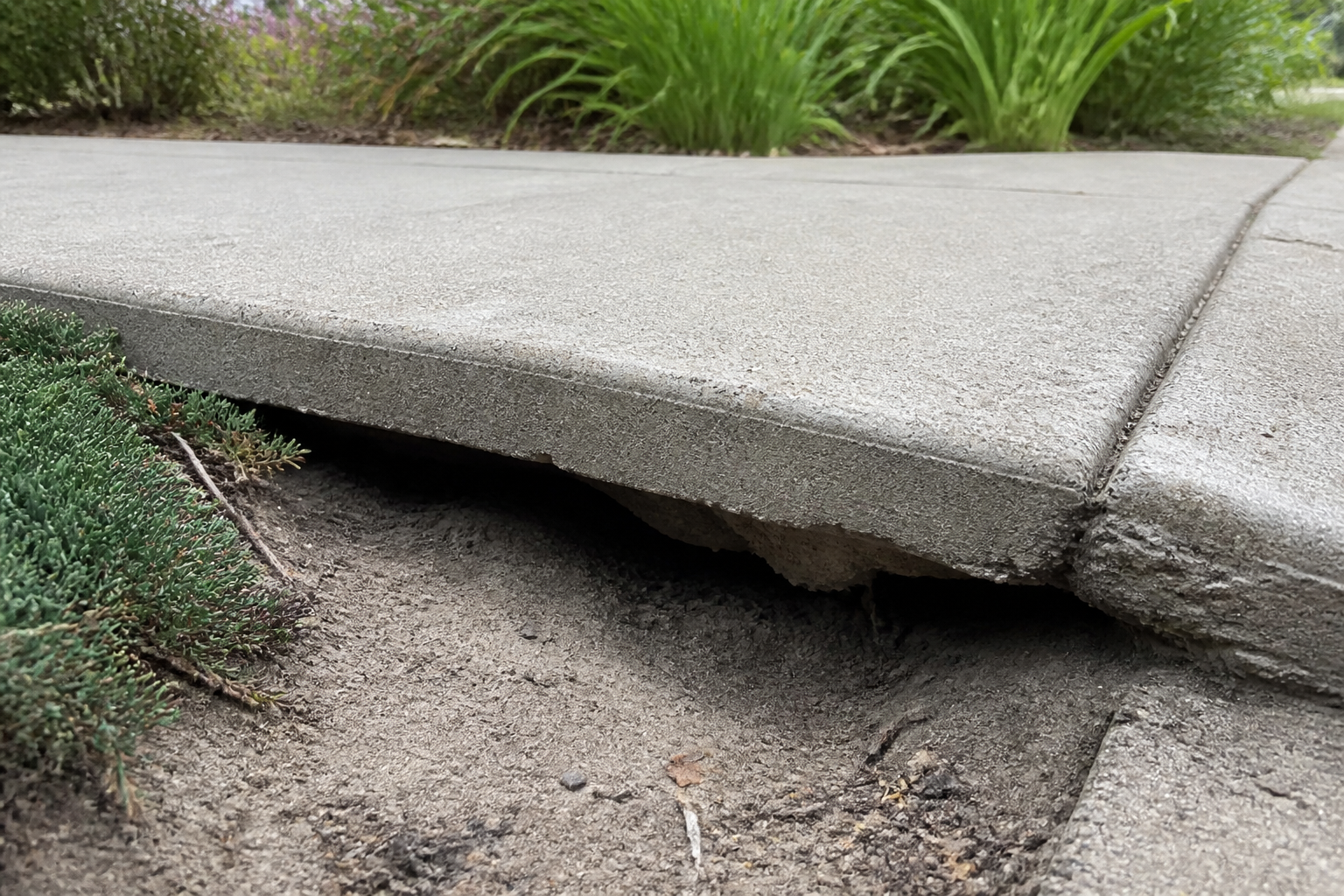
A void means the panel is no longer fully supported. That condition can worsen after the next wet season. Record the location. Do not assume slicing will fix it. Slicing addresses a raised edge. A void under a dropped panel is a base problem.
Warning Sign 4: Gaps That Opened as One Slab Dropped
As a panel settles, the joint can widen. A gap that catches a heel or a wheelchair caster is a trip and a mobility barrier even when the height difference is modest. Packed soil and debris in the joint can hide the drop until you clean the line.
Expansion joint maintenance can help when the issue is debris locking a joint that is still at grade. It does not raise a settled slab. Patching can help a broken surface that is still aligned. Mortar on a vertical face often chips and can recreate a step.
Warning Sign 5: Cracked Edges That Follow the Drop
Settlement can break the corner or the edge of the low panel. Spalls catch a toe or a cane tip. The crack pattern often follows the joint rather than running as a tight, flush hairline across a level slab.
Do not treat every crack as settlement. A tight, flush crack may only need monitoring. A crack or broken edge on a panel that also ponds or rocks belongs on the settlement list. Common places include paths next to planters, parkways with street trees, and walks at the downhill side of a grade. Top 5 locations where sidewalk trip hazards commonly develop maps typical sites.
What to Do After You Record the Signs
Write the location, the measured height, whether the panel rocks, whether it ponds, and the date. Rank busy entries and accessible routes first. Then match the defect:
- Raised lip, sound panel: often a candidate for sidewalk repair using patented horizontal slicing.
- Broken surface, panels aligned: patching may help.
- Packed joints at grade: expansion joint maintenance may help.
- Sunken, rocking, or unsupported slabs: generally a general contractor. SoCal PCC does not replace full panels.
Sidewalk Inspection Services separate items that need prompt trip hazard removal from items that need other trades. Section 5610 still applies: adjoining owners must maintain the sidewalk so it does not endanger persons or property.
Use the same notebook format on every walk so later visits compare to a baseline. Write the date, the weather (dry or after rain), the panel location, the measured height, whether the slab rocks, whether it ponds, and whether a void is visible at the edge. Photograph the ruler in the joint and a wider shot that shows the building or tree you used as a landmark. Without the wide shot, a close-up of a puddle is hard to find again in six months.
Settlement often clusters. A run of panels along a downhill parkway, a walk under a roof drain, or a path next to overspray from turf irrigation can show the same signs in a line. Map the whole run, not only the worst puddle. The first panel that rocks may sit next to two others that only pond. Those neighbors belong on the same referral if the base is washing out.
Do not fill a void with surface mortar and call the settlement closed. Mortar on a vertical face or in an unsupported gap often chips. It can hide the drop for a season and then recreate a step. Keep the record tied to the measured change in level and to the support condition you saw. The U.S. Access Board guidance is useful context for public walks; the number you apply at the joint is still section 303.
Frequently Asked Questions
What is sidewalk settlement in Southern California?
Sidewalk settlement Southern California sites see when a slab drops relative to its neighbor because the soil or base under it moved or washed out. It is the low side of a joint, not the high side.
Can horizontal slicing fix a settled panel?
Slicing removes a raised edge on a sound slab. It does not lift a sunken panel or fill a void. If the high neighbor is the only trip edge and that panel is sound, slicing may address that edge. The dropped slab still needs its own evaluation.
Is ponding always settlement?
Ponding means a low point. That can be settlement, original grade, or a drainage problem at the edge. Record it and measure the joint. Do not guess the cause from one puddle.
When should I call a professional?
Call when a panel rocks, a void is visible, the step exceeds published thresholds on a busy path, or you need a mapped report. A basic walk can flag the signs. A professional inspection records them consistently.
Does settlement create an ADA change in level?
Yes, if the resulting vertical difference meets the section 303 thresholds. The standard cares about the change in level, not the label you give the cause.
Conclusion
Sidewalk settlement Southern California owners can catch early looks like ponding, a step-down, a rocking slab, soil loss at the edge, or a gap that opened as one panel dropped. Measure the joint. Match raised lips to trip hazard removal and dropped slabs to the right trade. For a documented inspection, contact Precision Concrete Cutting at (760) 334-8921.
References
- 2010 ADA Standards, section 303 (Changes in Level).
- U.S. Access Board, public right-of-way accessibility guidance.
- California Streets and Highways Code section 5610.

