
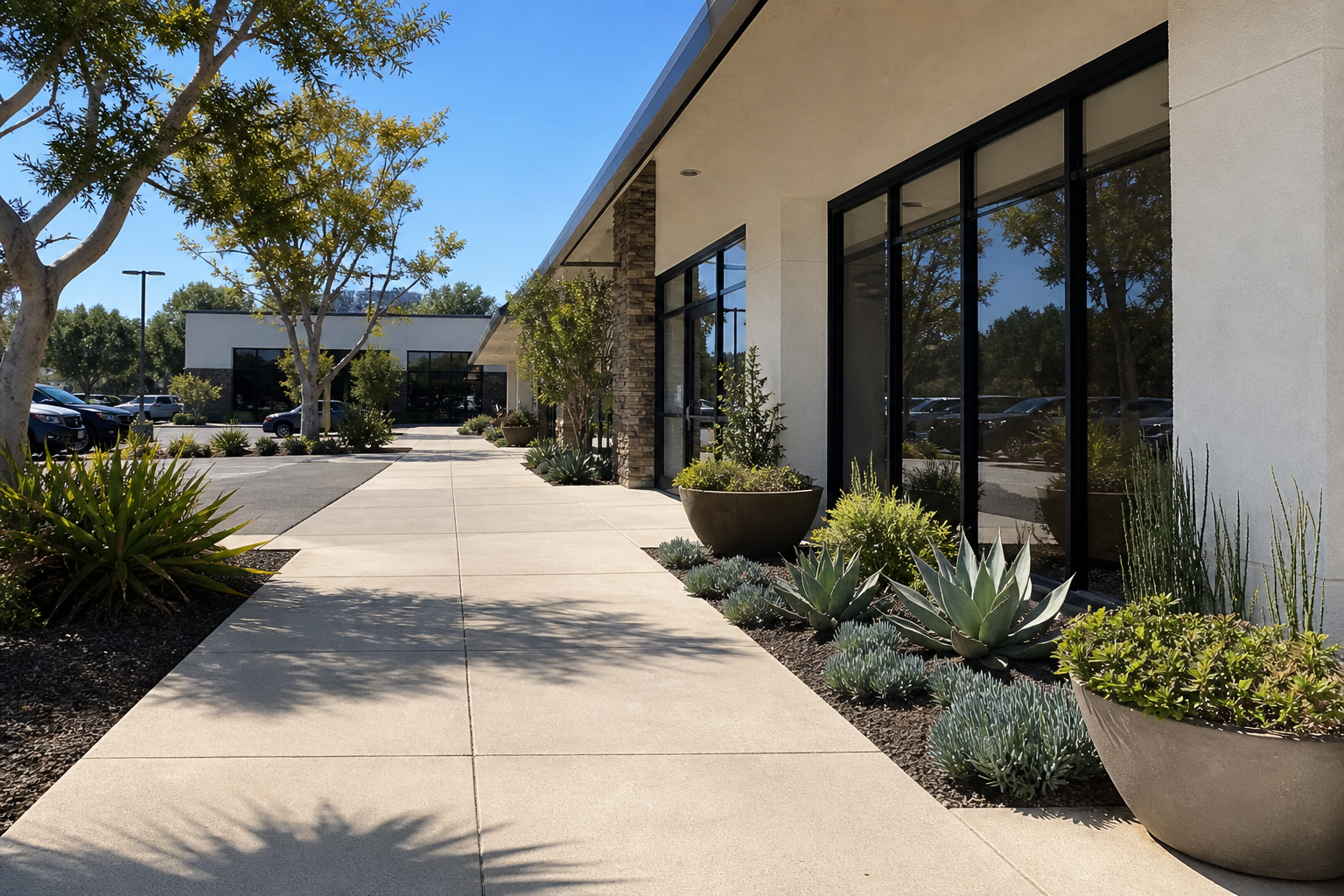
Sidewalk repairs large properties cannot finish in one visit. An HOA, school campus, medical office, or retail center in Southern California may have hundreds of joints. The useful question is not “fix everything.” It is which lips and drops sit on paths people cannot avoid, and which defects match a method SoCal PCC actually offers.
This article is a ranking method: measure, map, then schedule. It is written for commercial and multi-building sites. See commercial sidewalk maintenance for the same audience and how commercial property owners can stay ADA-compliant year-round for the inspection cycle.
Key Takeaways
- Rank by exposure and measured height, not by which panel is closest to the office.
- The 2010 ADA Standards (section 303) set 1/4 inch, 1/2 inch, and 1:12. Accessible-route cross slope is 1:48.
- California Streets and Highways Code section 5610 assigns adjoining owners a duty to maintain sidewalks so they do not endanger persons or property.
- HOAs and schools have extra path types (mailbox clusters, playground walks, drop-off loops) that belong on the first list. See why HOAs should partner with trip hazard specialists and the role of preventive sidewalk care in school safety plans.
Build a Map Before You Build a Work Order
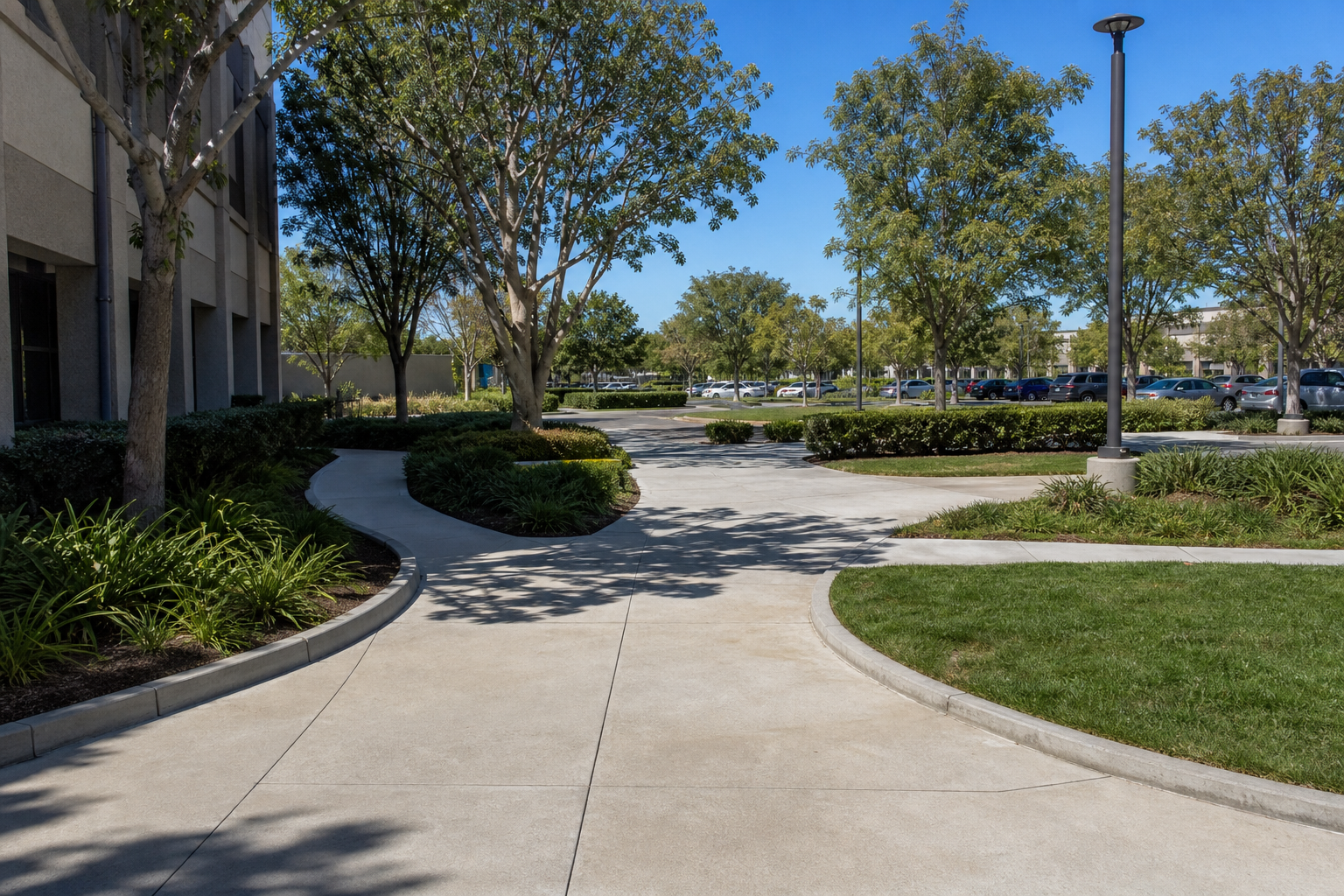
Walk the routes people actually use. Include parking to each entrance, accessible routes, side gates, trash enclosures, mailbox clusters, playground or school drop-off walks, and any path a wheelchair or stroller would take. If a person with a mobility device would leave the sidewalk to go around a defect, that location is a first-list item.
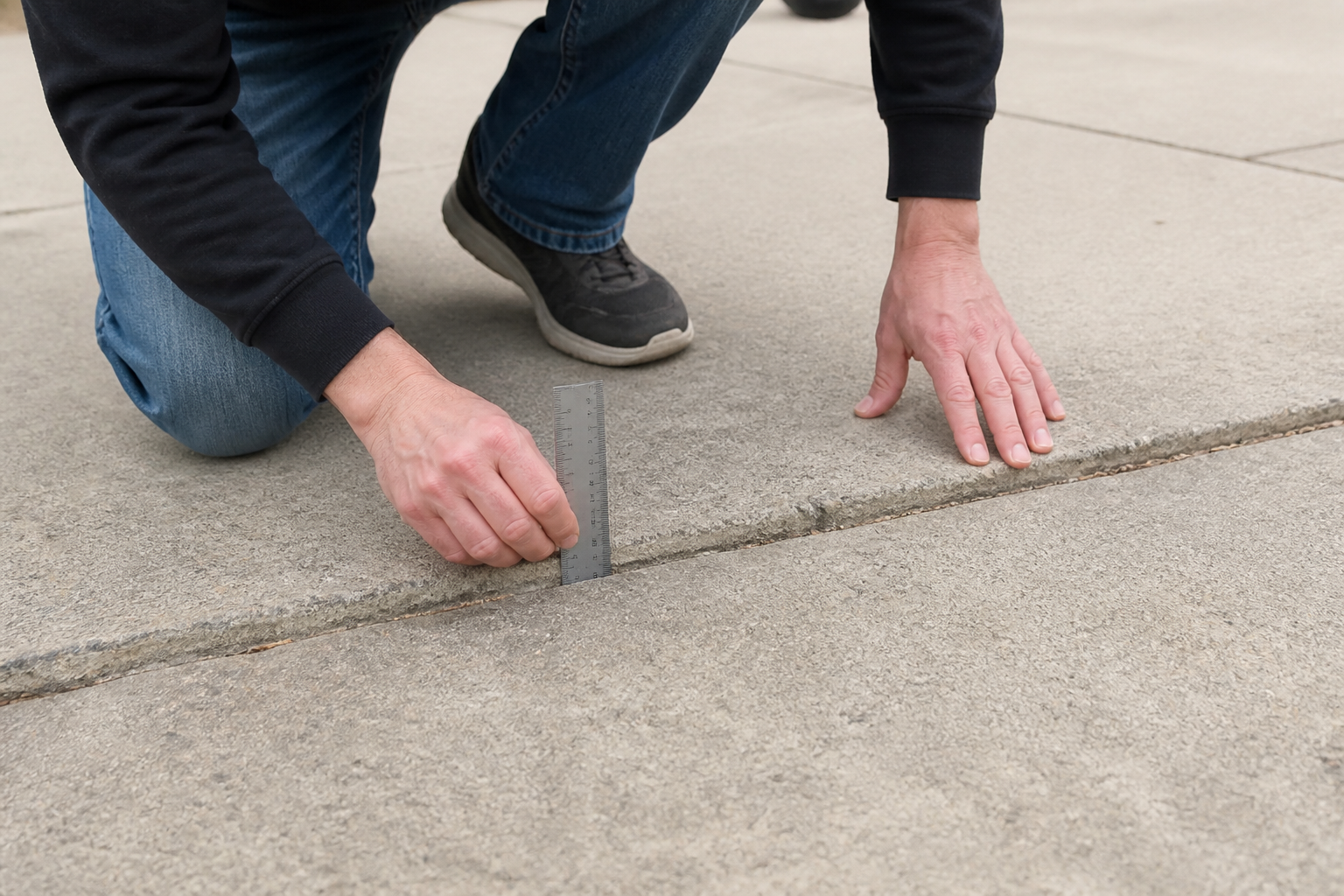
Record each finding: location (for example, “third panel south of the lobby doors”), measured height, rocking or ponding, primary or secondary route, and date. Sidewalk Inspection Services produce that list with consistent tools when you manage many slabs. A clipboard walk can start the map. A professional report is the version you schedule against.
Do not choose a repair method while you still lack heights. Separate flush joints from joints that exceed published thresholds. Then mark which of those joints sit on busy paths.
Priority 1: Primary Paths and Published Thresholds
Put these first:
- Lips on main entries and marked accessible routes.
- School, senior, and clinic paths where users have less ability to step over an edge.
- Poorly lit areas where a lip is easy to miss.
- Changes greater than 1/2 inch on any path that remains in pedestrian use — those need a longer transition under the ramp rule.
A smaller lip on a primary path can outrank a larger lip on an unused edge. Exposure is the first sort. Height is the second. The U.S. Access Board publishes related public right-of-way guidance; the numbers you apply on the map are still the 2010 Standards.
Priority 2: Secondary Walks and Seasonal Movement
After the first list, walk secondary routes: side yards, overflow parking connectors, and paths used mainly by staff. Changes greater than 1/2 inch still belong near the top of this group if people use them. Smaller lips can wait for the next work cycle if they are on the written list.
Southern California slabs keep moving. Wet winters swell expansive clay. Late summer shrinkage shows new offsets. Re-check panels next to large trees each year. Root growth is gradual. Schedule a repeat walk after the first heavy rains and again in late summer so the map does not go stale. Annual is a practical planning interval; high-traffic campuses may need more frequent checks. There is no single statewide interval in section 5610.
Priority 3: Match Each Defect to a Real Method
Sidewalk repairs large properties fail when every joint is treated as the same job. Use SoCal PCC’s actual scope:
- Raised lip, sound panel: patented horizontal slicing for trip hazard removal — precision concrete cutting designed to meet a 0-point differential and a 1:12 running slope. See sidewalk repair and top 5 signs your sidewalk needs professional slicing.
- Broken surface, panels aligned: patching may help. It does not remove a vertical lip.
- Packed or failed joints: expansion joint maintenance.
- Sunken, rocking, or failed slabs: general contractor. SoCal PCC does not replace full panels.
Older abrasive surface methods typically do not achieve both a true 0-point differential and a consistent 1:12 slope. That is why the company uses horizontal slicing for raised edges it can correct. Do not put a dropped slab on a slicing list just because it is on the same campus as a raised lip.
A Simple Scheduling Habit
Turn the map into cycles:
- Inspect and measure (in-house walk or professional inspection).
- Rank primary routes and heights.
- Assign slicing, patching, joint work, or a referral.
- Photograph completed locations with a date.
- Re-walk after winter rains and in late summer.
Keep evaluation separate from repair. A dated list shows what you found and what you scheduled. It is not a claim about legal outcomes, which depend on each site and local rules. What to expect during a sidewalk ADA compliance assessment is the formal version of step 1 when you need a written accessibility record.
Give each finding a simple tag so crews do not invent their own order on site: P1 (primary path, at or above threshold), P2 (secondary path, at or above threshold), Watch (below threshold or flush, re-measure next cycle), Refer (sunken, rocking, or failed — not a slicing item). Those four tags are enough for a campus spreadsheet. Add the height in inches and the date. Do not add slogans. The tag plus the number is what a later walk checks.
Staffing the walk matters as much as the tags. One person who knows the campus should own the map. New vendors should receive the last dated list, not a blank site. If a contractor proposes to treat every joint the same way, stop and split the list. Raised sound panels, packed joints, and dropped slabs are three jobs. Mixing them into one price hides the defects that will still be there after the crew leaves.
Budget in cycles, not as a single “sidewalk project.” A first cycle can clear P1 lips that fit patented horizontal slicing and send Refer items to a general contractor. A second cycle can take P2 lips and joint work. Watch items stay on the calendar for the post-rain and late-summer walks. That rhythm uses SoCal PCC for the work it does and keeps failed panels off a cutting list.
Share the map with the people who hear complaints: office managers, HOA boards, school facilities staff. A resident report about “the walk by the mailboxes” should match a row on the list. If it does not, add the row the same day and measure it. The list is only useful if it stays the single record. Photograph completed P1 locations so the next cycle does not re-open a joint that already met the published figures.
Lighting and traffic still change priority inside the same height band. A 3/8-inch lip on a night-used side entrance can outrank a 3/8-inch lip on a noon-only service path. Note lighting on the row. Note whether the path is used after dark, during drop-off, or only by staff. Those notes do not replace the ruler. They decide which equal heights go first.
Frequently Asked Questions
How should sidewalk repairs on large properties be prioritized?
Sidewalk repairs large properties should be ranked by who uses the path and how large the measured change is. Main entries and accessible routes go first. Unused edges go later, still on the written list.
Do I need to repair every joint this quarter?
No. You need a complete list and a first work set. Leaving an unused edge on the list is different from never recording it.
Can one contractor handle every defect?
Not if the contractor’s scope is slicing, patching, and joints. Failed or sunken panels generally need a general contractor. Ask for a report that separates those groups.
How often should a campus re-inspect?
Section 5610 does not set an interval. A practical baseline is at least once a year, with extra walks after major storms and near large trees. Heavy pedestrian sites often inspect more often.
Where do HOAs and schools start?
Start at the paths residents, students, and visitors cannot avoid: entries, accessible routes, mailbox clusters, and drop-off walks. Then expand the map to the rest of the campus.
Conclusion
Sidewalk repairs large properties become manageable when you measure first, rank primary routes, and match each defect to a method that exists. Keep the 1/4-inch, 1/2-inch, 1:12, and 1:48 figures on the map. When you want a documented list you can schedule against, contact Precision Concrete Cutting at (760) 334-8921.
References
- 2010 ADA Standards, section 303 and accessible-route cross slope (1:48).
- U.S. Access Board, public right-of-way accessibility guidance.
- California Streets and Highways Code section 5610.

